Inside Gurranmore Police Cabin

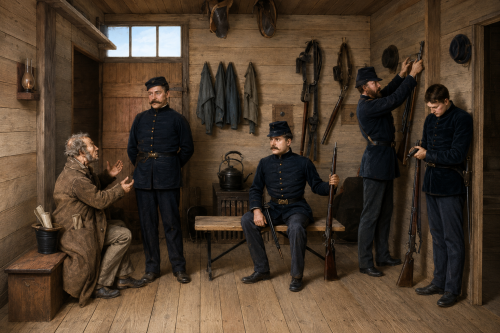
Around 1880, the interior of a police cabin at Gurranmore, near Pallas in County Limerick, reveals the modest conditions in which rural constables lived and worked. The small room is sparsely furnished, with simple wooden fittings, basic household utensils and few comforts. Uniformed officers occupy the cramped space, suggesting that the cabin served as both workplace and living quarters. Published in The Graphic in 1880, the image offers a rare glimpse of everyday policing in nineteenth-century Ireland. It preserves not only the appearance of the station, but also the disciplined, isolated life experienced by men posted in rural communities nearby.
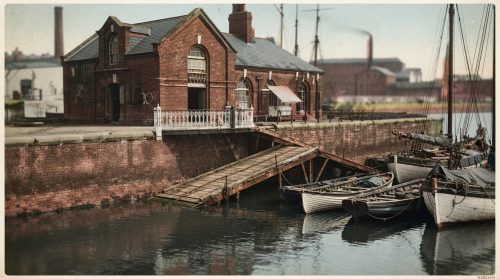
Limerick Boat Club

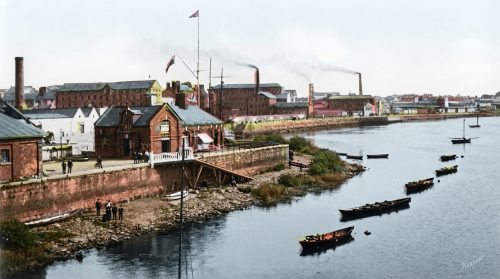
Limerick Boat Club, established in 1870, is one of the city’s oldest and most distinctive rowing institutions. Situated on the western side of Wellesley Pier beside Sarsfield Bridge, the club occupies a handsome Victorian red-brick clubhouse overlooking the River Shannon. As the second oldest rowing club in Limerick, it has played an important role in the city’s sporting and social life for generations. The club is particularly associated with recreational rowing, welcoming members who enjoy the river for exercise, companionship and leisure. Its historic setting and continuing community presence make it a familiar landmark on Limerick’s waterfront within the city.

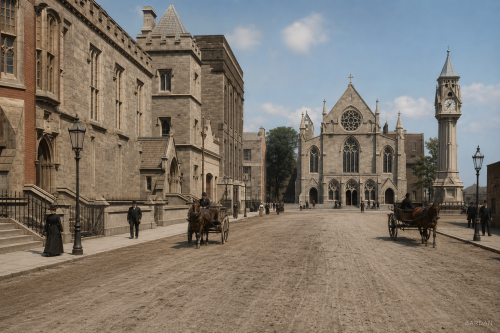
Baker Place, Limerick c.1900

At Baker Place in early twentieth-century Limerick, Saint Saviour’s Dominican Church stands at the centre of a broad cobbled streetscape, its Gothic stone façade, rose window, pointed arches, and carved doorways giving the scene a strong ecclesiastical presence. To the right, Tait’s Clock rises above the roadway as a civic landmark, balanced by red-brick industrial buildings and smoking chimneys behind it. Period pedestrians, a horse-drawn cart, street lamps, and a small wooden kiosk add everyday activity. The view captures a city shaped by faith, industry, commerce, public memory, and the architectural confidence of Edwardian urban life in Limerick’s historic core.

Pery Square

Around 1900, Pery Square presented one of Limerick’s most elegant urban settings, facing the newly opened People’s Park and framed by distinctive Georgian terraces. The celebrated Tontine Buildings, built between 1835 and 1838 as a speculative venture, gave the square a story as unusual as its architecture. Their shares, tied to named lives in the so-called Life and Death Lottery, were still gaining value as horse-drawn traffic, pedestrians, gas lamps, and civic buildings animated the street. The tontine was finally won in 1913 by Sophia Vanderkiste, closing a remarkable chapter in Limerick’s local social and architectural history.

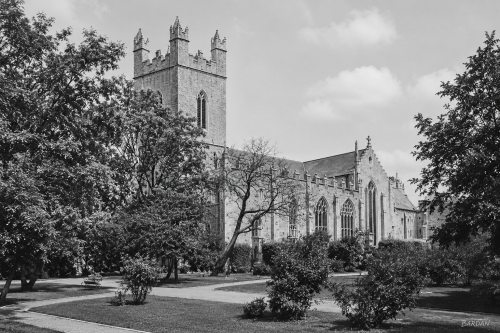
St Mary’s Cathedral

AI-assisted archival reconstruction showing St Mary’s Cathedral, Limerick, viewed from the surrounding garden grounds. The image presents the cathedral tower, Gothic windows, mature trees, planted walks, benches, and landscaped foreground in a restored historical setting, preserving the atmosphere of the original source photograph while removing modern watermarking and visual damage.

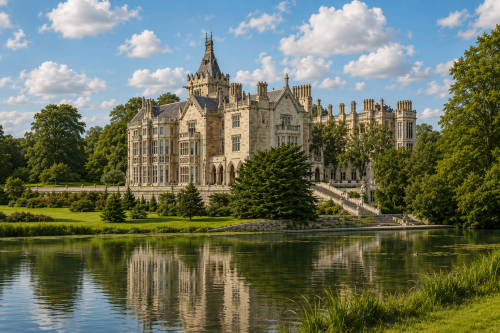
Adare Manor Colour Print

This variation of a colour print depicts Adare Manor beside the River Maigue in Adare, County Limerick. The imposing Gothic Revival residence is shown within landscaped grounds, reflected in the calm water and framed by mature trees. Often described as a calendar house, the manor is associated with 365 windows and 52 chimneys, representing the days and weeks of the year. Published in Francis Orpen Morris’s A Series of Picturesque Views of Seats of the Noblemen and Gentlemen of Great Britain and Ireland, the image celebrates the architecture, setting, and aristocratic character of one of County Limerick’s most recognisable historic estates and landmarks.

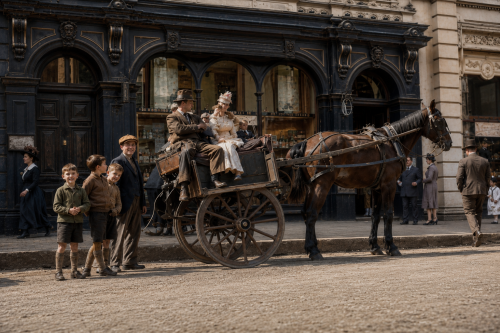
Jaunting Car On O’Connell Street

By 1937, O'Connell Street stood as Limerick's principal commercial thoroughfare, its Victorian and Georgian frontages housing chemists, drapers, and grocers that served the city's daily life. Ireland was still finding its footing after the Economic War with Britain, which had strained trade and agriculture through much of the decade, while the country prepared to adopt a new Constitution that same year. Horse-drawn jaunting cars remained a familiar sight on Limerick's streets even as motor vehicles grew more common, reflecting a city balancing older rhythms of trade and transport with the slow arrival of modern urban life in provincial Ireland.

Wellesly Bridge, Limerick (c.1840s)

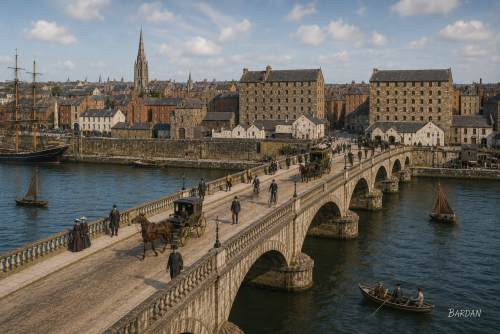
A sweeping view of Wellesley Bridge, now Sarsfield Bridge, crossing the River Shannon in Limerick City. The elegant 1835 structure rises with restrained neoclassical grace, its stone arches carrying traffic between the historic city centre and Thomondgate on the northern shore. Calm river water reflects the bridge’s pale masonry, while quays, rooftops, and distant activity suggest a city expanding beyond its old boundaries. Maritime details, mooring points, and riverside movement evoke Limerick’s trading past. The scene should feel dignified, atmospheric, and historically grounded, presenting the bridge as both active crossing and enduring architectural landmark.

King John’s Castle (1922)

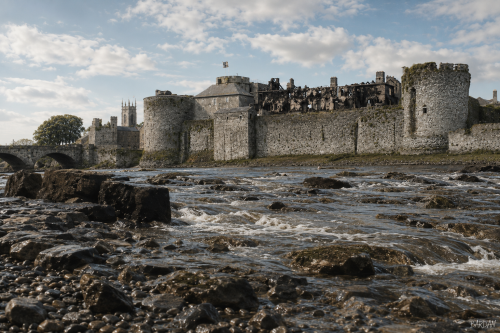
King John’s Castle stands beside the River Shannon at Curragower Falls, with broken water, river rocks and the castle’s stone frontage visible across the scene. The round towers, curtain walls and riverside defences remain central, while the burned Castle Barracks appears roofless and blackened within the enclosure. Thomond Bridge is visible to the left, with nearby trees, older buildings and a church tower rising beyond the castle walls. The river surface shows ripples, reflections and shallow movement below the fortifications. The image presents the castle after damage, set within the wider early twentieth century Limerick urban riverside landscape after 1922.