Athlunkard Boat Club

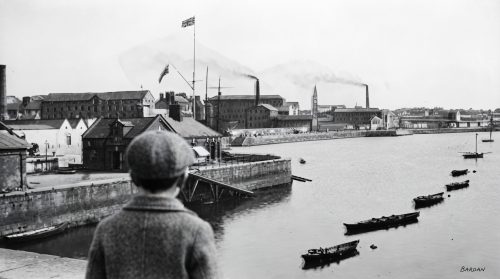
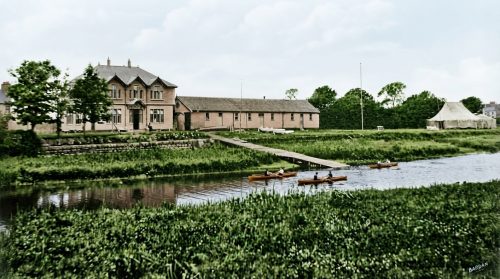
Athlunkard Boat Club was founded in 1898, taking its name from its home beside O’Dwyer Bridge at the end of Athlunkard Street. By the 1930s, the club was already firmly woven into Limerick’s rowing tradition, with a proud record on the water. Its greatest distinction came through the Senior Eight Championship, which Athlunkard won twice, in 1913 and 1923. That achievement made it the only Limerick club to secure the title on two occasions. Its riverside presence and competitive success gave Athlunkard Boat Club a lasting place in the sporting history of the city and the wider Shannon rowing community.

Lady Adare, 1947

This 1947 Vogue portrait shows Lady Adare, also known as Viscountess Adare and born Nancy Yuille, modelling an elegant gown by the celebrated French couturier Jean Patou. Photographed in the United States by Horst P. Horst, the composition reflects the polished glamour and controlled sophistication associated with post-war fashion photography. The gown’s refined silhouette, luxurious fabric and carefully arranged drapery emphasise aristocratic elegance, while the studio lighting gives the image a sculptural quality. Published by Condé Nast, the photograph captures the renewed confidence of haute couture and the enduring influence of society figures within mid-twentieth-century fashion culture and visual style.

Aerial View Of Limerick (c.1920s)

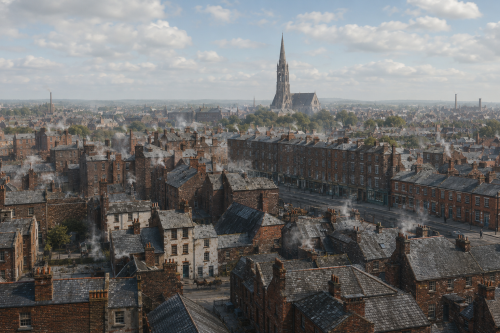
A hazy bird’s-eye view of Limerick in the 1920s stretches across rooftops, chimneys, lanes, and terraces fading into mist. Smoke rises from houses and workshops, softening the city skyline and giving the scene a wintery industrial atmosphere. A tall church spire dominates the distance, standing above packed streets and modest dwellings, while long rows of buildings suggest dense urban life along the Shannon. The elevated perspective captures Limerick as a working city of faith, labour, and close-knit neighbourhoods. Though blurred by age and weather, the photograph preserves a rare panoramic impression of everyday Limerick between war, industry, and memory.

Glenduff Castle Restored

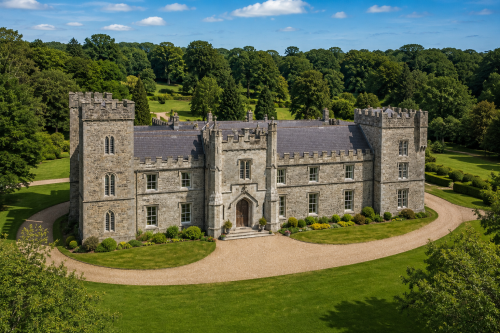
This reconstructed view presents Glenduff Castle in County Limerick as it may have appeared before its destruction in 1922. The imposing residence combines the fortified character of an earlier seventeenth-century tower house with the Gothic Revival additions created for the Ievers family around 1840. Tall crenellated towers, pointed windows, battlements and a formal central entrance give the building a commanding presence. Set within carefully maintained lawns and mature woodland, the castle reflects the scale and confidence of a nineteenth-century Irish country estate. The image offers a plausible visual impression rather than a definitive record of its original appearance or grandeur.

St Mary’s Church

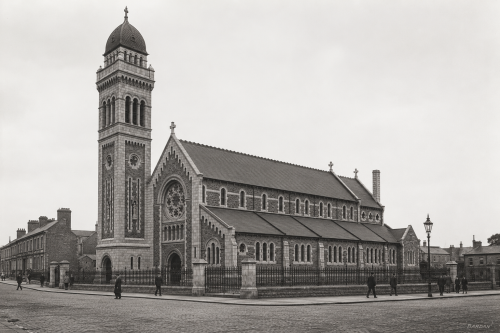
St Mary’s Church stands on Athlunkard Street in Limerick, occupying a site associated with Catholic worship since the eighteenth century. The present church opened in 1932, replacing an earlier chapel where Mass was first celebrated on December 10, 1749. Designed by Ashlin and Coleman of Dublin, the building reflects the scale and ambition of parish church architecture in early twentieth-century Limerick. Its tower, façade, railings and street setting mark an important local landmark, while the surviving holy water font from the former chapel links the modern church with the long religious history of St Mary’s parish community today.

Shannon Bridge Under Construction (1987)

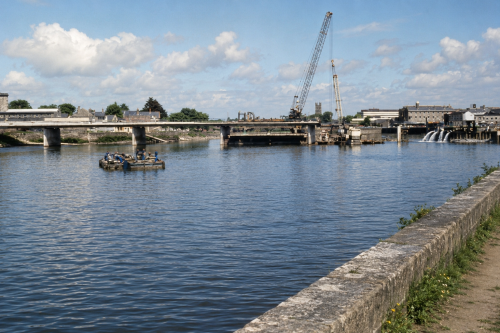
Shannon Bridge, opened on 30 May 1988, remains widely known in Limerick as the “New Bridge”, despite now being several decades old. This four-lane concrete girder crossing connects the Dock Road and Mallow Street area with the North Circular Road and Clancy Strand, providing an important inner-city relief route across the River Shannon. Soon after opening, it acquired another memorable nickname, the “Whistling Bridge”. Strong winds travelling up the Shannon Estuary passed through gaps in the original railings, producing a loud, eerie shrill sound. The problem was later reduced by fitting mesh grilles over the railings along the exposed crossing.

Limerick Land League Demonstration

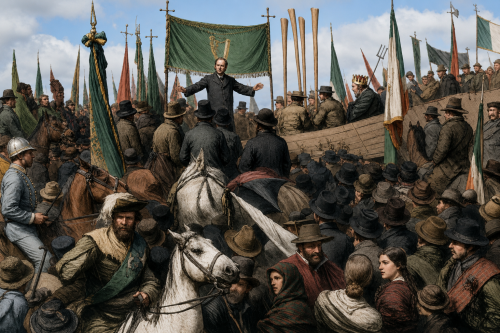
This 1880 illustration depicts a Land League demonstration in Limerick, organised to advance the rights and welfare of Irish tenant farmers. Large crowds gathered to protest against insecure tenancies, excessive rents and the threat of eviction under the landlord system. Speakers and organisers promoted sweeping land reform, including tenant protection and the transfer of land ownership from landlords to those who worked it. Such demonstrations formed part of the wider Irish Land War, combining public meetings, political pressure and organised resistance. The scene reflects the growing strength of rural agitation and nationalist politics in late nineteenth-century Limerick and Ireland nationally.

A Busy Day On George Street

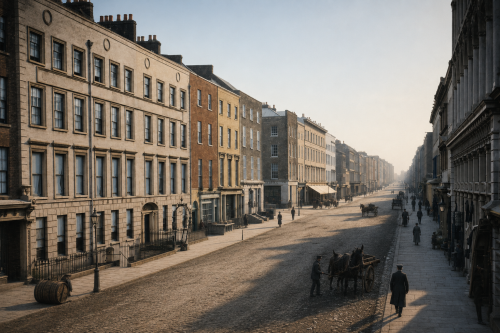
George Street, now O’Connell Street, formed the bustling commercial and social heart of Limerick around 1900. Elegant Georgian and Victorian façades lined the thoroughfare, their ornate shopfronts illuminated by gaslight and filled with goods for local shoppers. Horse-drawn carriages, jaunting cars and merchant carts crowded the roadway, while pedestrians in heavy coats and hats moved between businesses and hotels. The grand Cruises Royal Hotel stood among the street’s most prominent landmarks, welcoming merchants, travellers and visitors. This scene reflects the energy of late-Victorian Limerick before motor traffic transformed the city’s principal shopping street and historic urban centre during a changing era.

Jaunting Car On O’Connell Street

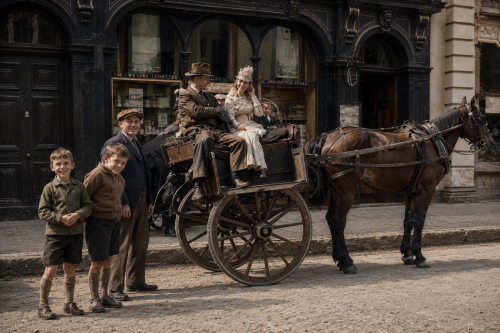
By 1937, O'Connell Street stood as Limerick's principal commercial thoroughfare, its Victorian and Georgian frontages housing chemists, drapers, and grocers that served the city's daily life. Ireland was still finding its footing after the Economic War with Britain, which had strained trade and agriculture through much of the decade, while the country prepared to adopt a new Constitution that same year. Horse-drawn jaunting cars remained a familiar sight on Limerick's streets even as motor vehicles grew more common, reflecting a city balancing older rhythms of trade and transport with the slow arrival of modern urban life in provincial Ireland.