Limerick Market Day, 1937

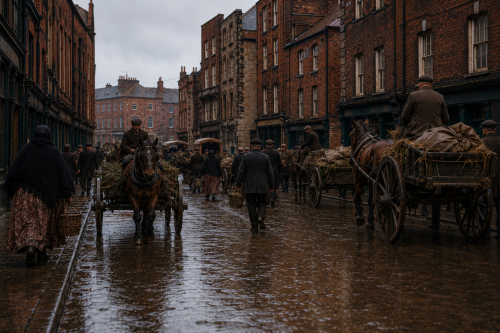
This photograph, dated 1 March 1937, captures a busy market day in Limerick city. Horse-drawn carts, traders, shoppers, and farmers crowd the wet street, creating a vivid picture of everyday commercial life. On the right, a man drives a horse and trap, a form of transport commonly associated with more prosperous Irish farmers. Market goods are displayed on carts and stalls, while pedestrians move between the buildings lining the street. The scene records the importance of markets to Limerick’s economy, bringing rural producers and urban customers together during a period when horses remained central to transport and trade throughout Ireland.
Limerick Boat Club

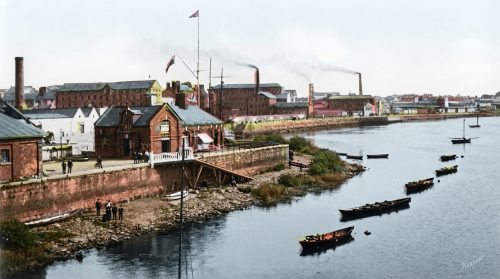
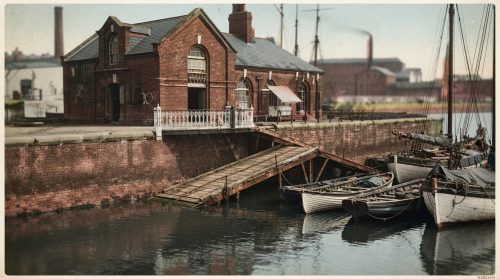
Limerick Boat Club, established in 1870, is one of the city’s oldest and most distinctive rowing institutions. Situated on the western side of Wellesley Pier beside Sarsfield Bridge, the club occupies a handsome Victorian red-brick clubhouse overlooking the River Shannon. As the second oldest rowing club in Limerick, it has played an important role in the city’s sporting and social life for generations. The club is particularly associated with recreational rowing, welcoming members who enjoy the river for exercise, companionship and leisure. Its historic setting and continuing community presence make it a familiar landmark on Limerick’s waterfront within the city.

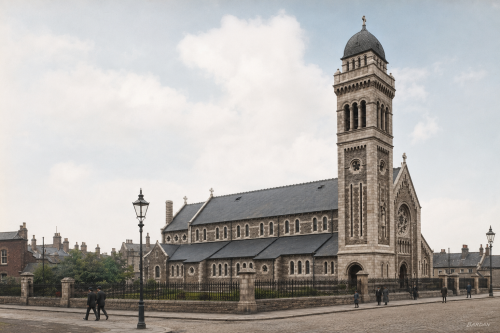
St Mary’s Church

St Mary’s Church stands on Athlunkard Street in Limerick, occupying a site associated with Catholic worship since the eighteenth century. The present church opened in 1932, replacing an earlier chapel where Mass was first celebrated on December 10, 1749. Designed by Ashlin and Coleman of Dublin, the building reflects the scale and ambition of parish church architecture in early twentieth-century Limerick. Its tower, façade, railings and street setting mark an important local landmark, while the surviving holy water font from the former chapel links the modern church with the long religious history of St Mary’s parish community today.

King John’s Castle (1922)

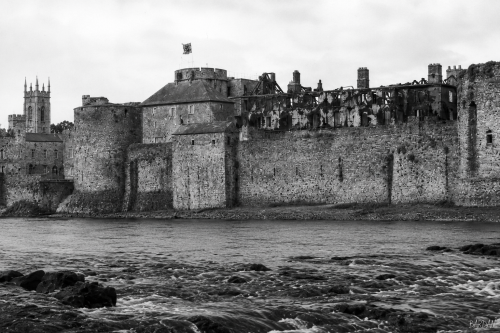
King John’s Castle stands beside the River Shannon at Curragower Falls, with broken water, river rocks and the castle’s stone frontage visible across the scene. The round towers, curtain walls and riverside defences remain central, while the burned Castle Barracks appears roofless and blackened within the enclosure. Thomond Bridge is visible to the left, with nearby trees, older buildings and a church tower rising beyond the castle walls. The river surface shows ripples, reflections and shallow movement below the fortifications. The image presents the castle after damage, set within the wider early twentieth century Limerick urban riverside landscape after 1922.

Shannon Bridge Under Construction (1987)

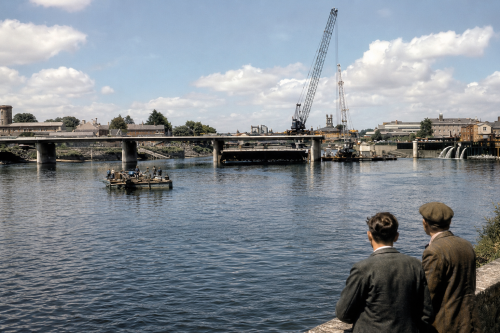
Shannon Bridge, opened on 30 May 1988, remains widely known in Limerick as the “New Bridge”, despite now being several decades old. This four-lane concrete girder crossing connects the Dock Road and Mallow Street area with the North Circular Road and Clancy Strand, providing an important inner-city relief route across the River Shannon. Soon after opening, it acquired another memorable nickname, the “Whistling Bridge”. Strong winds travelling up the Shannon Estuary passed through gaps in the original railings, producing a loud, eerie shrill sound. The problem was later reduced by fitting mesh grilles over the railings along the exposed crossing.

Limerick Land League Demonstration

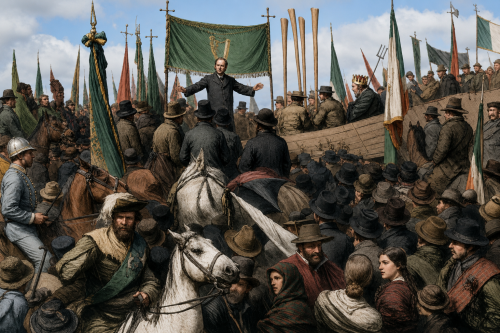
This 1880 illustration depicts a Land League demonstration in Limerick, organised to advance the rights and welfare of Irish tenant farmers. Large crowds gathered to protest against insecure tenancies, excessive rents and the threat of eviction under the landlord system. Speakers and organisers promoted sweeping land reform, including tenant protection and the transfer of land ownership from landlords to those who worked it. Such demonstrations formed part of the wider Irish Land War, combining public meetings, political pressure and organised resistance. The scene reflects the growing strength of rural agitation and nationalist politics in late nineteenth-century Limerick and Ireland nationally.

Aerial View Of Limerick (c.1920s)

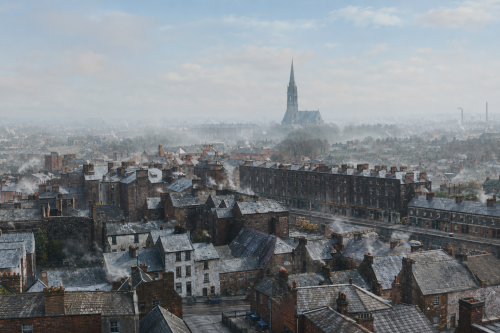
A hazy bird’s-eye view of Limerick in the 1920s stretches across rooftops, chimneys, lanes, and terraces fading into mist. Smoke rises from houses and workshops, softening the city skyline and giving the scene a wintery industrial atmosphere. A tall church spire dominates the distance, standing above packed streets and modest dwellings, while long rows of buildings suggest dense urban life along the Shannon. The elevated perspective captures Limerick as a working city of faith, labour, and close-knit neighbourhoods. Though blurred by age and weather, the photograph preserves a rare panoramic impression of everyday Limerick between war, industry, and memory.

Barricades In Limerick

At Thomond Bridge in Limerick in 1923, a soldier stands guard beside a rough barricade near the Treaty Stone, a symbolic landmark now overshadowed by civil conflict. The scene evokes the tense aftermath of the Treaty split, when Anti-Treaty IRA forces and pro-Treaty National Army troops fought for control of the city. Sandbags, timber, stone, and street debris suggest hurried urban fortification, while the soldier’s watchful posture conveys danger and uncertainty. The bridge becomes both military checkpoint and historic threshold, linking Limerick’s medieval memory with the bitter street warfare that marked the Irish Civil War in the city that summer.

Thatched Cottages of Adare

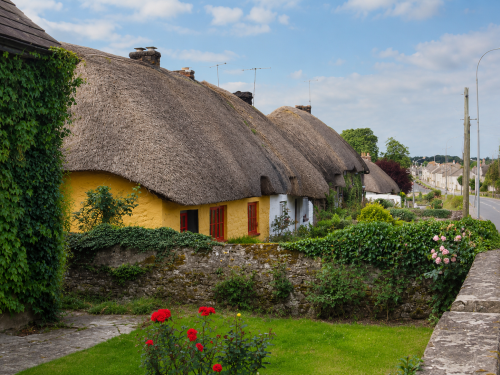
In July 1981, a row of traditional thatched cottages lends Adare its distinctive old-world character. Whitewashed walls, steep straw roofs and small windows line the roadside, reflecting a style once common throughout rural Ireland. The cottages appear carefully maintained, their simple façades softened by flowers, hedges and mature trees. Passing traffic and summer light place the scene firmly in everyday village life rather than a staged historical setting. The image preserves a familiar view of Adare at a time when its architectural heritage was becoming central to the village’s identity and appeal for visitors to County Limerick and beyond worldwide.