Adare Manor Colour Print

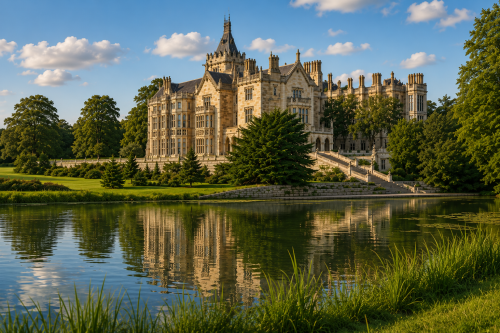
This variation of a colour print depicts Adare Manor beside the River Maigue in Adare, County Limerick. The imposing Gothic Revival residence is shown within landscaped grounds, reflected in the calm water and framed by mature trees. Often described as a calendar house, the manor is associated with 365 windows and 52 chimneys, representing the days and weeks of the year. Published in Francis Orpen Morris’s A Series of Picturesque Views of Seats of the Noblemen and Gentlemen of Great Britain and Ireland, the image celebrates the architecture, setting, and aristocratic character of one of County Limerick’s most recognisable historic estates and landmarks.
Jaunting Car On O’Connell Street

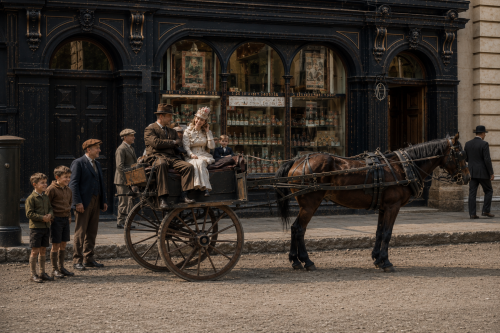
By 1937, O'Connell Street stood as Limerick's principal commercial thoroughfare, its Victorian and Georgian frontages housing chemists, drapers, and grocers that served the city's daily life. Ireland was still finding its footing after the Economic War with Britain, which had strained trade and agriculture through much of the decade, while the country prepared to adopt a new Constitution that same year. Horse-drawn jaunting cars remained a familiar sight on Limerick's streets even as motor vehicles grew more common, reflecting a city balancing older rhythms of trade and transport with the slow arrival of modern urban life in provincial Ireland.

King John’s Castle (1922)

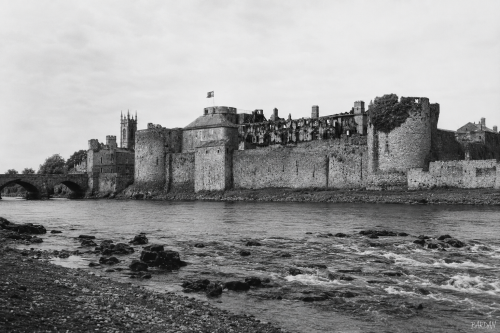
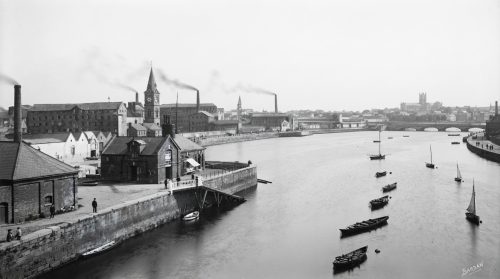
King John’s Castle stands beside the River Shannon at Curragower Falls, with broken water, river rocks and the castle’s stone frontage visible across the scene. The round towers, curtain walls and riverside defences remain central, while the burned Castle Barracks appears roofless and blackened within the enclosure. Thomond Bridge is visible to the left, with nearby trees, older buildings and a church tower rising beyond the castle walls. The river surface shows ripples, reflections and shallow movement below the fortifications. The image presents the castle after damage, set within the wider early twentieth century Limerick urban riverside landscape after 1922.

Aerial View Of Limerick (c.1920s)

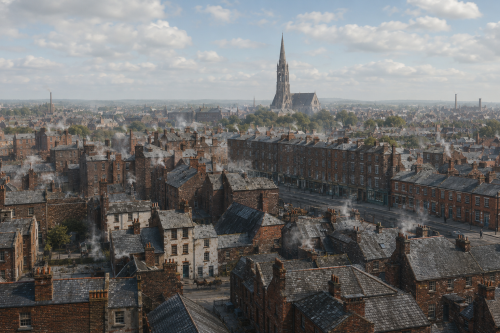
A hazy bird’s-eye view of Limerick in the 1920s stretches across rooftops, chimneys, lanes, and terraces fading into mist. Smoke rises from houses and workshops, softening the city skyline and giving the scene a wintery industrial atmosphere. A tall church spire dominates the distance, standing above packed streets and modest dwellings, while long rows of buildings suggest dense urban life along the Shannon. The elevated perspective captures Limerick as a working city of faith, labour, and close-knit neighbourhoods. Though blurred by age and weather, the photograph preserves a rare panoramic impression of everyday Limerick between war, industry, and memory.

Inside Gurranmore Police Cabin

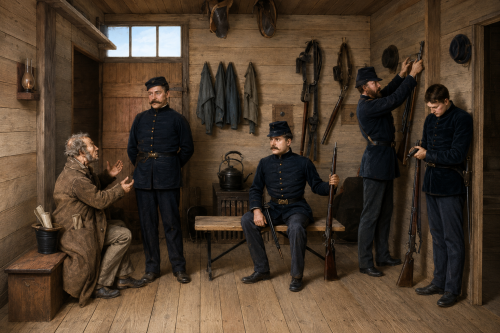
Around 1880, the interior of a police cabin at Gurranmore, near Pallas in County Limerick, reveals the modest conditions in which rural constables lived and worked. The small room is sparsely furnished, with simple wooden fittings, basic household utensils and few comforts. Uniformed officers occupy the cramped space, suggesting that the cabin served as both workplace and living quarters. Published in The Graphic in 1880, the image offers a rare glimpse of everyday policing in nineteenth-century Ireland. It preserves not only the appearance of the station, but also the disciplined, isolated life experienced by men posted in rural communities nearby.

St Mary’s Church

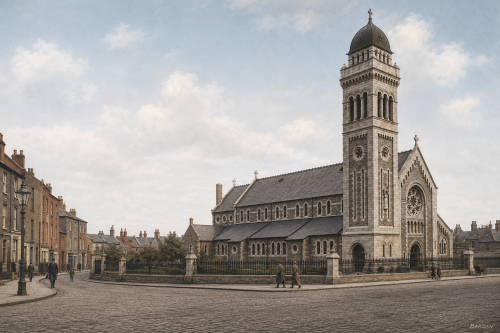
St Mary’s Church stands on Athlunkard Street in Limerick, occupying a site associated with Catholic worship since the eighteenth century. The present church opened in 1932, replacing an earlier chapel where Mass was first celebrated on December 10, 1749. Designed by Ashlin and Coleman of Dublin, the building reflects the scale and ambition of parish church architecture in early twentieth-century Limerick. Its tower, façade, railings and street setting mark an important local landmark, while the surviving holy water font from the former chapel links the modern church with the long religious history of St Mary’s parish community today.

Limerick Boat Club

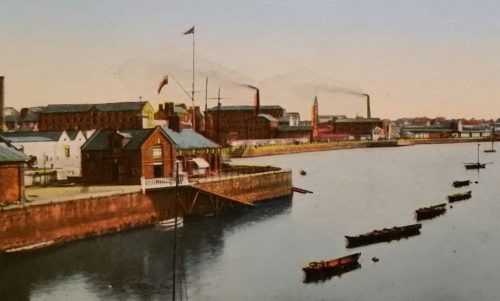
Limerick Boat Club, founded in 1870, ranks among Ireland’s oldest and most distinguished sporting institutions. For generations, it has introduced people to the pleasures and disciplines of rowing on the River Shannon, encouraging fitness, teamwork and a lasting appreciation of the water. The club’s striking red-brick Victorian clubhouse, standing directly beside the river, has become a familiar landmark on Limerick’s waterfront. Although rooted in a proud competitive tradition, the club places strong emphasis on recreational rowing and community participation. Its enduring presence reflects both the city’s deep connection with the Shannon and Limerick’s long, celebrated sporting heritage and civic identity.

Shannon Bridge Under Construction (1987)

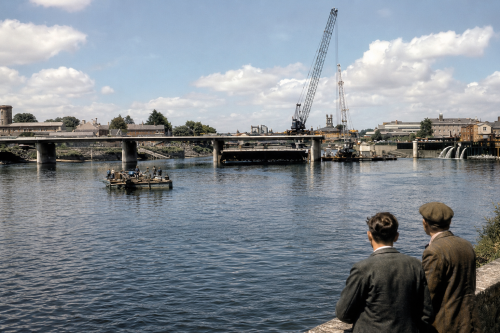
Shannon Bridge, opened on 30 May 1988, remains widely known in Limerick as the “New Bridge”, despite now being several decades old. This four-lane concrete girder crossing connects the Dock Road and Mallow Street area with the North Circular Road and Clancy Strand, providing an important inner-city relief route across the River Shannon. Soon after opening, it acquired another memorable nickname, the “Whistling Bridge”. Strong winds travelling up the Shannon Estuary passed through gaps in the original railings, producing a loud, eerie shrill sound. The problem was later reduced by fitting mesh grilles over the railings along the exposed crossing.

Thatched Cottages of Adare

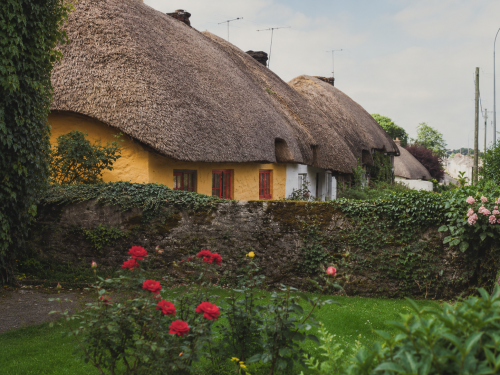
In July 1981, a row of traditional thatched cottages lends Adare its distinctive old-world character. Whitewashed walls, steep straw roofs and small windows line the roadside, reflecting a style once common throughout rural Ireland. The cottages appear carefully maintained, their simple façades softened by flowers, hedges and mature trees. Passing traffic and summer light place the scene firmly in everyday village life rather than a staged historical setting. The image preserves a familiar view of Adare at a time when its architectural heritage was becoming central to the village’s identity and appeal for visitors to County Limerick and beyond worldwide.