Roads and Streets

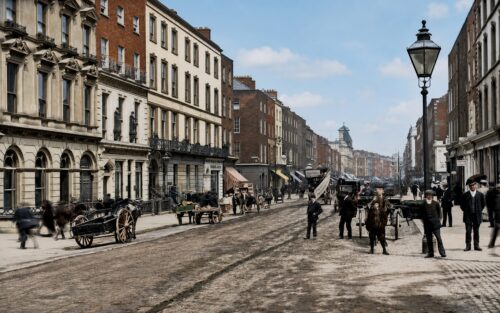
George Street Public Street View, Limerick, 1900

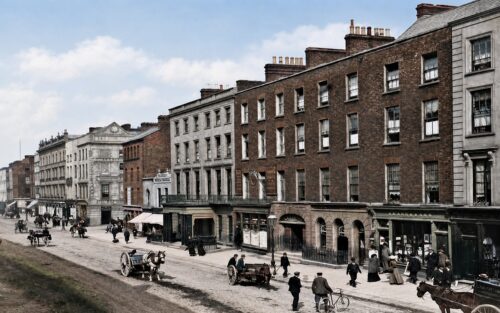
George Street, Limerick, is shown here around 1900 as a long, open city-centre thoroughfare bordered by brick and limestone commercial buildings. Horse-drawn carts and carriages pass along the worn roadway, while pedestrians move between pavements, shopfronts and crossing points. Gas lamps, awnings and sash-windowed façades emphasise the Edwardian character of the street. The broad perspective draws attention to George Street’s role as a principal route for trade, transport and public life, linking shops, offices and hotels with the wider city. The scene captures everyday urban movement before motor traffic altered the pace and appearance of central Limerick so visibly here.
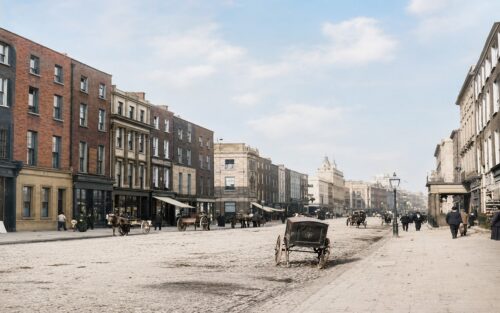
Busy Day On George Street, Limerick, 1900

George Street, Limerick, appears as a spacious Edwardian thoroughfare around 1900, with red-brick and limestone buildings framing both sides of the broad roadway. Horse-drawn carts and carriages move through the open street, while pedestrians gather near shopfronts, cross the road, and pass beneath awnings. The distant civic buildings and gas lamps give the scene formal urban character, while the uneven surface and scattered traffic suggest everyday commerce rather than ceremony. This image captures George Street as a working city-centre artery, where trade, travel, social exchange and public movement shaped daily life in Limerick before motor vehicles became widely common there.

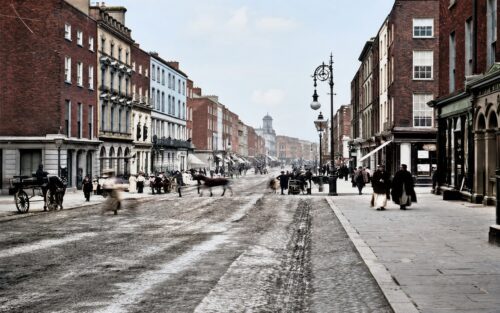
George Street, Limerick, 1900

George Street, Limerick, appears here as an Edwardian commercial street around 1900, viewed along a row of substantial brick and stone buildings. Shopfronts, arched entrances and upper-floor sash windows give the scene a strong urban character, while pedestrians move between pavements and the roadway. Horse-drawn carts, traps and delivery wagons mark the rhythm of trade before motor traffic became common. Awnings and open premises suggest active shopping and business life, with people pausing near doorways or crossing the street. The distant civic façades and broad perspective capture George Street as a central route of commerce, transport and public life.

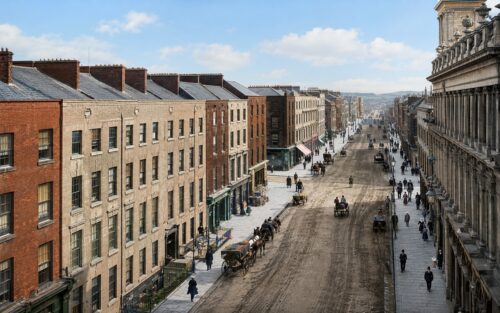
Looking Up George Street, Limerick, 1900

George Street, Limerick, is shown from an elevated viewpoint around 1900, revealing the long sweep of the city’s principal commercial thoroughfare. Cruises Royal Hotel is visible on the left, among rows of red-brick and limestone buildings with shopfronts below and tall windows above. Horse-drawn carts, traps and delivery vehicles move along the broad roadway, while pedestrians use the pavements and cross between traffic. The scene captures a city centre shaped by trade, hospitality, civic architecture and daily movement. Gas lamps, awnings and distant hills add depth, placing Edwardian Limerick within both urban bustle and familiar local landscape atmosphere.

George Street Civic Street Scene, Limerick, 1900

This historic reconstruction shows George Street, Limerick, as a lively Edwardian thoroughfare around 1900, framed by tall commercial buildings, shopfronts, awnings and gas lamps. Horse-drawn carts, traps and carriages move along the worn roadway, while pedestrians gather on pavements, pause outside premises and cross between traffic. The red-brick façades, ornate stonework and active street frontage suggest a confident shopping and business district at the heart of the city. The wide perspective emphasises George Street as one of Limerick’s principal routes, where trade, transport, conversation and public movement shaped daily life before motor vehicles changed the city’s rhythm forever.