

Related Archive: 1510s

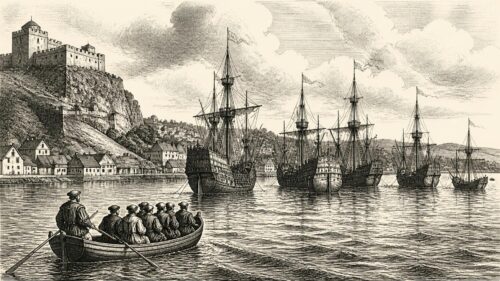
Ferdinand’s Kinsale Harbour

Ferdinand’s Kinsale Harbour

Archived: 18 October 2026

Abstract

In June 1518, storms diverted Archduke Ferdinand’s Habsburg flotilla to Kinsale, where the fifteen-year-old brother of Charles of Habsburg received provisions, formal hospitality and civic discipline before sailing for Flanders. Laurent Vital’s account offers valuable, though prejudiced and linguistically mediated, observations of the port, worship, clothing and relations between townspeople and countryside. Elsewhere, Gerald FitzGerald’s Kildare rental documented lordship, revenues, learning and religious patronage, including Maynooth’s chantry college. Armagh’s Franciscans underwent Observant reform, while annals record northern raids, hostages, succession killings, and the deaths of esteemed clerics and poets, revealing plural, connected Irish societies within wider European and Atlantic networks.
Read Article

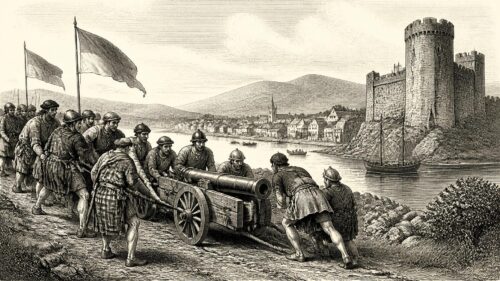
Sligo’s French Siege Gun

Sligo’s French Siege Gun

Archived: 18 October 2026

Abstract

In 1516, Ireland was governed through overlapping royal, Gaelic and urban powers. As Henry VIII’s deputy, Kildare led a coalition that captured Leap Castle, secured hostages and imposed authority in the midlands. In the north-west, Manus O’Donnell obtained French-linked artillery after a pilgrim’s visit to Lough Derg, used it to take Sligo Castle, and later negotiated peace with O’Neill under Dublin’s mediation. Kildare’s Dublin parliament addressed markets, ports, taxation and defence. Religious life, travel and scholarship remained vital: friars drowned on Lough Erne, the Book of Fenagh was completed, and Desmond’s Gaelic lord died amid continuing regional warfare and connections.

Read Article