Archived: 1 November 2026
Abstract
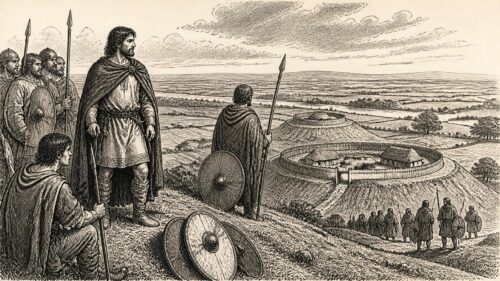
In 728, battles and deaths reshaped Irish political and ecclesiastical leadership. Flaithbertach son of Loingsech defeated and killed Cináed son of Írgalach at Druim Corcain, enabling his claim to the kingship of Ireland, understood as contested supremacy rather than central rule. In Leinster, Fáelán defeated his brother Dúnchad at Ailenn and became overking. Domnall of Connacht and Flann, abbot of Bangor, also died, creating further uncertainty. Annals reliably date core events but cannot reconstruct battlefields or ordinary experience. The year illustrates violent succession, regional autonomy, dynastic rivalry, and the political importance of monastic and learned communities across early medieval Ireland.
Read Article

Archived: 1 November 2026
Abstract
In 726, Irish annals record conflict linking Leinster, Brega and Mide. Cináed son of Írgalach of the Síl nÁedo Sláine fought the Leinstermen at Maíne, demonstrating continuing rivalry after Leinster’s victory at Allen. Crimthann, son of former Leinster king Cellach Cualann, was killed young at Belach Lice; Inisfallen names Muiredach as victor. Ailill son of Badbchad was slain in Mide. The deaths of Da Chonda of Connor, Mainchín of Leighlin and Cillíne Long of Iona underline ecclesiastical importance. Sparse, differing annalistic notices reveal clearly local dynastic violence, regional ambition and interconnected church networks, but not island-wide crisis or settled overlordship.
Read Article
Archived: 1 November 2026
Abstract
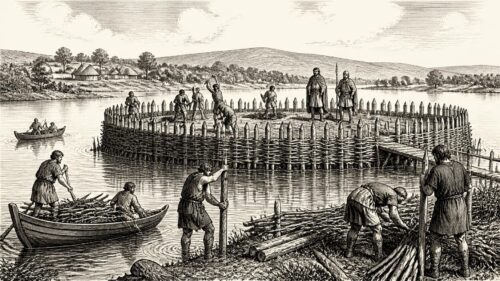
In 725, Irish annals record dispersed events rather than a single national turning point. Cináed son of Írgalach caused the Ulaid to flee, indicating temporary northern reach after his victory in 724, but not conquest. A fortified or constructed island associated with Crach’s son suggests investment in defended wetland settlement, though its site and purpose remain unknown. Obituaries commemorated scribes, teachers and abbots linked to Armagh, Kildare, Munster and communities, demonstrating ecclesiastical learning and institutional influence. Simul son of Drust was imprisoned in northern Britain. Divergent annalistic chronologies require caution, yet these notices reveal organised power, construction and intellectual networks.
Read Article
Archived: 1 November 2026
Abstract
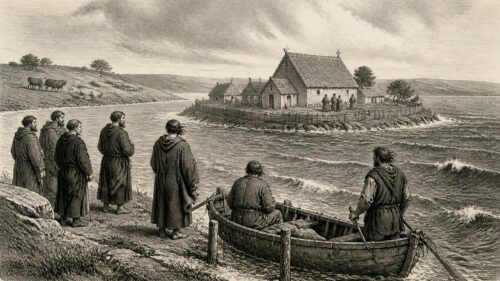
In 720, Irish annals recorded a rainy summer, the death of Sínach of Inis Clothrann, and a great sea-flood in October. The wet season may have disrupted cereal growing, haymaking, travel and fodder supplies, although its effects varied by resources and status and cannot prove famine. Sínach’s obituary attests to an ecclesiastical community on Lough Ree, connected through the Shannon to estates, labour and exchange. Politically, the year lay between Fergal’s campaigns against Leinster, though no conflict is securely dated to it. The sea-flood, perhaps storm surge or tsunami, remains unlocated and unexplained, demonstrating environmental vulnerability and maritime connections alike.
Read Article
