Archived: 31 October 2026
Abstract
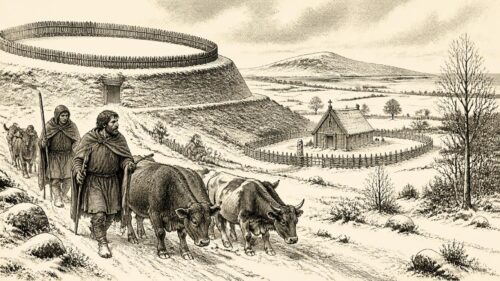
In 748, Irish annals recorded exceptional snow, widespread cattle mortality and subsequent drought, placing severe pressure on a pastoral economy without proving famine. The death of Indrechtach, king of the Ciannachta, affected politics in Brega, while Congal of Airthir was killed at Ráith Escla. Ua Suanaig’s law was enforced in Leth Cuinn, demonstrating proclaimed legal authority despite uncertain provisions or reach. Annals also noted deaths of abbots, anchorites and learned men, illustrating churches’ economic and social importance. A described battle and an aerial-ship prodigy reveal chronicles combining conflict, environment, leadership and marvels. The evidence depicts interconnected hardship, authority and learning.
Read Article
Archived: 1 November 2026
Abstract
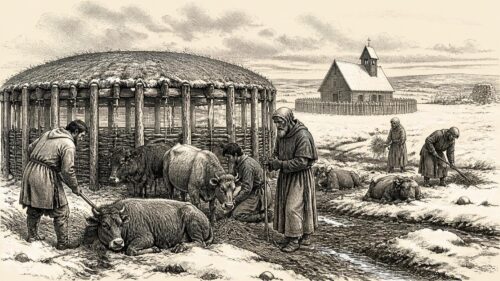
In 747, Ireland experienced exceptionally deep snow, widespread cattle mortality and subsequent drought, shocks that endangered a rural economy dependent on livestock for food, labour, tribute and status. The annals do not establish famine or population loss, but attest severe island-wide disruption. Political life continued: Indrechtach of the Ciannachta and Queen Muirenn died, while Congal of the Airthir was slain. Suanach’s grandson’s law operated in Leth Cuinn, indicating public legal or ecclesiastical authority. Obituaries recorded abbots, anchorites and scholars, including Cúan Cam. Munster sources noted fighting at Cúil Géisi. Together, the entries reveal interconnected environmental, political, legal and religious pressures.
Read Article
Archived: 1 November 2026
Abstract
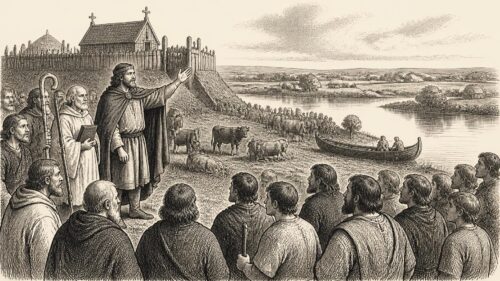
In the political moment around 744, Irish annals record regional deaths, warfare and the close alliance of kingship and church authority. Ardgal, king of Éile, died, while bishops and ecclesiastical leaders including Laidcnén of Saigir and Colmán of Lesán were killed. Conflicts claimed Conchobor of Uí Fhidgente and other elites, and the Déisi defeated Corcu Mo-Druad. Most significantly, Forggus son of Cellach, Uí Briúin king of Connacht, jointly enforced the laws of Saints Ciarán of Clonmacnoise and Brénainn of Clonfert, securing ecclesiastical rights through royal power. Differing annalistic chronologies place much of this cluster in 743 or 744. Sources differ.
Read Article
Archived: 1 November 2026
Abstract
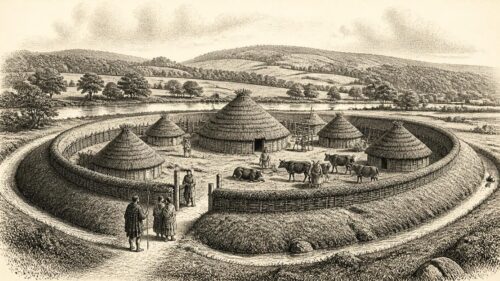
In 740, Irish annals record the killing of Forbasach son of Ailill, ruler of Osraige, revealing the vulnerability of a strategically placed kingdom between Leinster and Munster. They provide no details of his killer, circumstances or successor, limiting interpretation. Another secular leader, Ua Ailello of Cenél Fiachrach, was also killed. Ecclesiastical deaths included Cellach, abbot of Clonmacnoise, Dub dá Boirenn of Fore, Bran of Lann Ela and Flann Febla of Gort Conaig. These losses illustrate changes in authority across political and religious communities. Rural life continued through farming, craftwork and livestock management, while monastic literacy preserved this selective historical record.
Read Article

