Archived: 14 October 2026
Abstract
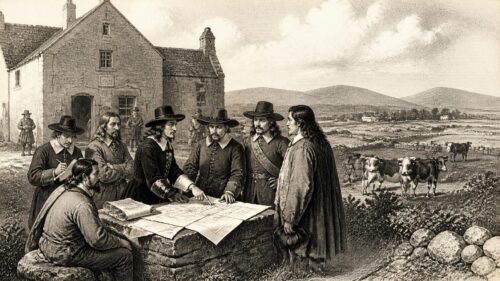
In 1675, Ireland remained shaped by unresolved consequences of Cromwellian conquest and Restoration land legislation. On 22 September, Charles II appointed commissioners to decide individual Connacht transplanters’ claims, addressing disputed assignments without reversing Protestant property gains. Lord Lieutenant Essex left for England amid conflict over revenue farming, military finance and Dublin’s dependence on Whitehall; Boyle and Forbes governed as lords justices. Catholic clergy faced continuing, uneven pressure under banishment policy, while parallel Protestant and Catholic hierarchies endured. English restrictions on Irish cattle trade encouraged commercial redirection towards continental and Atlantic markets. Together, these issues exposed an incomplete post-conquest settlement still.
Read Article
Archived: 14 October 2026
Abstract
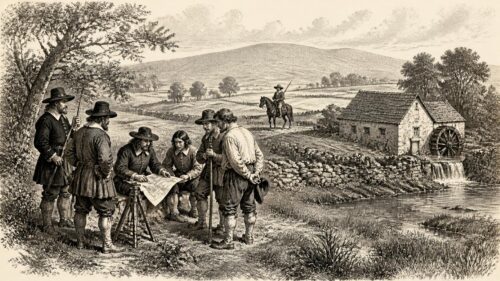
In 1654, the Commonwealth sought to consolidate Cromwellian conquest through transplantation, surveys and institutions. Catholics deemed liable to removal faced a 1 May deadline to move to Connacht or Clare, though enforcement proved uneven amid exemptions, shortages and local dependence on tenants. Courts of survey launched the Civil Survey, recording pre-war ownership, resources and boundaries to facilitate confiscation and redistribution. Charles Fleetwood, appointed Lord Deputy, pursued a hard settlement despite divisions among Protestants and intervention over exemptions. Ireland gained Westminster representation without an Irish parliament. In December, William Petty’s contract initiated preparations for the Down Survey, making dispossession administratively durable.
Read Article
Archived: 17 October 2026
Abstract
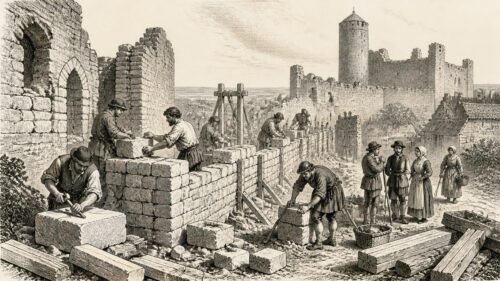
In 1576 Sir Henry Sidney extended Tudor authority through provincial journeys, submissions, hostages, county organisation and garrisons, but encountered persistent resistance. At Athenry, devastated during Burke conflict, he ordered a smaller defensible enclosure, yet reconciliation collapsed when Clanricarde’s sons defied restrictions, leaving rebuilding incomplete. Connacht’s new counties and Nicholas Malby’s command joined administration to coercive warfare. William Drury’s Munster presidency introduced courts, martial law and proposed composition, threatening lordly power. Rory Óg O’More’s resistance exposed instability in the midlands. Succession disputes, learned men’s deaths, fires and Essex’s death further marked a year in which expanding government failed to secure consent.
Read Article
Archived: 17 October 2026
Abstract
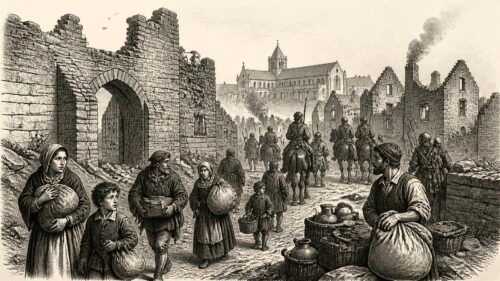
In 1572 Sir Edward Fitton’s Galway court and arrest of the earl of Clanricarde provoked Ulick and John Burke’s rebellion across Connacht. Supported by gallowglasses and Scottish mercenaries, they attacked castles, towns, trade routes and government allies, devastating Athenry and threatening Galway. The crown released Clanricarde to restore peace, but negotiation merely suspended disputes over succession and authority. Meanwhile, rebels unsuccessfully aided James fitz Maurice during the siege and eventual fall of Castlemaine Castle, a key stage in the first Desmond rebellion. Deaths of churchmen, learned men and civilians, alongside reported human and cattle mortality, reflected insecurity amid Tudor rule.
Read Article
Archived: 17 October 2026
Abstract
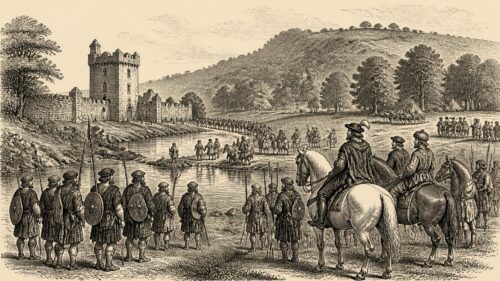
In 1570, Tudor efforts to extend authority in Ireland exposed the limits of provincial government. Sir Edward Fitton’s new Connacht presidency clashed with Conor O’Brien in Thomond, where negotiated submission followed resistance, and campaigned with Clanricarde against John Burke at Shrule. The battle involved English, Irish and Scottish troops, artillery and traditional forces; its outcome remained contested, though government troops held the field. Campaigns imposed demands through cess, supplies, hostages and destruction. In Munster, rebellion persisted despite expeditions and Desmond’s detention. Papal excommunication heightened international anxieties, yet allegiance remained shaped by kinship, territory, employment and rivalry as much as religion.
Read Article




