
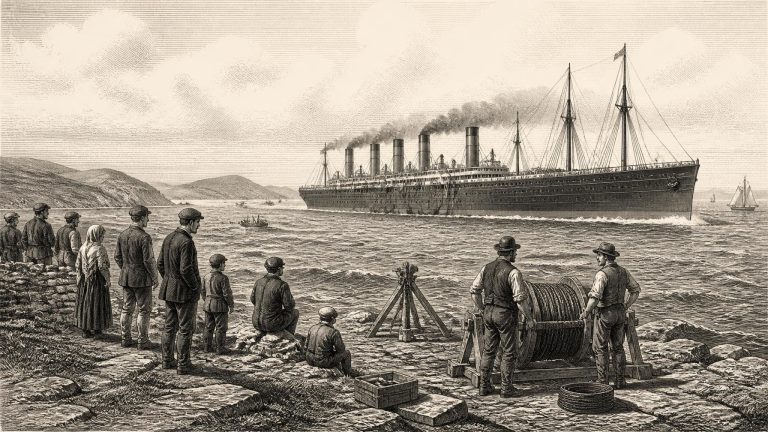
Cullen’s Red Hat, Valentia Wire
In 1866 Ireland stood at a remarkable intersection of coercion, religious confidence and modern connection. The island was still governed from Westminster through Dublin Castle, and official fears of Fenian conspiracy brought an extraordinary curtailment of civil liberty. Yet the same year supplied striking signs of institutional growth: Paul Cullen became the first Irish cardinal; Alexandra College opened a new path in women’s advanced education; a major Catholic church was dedicated in industrial Belfast; and the Atlantic cable made the remote Kerry coast a gateway for messages between Europe and North America. These were not parts of a single national programme. They belonged to communities with different loyalties, resources and hopes. Together, however, they show an Ireland whose political future was deeply contested while its religious, educational and communications worlds were being remade.