

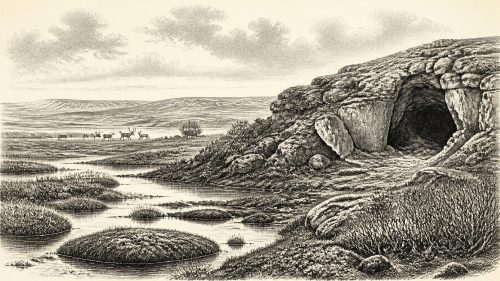
Related Archive: Awbeg Valley Reindeer

Awbeg Valley Reindeer Country

Awbeg Valley Reindeer Country

Archived: 21 September 2026

Abstract

Around 30,989 BCE, Ireland was a climatically unstable Late Pleistocene landscape, not a place with recoverable annual history. Derryvree, County Fermanagh, preserves evidence of treeless tundra wetlands, with cold-adapted plants, insects and shallow freshwater habitats. Castlepook Cave, County Cork, contains remains of mammoth, reindeer, giant deer, predators and smaller northern animals, accumulated across several episodes rather than one event. A marked reindeer femur may record butchery by Upper Palaeolithic people, suggesting brief human presence, but no settlement, tools, hearths or burials are securely associated. Ireland remained ecologically connected intermittently with north-west Europe before advancing ice and changing seas restricted movement.

Read Article

Awbeg Valley Reindeer

Awbeg Valley Reindeer

Archived: 9 September 2026

Abstract

31,877 BCE is a modern approximation for a broad later Pleistocene interval, not a recoverable Irish year. Before the Last Glacial Maximum, Ireland contained regionally varied, cold, open tundra and wetlands, evidenced by Derryvree deposits in Fermanagh. Castlepook Cave Cork’s Awbeg valley preserves fauna, including reindeer, mammoth, giant deer, predators and, accumulated across different times rather than one moment. A dated reindeer femur may bear human cut marks, suggesting brief Upper Palaeolithic visitation, but disturbed contexts prevent certainty. No settlements, tools, identities or social institutions are securely known. The evidence portrays active Ice Age ecosystems and possible early human presence.

Read Article