

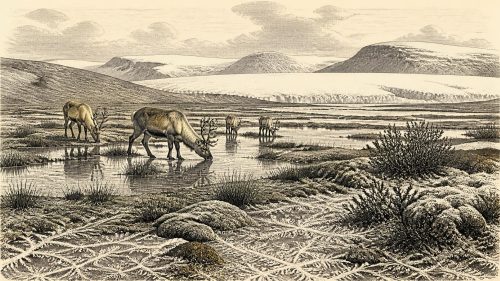
BIRM-166’s Coldwater World
Archived: 6 October 2026
30,212 BCE cannot describe a specific Irish event, as Late Pleistocene evidence provides only broad, calibrated ranges. At Derryvree, County Fermanagh, freshwater organic deposits between glacial tills record a temporary cold wetland of mosses, sedges, aquatic plants and northern insects, demonstrating local environmental change amid uneven ice-sheet growth. Castlepook Cave, County Cork, preserves an accumulated fauna including mammoth, reindeer, horse, predators and small cold-climate animals, showing intermittent habitable open country. A cut-marked reindeer femur may indicate Upper Palaeolithic butchery, but cannot securely establish settlement or social organisation. Ireland was climatically volatile, ecologically varied and perhaps briefly visited by mobile people.