

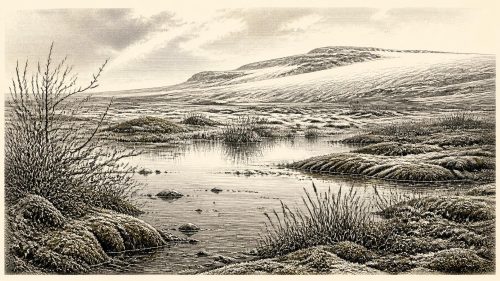
Menyanthes Between Tills
Archived: 4 October 2026
Around 30,284 BCE, Ireland cannot be described through a precise annual chronology, but environmental evidence illuminates a Late Pleistocene landscape. At Derryvree, County Fermanagh, freshwater organic deposits between glacial tills demonstrate a locally ice-free tundra wetland, with sedges, mosses, herbs and bogbean, during an unstable climatic interval. Cave evidence from Kerry indicates episodic unfrozen conditions, while Castlepook Cave, County Cork, records cold-adapted fauna including reindeer, mammoth and predators. A possibly cut-marked reindeer bone suggests, but does not confirm, human presence. Before the Last Glacial Maximum, Ireland was a shifting mosaic of water, open vegetation, animals and advancing ice across regions.