

Derryvree’s Moss Carbon
Archived: 3 October 2026
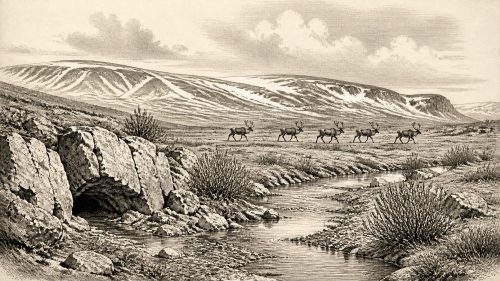
Around 30,322 BCE, Ireland lay in the Late Pleistocene, before the British–Irish Ice Sheet reached its maximum extent. Climate and landscapes changed repeatedly, producing mosaics of ice, exposed ground, tundra, wetlands and meltwater. Organic deposits at Derryvree, Fermanagh, suggest cold freshwater habitats, although their radiocarbon date is imprecise and low-confidence. Castlepook Cave’s fauna, including mammoth, reindeer, lemmings, predators and giant deer, demonstrates varied cold-environment ecosystems over long periods. A possibly cut-marked reindeer bone may indicate Upper Palaeolithic butchery, but cannot prove permanent human settlement. No evidence identifies polities, conflict, trade, religion or calendar-year events; interpretation depends on uncertain surviving traces.