

BIRM-166’s Interstadial Edge
Archived: 2 October 2026
Abstract
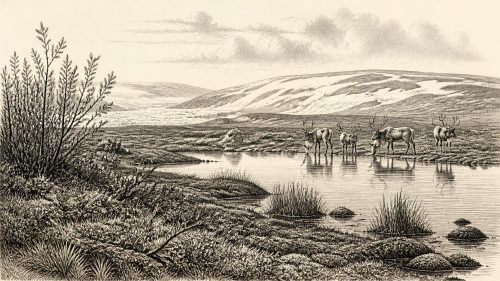
Around 30,372 BCE, Ireland lay within the Late Pleistocene, near the end of a Greenland interstadial, but no annual Irish record survives. The Derryvree deposits in County Fermanagh, bracketed by glacial tills, show a locally ice-free freshwater wetland between advances; BIRM-166 dates broadly to 36,900–31,700 years before present. Low, treeless vegetation supported marsh communities, while caves at Castlepook document diverse cold-stage mammals. A modified reindeer bone may indicate human activity, but proves neither settlement nor occupation. Evidence reveals climatic instability and ecological possibility, not politics, society or securely documented human history across the island at this date in any detail.