

Mammoth Cave’s Butchery Mark
Archived: 2 October 2026
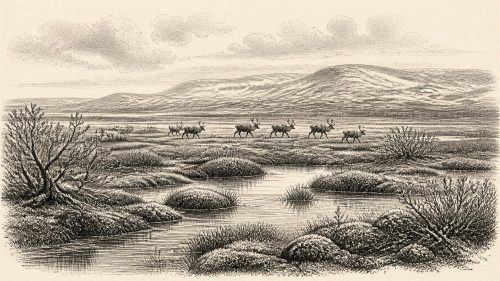
Around 30,374 BCE, Ireland lay within the unstable Late Pleistocene, marked by cold, variable conditions and growing glacial influence. Derryvree in Fermanagh preserves freshwater deposits between tills, indicating an ice-free or ice-distal interval with open tundra-steppe, wetlands and sparse Arctic-alpine vegetation. Castlepook Cave in Cork produced remains of reindeer, mammoth and other cold-adapted fauna, although their contexts and dates are uncertain. A cut-marked reindeer femur may represent Ireland’s earliest human butchery, but proves neither settlement nor a local hunting economy. Ice expansion destroyed or buried much evidence. Thus this period is understood through broad dates, environmental traces and cautious interpretation.