

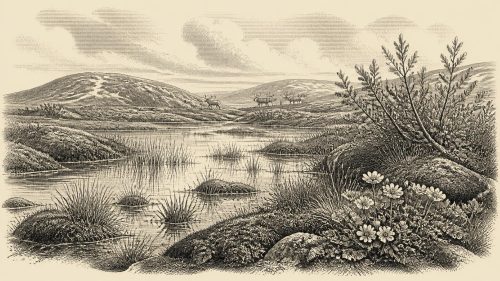
BIRM-166’s Sheltered Water
Archived: 1 October 2026
Around 30,418 BCE, Ireland has no recorded human history, only fragmentary Late Pleistocene environmental evidence. At Derryvree, County Fermanagh, the BIRM-166 organic horizon, dated broadly to 34,950–29,750 BCE, preserves freshwater silts between glacial tills, demonstrating a local ice-free interval. Plant, moss and insect remains indicate cold, treeless tundra wetland, not a mild or wholly ice-free island. Cave finds at Castlepook, County Cork, document cold-adapted fauna, though remains derive from different periods. A possibly cut-marked reindeer bone offers uncertain evidence of human activity. Ireland formed a climatically unstable landscape of shifting ice, water and mobile animals, without demonstrable settlements or polities.