

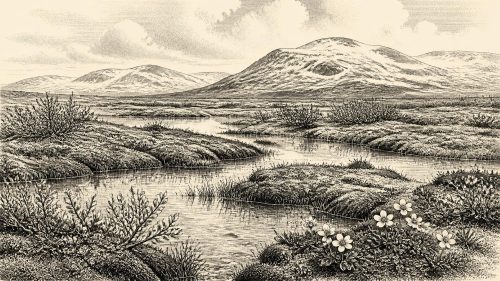
Derryvree’s Coldwater Mosaic
Archived: 28 September 2026
Around 30,536 BCE, a modern and imprecise label, Ireland was a cold, changing Upper Palaeolithic landscape rather than a documented human society. At Derryvree, County Fermanagh, freshwater silts between glacial tills preserve evidence of ice-free intervals: pools, mosses, sedges, herbs and tundra-like plants in a periglacial mosaic. Growing ice later buried these deposits, preceding major British-Irish Ice Sheet expansion. Cave fauna from County Cork, including mammoth, reindeer and predators, shows intermittent ecological connections with Europe. A possibly cut-marked reindeer bone suggests human passage, but no secure settlements, tools or communities are known. Environmental evidence, not national history, defines this period.