

Derryvree’s Buried Mosses
Archived: 27 September 2026
Abstract
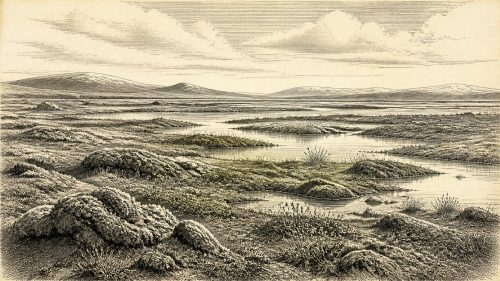
30,568 BCE is a modern label within a broad Late Pleistocene range, not a date for a recorded event. At Derryvree, County Fermanagh, buried freshwater silts beneath glacial till, radiocarbon dated broadly to Marine Isotope Stage 3, preserve mosses, sedges and other tundra vegetation. They show that some Irish areas remained ice-free, cold, seasonal and periglacial before later ice-sheet expansion. Cave fauna, including reindeer, giant deer and hyaena, indicates varied animal life, though bones span different periods. A possibly cut-marked Castlepook reindeer bone suggests brief human visits, not settlement. Evidence supports wetlands and animals, but no society, economy or institutions.