

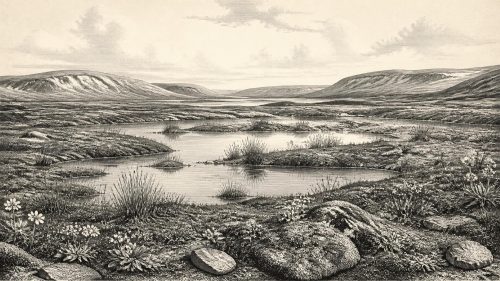
Arenaria at Maguiresbridge
Archived: 25 September 2026
Around 30,703 BCE, Ireland’s history is reconstructed from Late Pleistocene environmental evidence rather than dated events or human activity. At Derryvree near Maguiresbridge, freshwater silts between glacial tills, radiocarbon dated broadly to 34,950–29,750 BCE, record a temporary ice-free, periglacial wetland. Pollen, plants, insects and mosses indicate treeless tundra, shallow water and ecological variety, including fringed sandwort. Castlepook Cave’s disturbed, long-lived bone deposits show intermittent connections to wider European fauna, including mammoth, reindeer and hyaena, but cannot describe one year. No secure human presence is known. The period reflects fluctuating ice, habitats, drainage and faunal opportunities before the Last Glacial Maximum.