

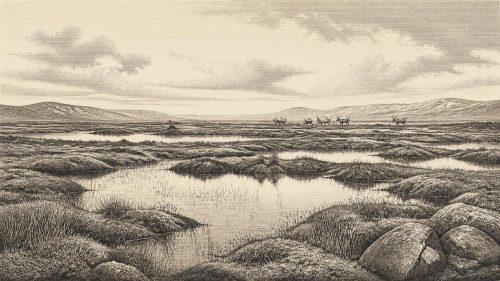
Fermanagh Pools, Cork Hyenas
Archived: 21 September 2026
Abstract
Around 30,945 BCE, Ireland was part of a climatically unstable Late Pleistocene landscape, not a recoverable historical year. At Derryvree in Fermanagh, organic freshwater deposits between glacial tills record cold, treeless wetlands supporting mosses, sedges, aquatic plants, insects and tundra-like vegetation. Castlepook Cave in Cork yielded mammoth, reindeer, giant deer, bear, fox, hare, lemming and spotted hyaena remains, indicating diverse cold-stage fauna. Dates from both sites span broad ranges, not a single year. A modified reindeer bone may indicate early human activity, but no secure evidence establishes permanent settlement. Shifting ice, sea levels and habitats governed access and survival locally.