

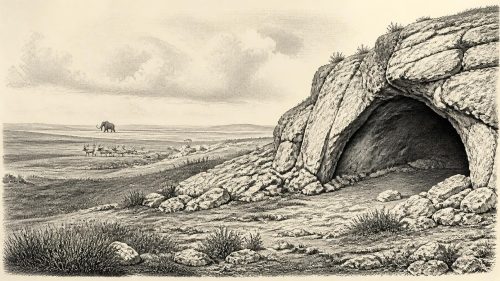
Castlepook’s Two Thousand Bones
Archived: 21 September 2026
At roughly 30,955 BCE, Ireland lay within the climatically unstable MIS 3 Ice Age, before the Last Glacial Maximum. Changing sea levels, ice margins and coastlines created open, harsh, variable habitats supporting mammoth, reindeer, giant deer, bears and carnivores. Castlepook Cave, near Doneraile, preserves Ireland’s richest known pre-maximum vertebrate archive, although its 2,000 surviving bones accumulated across long periods and were disturbed by water and animals. A cut-marked reindeer femur, tentatively dated around 31,000 BCE, may indicate human butchery. It cannot prove settlement or a resident population. No contemporary Irish evidence attests to communities, farming, politics, religion or Celtic culture.