

Maguirebridge’s Buried Sedgebed
Archived: 20 September 2026
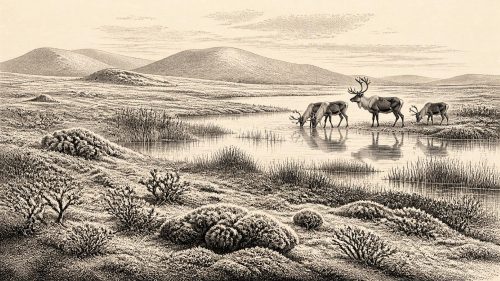
At roughly 31,100 BCE, Ireland lay within the unstable cold conditions of Marine Isotope Stage 3, not a precisely datable historical year. At Derryvree near Maguiresbridge, organic freshwater sediments sealed between glacial tills record an ice-free interval, calibrated broadly to 36,900–31,700 BP. Sedges, mosses, herbs and aquatic plants indicate cold, open wetlands amid changing ice cover. Comparable Fermanagh deposits and Kerry cave calcite confirm intermittent milder conditions. Cave fauna shows that reindeer, deer, mammoth and predators reached Ireland episodically. A possibly tool-marked reindeer bone from Castlepook may indicate human presence, but neither permanent settlement nor travel routes can be demonstrated.