

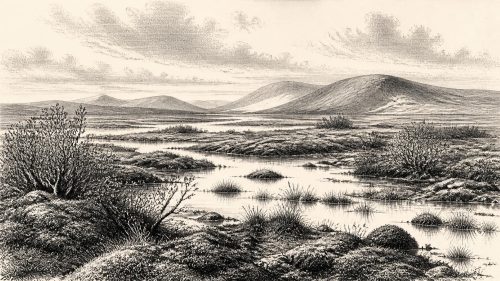
Derryvree’s Two-Till Silence
Archived: 19 September 2026
Around 31,169 BCE, Ireland lay within the unstable Late Pleistocene climate of Marine Isotope Stage 3. Derryvree, County Fermanagh, preserves freshwater sediments between two glacial tills, indicating a cold, wet, locally ice-free interval before renewed ice advance. Plant and insect remains suggest tundra wetlands rather than modern woodland. Other sites record changing climatic conditions, while southern caves preserve remains of reindeer, mammoth, hyaena and other animals. These finds demonstrate intermittent animal access across altered Irish Sea geography. Human presence remains unproven: a marked reindeer bone from Castlepook may indicate butchery, but cannot establish settlement. Ireland’s best-recorded history is environmental transformation.