

BIRM-166’s Treeless Interval
Archived: 19 September 2026
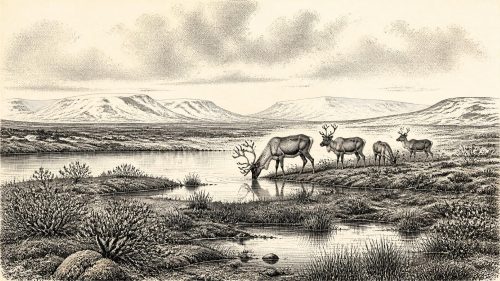
Around 31,175 BCE, Ireland lay within a changing Late Pleistocene landscape, not a recordable historical year. Derryvree in County Fermanagh preserves freshwater organic sediments between tills, dated broadly to an interval including this notional date. Its pollen, plants and insects indicate a treeless, cold wetland with tundra vegetation. Ireland was regionally varied as ice expanded towards its later maximum, while lower sea levels altered surrounding geography. Castlepook Cave yielded reindeer, mammoth, giant deer and predators, showing connections with wider European ecosystems. A possibly cut-marked reindeer bone suggests human presence, but cannot prove permanent settlement or occupation. Evidence therefore documents change.