

Crag Cave’s Winter Calcite
Archived: 17 September 2026
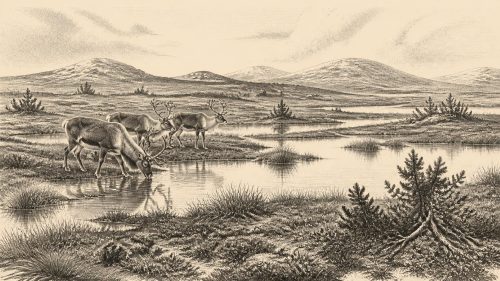
Around 31,385 BCE, Ireland lay within Marine Isotope Stage 3, an unstable phase of the last Ice Age rather than a precisely datable historical moment. Derryvree, County Fermanagh, preserves freshwater sediments between glacial tills, indicating cold, open, tundra-like wetland during an ice-free interval. Calcite growth in Kerry’s Crag Cave demonstrates episodic conditions permitting liquid water, while ice sheets remained dynamic elsewhere. Southern caves yielded mammoth, reindeer and hyaena remains, showing links to wider European fauna. A cut-marked Castlepook reindeer bone may indicate early human activity in Ireland, but disturbed context and absent settlements preclude claims of permanent occupation or society.