

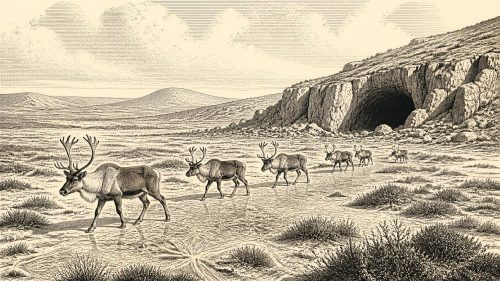
Mammoth Cave’s Single Mark
Archived: 14 September 2026
Around 31,757 BCE, Ireland lay within fluctuating Marine Isotope Stage 3 Ice Age conditions, with uncertain chronology and shifting ice, seas and land connections. Open, seasonal, largely treeless landscapes supported reindeer, mammoth, giant deer, bears, wolves, hyaenas and other cold-adapted fauna. Cave deposits and inter-till sediments provide fragmentary evidence, while older excavations and revised radiocarbon dating require caution. Castlepook, or Mammoth Cave, preserves Ireland's major late-Pleistocene mammal assemblage. A cut-marked reindeer femur may indicate brief Upper Palaeolithic carcass processing, but cannot demonstrate settlement, continuous population or wider social practices. No political, religious or cultural institutions are evidenced. Modern investigation continues.