

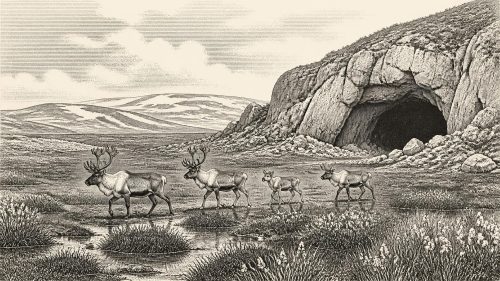
Mammoth Cave’s Uncertain Butchery
Archived: 14 September 2026
Approximately 31,785 BCE lies within Marine Isotope Stage 3, when Ireland experienced fluctuating cold conditions rather than uniform ice cover. Buried deposits at Derryvree and Greenagho in Fermanagh indicate freshwater tundra environments, while Crag Cave stalagmites record warmer, wetter phases. Castlepook Cave, County Cork, contains Ice-Age fauna and a reindeer femur dated around 33,000 years ago, bearing a possible stone-tool butchery mark. If confirmed, this may represent Ireland’s earliest human activity, but not permanent settlement. Poor excavation contexts, uncertain bone accumulation and absent associated artefacts require caution. Later glaciation transformed landscapes, leaving fragmentary evidence of mobile people, animals and habitats.