

Cork Caves, Fermanagh Silts
Archived: 9 September 2026
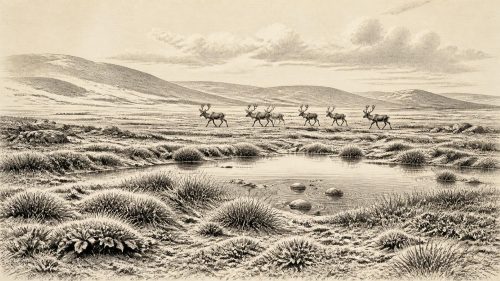
Around 31,867 BCE, Ireland formed part of a climatically unstable late Last Glacial Period landscape, rather than a recognisable historical year. Fermanagh deposits at Derryvree and Greenagho indicate local freshwater, tundra and periglacial conditions before major ice-sheet expansion. Open vegetation supported changing assemblages of cold-stage mammals, documented especially by mixed cave remains at Castlepook, County Cork. A cut-marked reindeer bone there may suggest brief human activity around 33,000 years ago, but cannot establish permanent settlement. Lower sea levels altered possible routes, without proving a land bridge. Later glaciation destroyed or obscured evidence, leaving environmental fragments rather than evidence of societies.