


Jervis Bridge
Archived: 14 October 2026
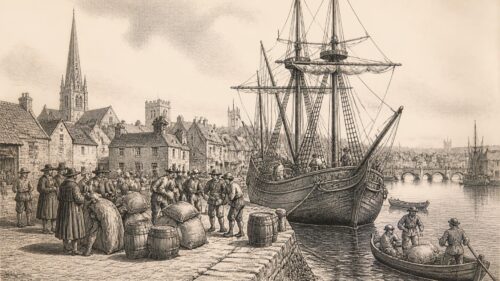
In 1676, under Lord Lieutenant Essex, Ireland’s administration addressed fragile revenue, quit rents, transplantees’ land claims in Connacht and Clare, and unlawful county charges, reflecting unresolved consequences of Cromwellian confiscation. Patronage shaped officeholding, while rewards for Patrick Fleming and Redmond O’Hanlon exposed limited control in Ulster. Dublin changed through Humphrey Jervis’s Essex Bridge, promoting north-side development and commerce. The ship Katherine carried Irish Protestant-organised relief to war-stricken New England, including allied Indigenous recipients. Meanwhile, Francis O’Molloy’s Irish-language Catholic catechism, printed in Rome, demonstrated continental religious networks. These events reveal Ireland as contested, rebuilt and connected across Atlantic and European worlds.