
Archived: 11 October 2026
Abstract
In 1831, Ireland experienced escalating conflict over tithes, compulsory payments supporting the established Church, despite most occupiers being Catholic. Organised resistance, including Patt Lalor’s boycott strategy, culminated at Carrickshock, County Kilkenny, where twelve constables and a process-server were killed. The census recorded approximately 7.8 million people amid poverty and land pressure. Edward Stanley established the basis for non-denominational national education. At Ralahine, County Clare, an Owenite co-operative sought security through shared labour and profits. Catholic and evangelical institutions developed, while James Hardiman’s Irish Minstrelsy promoted Irish-language poetry. The year combined coercion with reform, social experimentation, demographic observation and cultural assertion.
Read Article
Archived: 11 October 2026
Abstract
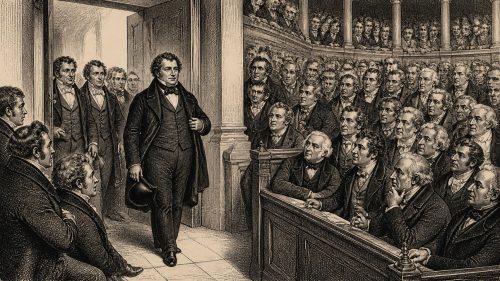
In 1830 Daniel O’Connell took his Westminster seat, embodying Catholic Emancipation after the 1829 Relief Act, while its limitations remained stark. The raised £10 franchise disfranchised many former forty-shilling freeholders, and Ireland remained governed under the Union. O’Connell’s Waterford election followed William IV’s accession and a general election, amid emerging British reform debates. Resistance to tithes supporting the Church of Ireland intensified, particularly late in the year, reflecting religious inequality and rural hardship. Distress, insecure agricultural work and market grievances sharpened tensions. Belfast’s July Orange riots exposed northern sectarian divisions. Contemporary diaries and records reveal political life extending beyond Parliament.
Read Article

Archived: 11 October 2026
Abstract
In 1829, Catholic Emancipation transformed Irish constitutional politics after Daniel O’Connell’s 1828 Clare election and the Catholic Association’s mass mobilisation forced Wellington’s government to act. The Roman Catholic Relief Act, assented to on 13 April, enabled Catholics taking a new oath to enter Parliament and many public offices, though it preserved the Protestant state settlement and excluded them from certain positions. Simultaneously, the Irish election law raised the county freehold qualification from forty shillings to £10, disfranchising many poor Catholic voters. O’Connell’s pre-Act election required a Clare by-election, which he won unopposed. Protestant opposition persisted; Gerald Griffin’s novel reflected society.
Read Article

Archived: 11 October 2026
Abstract
Daniel O’Connell’s decisive County Clare by-election victory at Ennis in 1828 exposed the contradiction of allowing Catholic freeholders to vote while barring Catholic MPs from taking Westminster oaths. Challenging ministerial supporter William Vesey Fitzgerald, O’Connell secured 2,057 votes to 982, aided by priests, organisers and disciplined popular mobilisation. Though unable to take his seat, he forced government and parliament to confront Catholic exclusion. The campaign demonstrated constitutional agitation’s power amid rural poverty, contested education, coercive criminal law, and uneven economic development. Belfast’s new Botanic Garden and expanding trade statistics reflected urban and administrative ambitions, while Clare transformed local politics nationally.
Read Article
Archived: 14 October 2026
Abstract
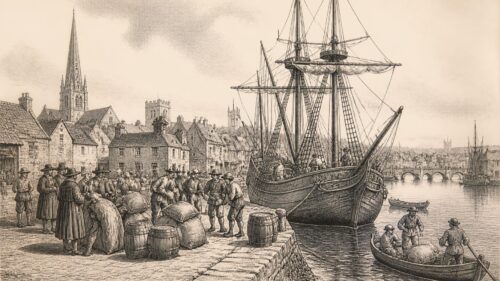
In 1676, under Lord Lieutenant Essex, Ireland’s administration addressed fragile revenue, quit rents, transplantees’ land claims in Connacht and Clare, and unlawful county charges, reflecting unresolved consequences of Cromwellian confiscation. Patronage shaped officeholding, while rewards for Patrick Fleming and Redmond O’Hanlon exposed limited control in Ulster. Dublin changed through Humphrey Jervis’s Essex Bridge, promoting north-side development and commerce. The ship Katherine carried Irish Protestant-organised relief to war-stricken New England, including allied Indigenous recipients. Meanwhile, Francis O’Molloy’s Irish-language Catholic catechism, printed in Rome, demonstrated continental religious networks. These events reveal Ireland as contested, rebuilt and connected across Atlantic and European worlds.
Read Article
Archived: 14 October 2026
Abstract
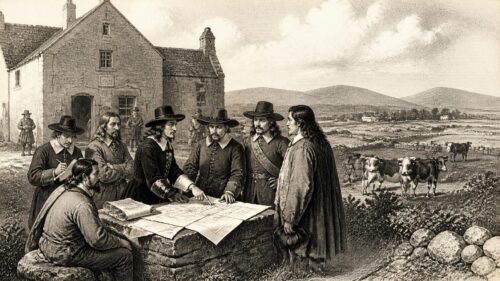
In 1675, Ireland remained shaped by unresolved consequences of Cromwellian conquest and Restoration land legislation. On 22 September, Charles II appointed commissioners to decide individual Connacht transplanters’ claims, addressing disputed assignments without reversing Protestant property gains. Lord Lieutenant Essex left for England amid conflict over revenue farming, military finance and Dublin’s dependence on Whitehall; Boyle and Forbes governed as lords justices. Catholic clergy faced continuing, uneven pressure under banishment policy, while parallel Protestant and Catholic hierarchies endured. English restrictions on Irish cattle trade encouraged commercial redirection towards continental and Atlantic markets. Together, these issues exposed an incomplete post-conquest settlement still.
Read Article
Archived: 14 October 2026
Abstract
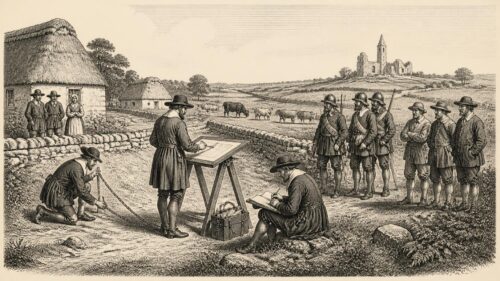
In 1656, Cromwellian Ireland was being reorganised through Sir William Petty’s Down Survey, which recorded land, boundaries and value to distribute forfeited estates among soldiers and adventurers. Field books enabled officials to assess claims while reserving specified public and ecclesiastical lands. This administrative project underpinned confiscation and the uneven, coercive transplantation of Catholic landholders to Connacht and Clare, affecting rural society beyond formal removals. Henry Cromwell sought firmer Protestant civil government amid army and religious divisions, while war with Spain heightened security concerns. Catholic communities endured repression; Quakers faced persecution. Ussher’s death, Ware’s Patrick edition, and Molyneux’s birth reflected continuity.
Read Article
Archived: 14 October 2026
Abstract
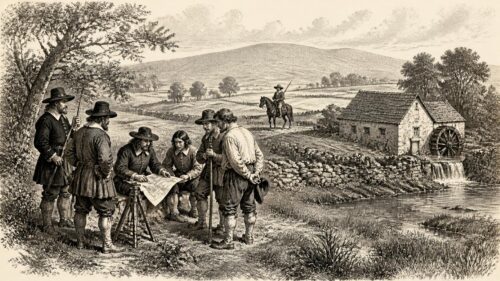
In 1654, the Commonwealth sought to consolidate Cromwellian conquest through transplantation, surveys and institutions. Catholics deemed liable to removal faced a 1 May deadline to move to Connacht or Clare, though enforcement proved uneven amid exemptions, shortages and local dependence on tenants. Courts of survey launched the Civil Survey, recording pre-war ownership, resources and boundaries to facilitate confiscation and redistribution. Charles Fleetwood, appointed Lord Deputy, pursued a hard settlement despite divisions among Protestants and intervention over exemptions. Ireland gained Westminster representation without an Irish parliament. In December, William Petty’s contract initiated preparations for the Down Survey, making dispossession administratively durable.
Read Article

Archived: 14 October 2026
Abstract
In 1653, the Commonwealth completed Ireland’s military conquest as Sir Phelim O’Neill was executed and Philip O’Reilly surrendered Cloughoughter Castle, the last formal Irish Catholic field-force stronghold. Catholic clergy faced expulsion, while Hugh O’Reilly’s death symbolised ecclesiastical disruption. Commonwealth plans shifted towards settlement: Connacht and Clare were designated for transplantation, and forfeited estates were prepared for soldiers and Merchant Adventurers through surveys and land allocation. These measures threatened Catholic proprietors and reshaped local society amid famine, disease, depopulation and insecurity. Cromwell’s Protectorate consolidated London-directed rule, inaugurating a Protestant military state whose post-war settlement rested on confiscation, displacement and administrative control.
Read Article
Archived: 17 October 2026
Abstract
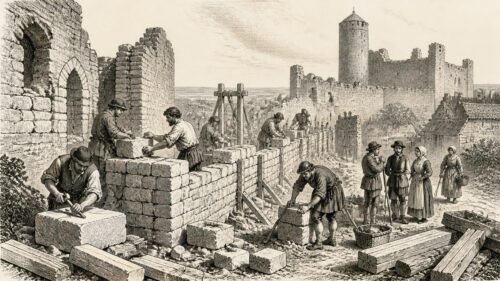
In 1576 Sir Henry Sidney extended Tudor authority through provincial journeys, submissions, hostages, county organisation and garrisons, but encountered persistent resistance. At Athenry, devastated during Burke conflict, he ordered a smaller defensible enclosure, yet reconciliation collapsed when Clanricarde’s sons defied restrictions, leaving rebuilding incomplete. Connacht’s new counties and Nicholas Malby’s command joined administration to coercive warfare. William Drury’s Munster presidency introduced courts, martial law and proposed composition, threatening lordly power. Rory Óg O’More’s resistance exposed instability in the midlands. Succession disputes, learned men’s deaths, fires and Essex’s death further marked a year in which expanding government failed to secure consent.
Read Article
Archived: 8 September 2026
Abstract
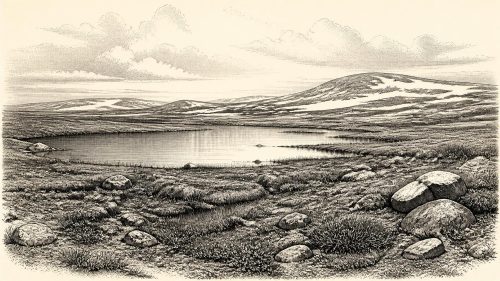
Around 31,977 BCE, or c. 34,000 cal BP, Ireland was a climatically unstable Late Pleistocene landscape approaching expansion of the last Irish Ice Sheet. Organic lake and freshwater deposits beneath till at Derryvree and Greenagho, County Fermanagh, show that parts of north-central Ireland were ice-free, supporting open tundra and periglacial environments. Offshore evidence indicates later ice advances, chiefly after this period. No archaeological evidence demonstrates human occupation: Palaeolithic and Mesolithic finds cannot be projected backwards. Glacial erosion, redeposition and subsequent sea-level rise hinder preservation. Thus this date records environmental transformation, with advancing ice, water and sediments shaping the future landscape.
Read Article




