

MacArthur, Gregory and Stormont
Archived: 26 September 2026
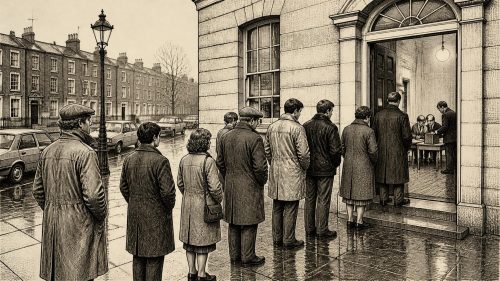
In 1982, Ireland endured two general elections, the collapse of governments and changes between Charles Haughey and Garret FitzGerald amid recession, unemployment, borrowing and tax protests. Haughey’s precarious minority relied on Tony Gregory’s inner-city development agreement before losing confidence; the MacArthur affair and telephone-tapping allegations further damaged public trust. Northern Ireland elected a Stormont Assembly, but nationalist boycotts limited its legitimacy as violence continued, including fatal bombings in London and Ballykelly. Social change included abolition of school corporal punishment and Dublin’s first crematorium. Constitutional debate on abortion intensified, while cultural, neutrality and Falklands issues underscored unresolved political divisions across Ireland.