
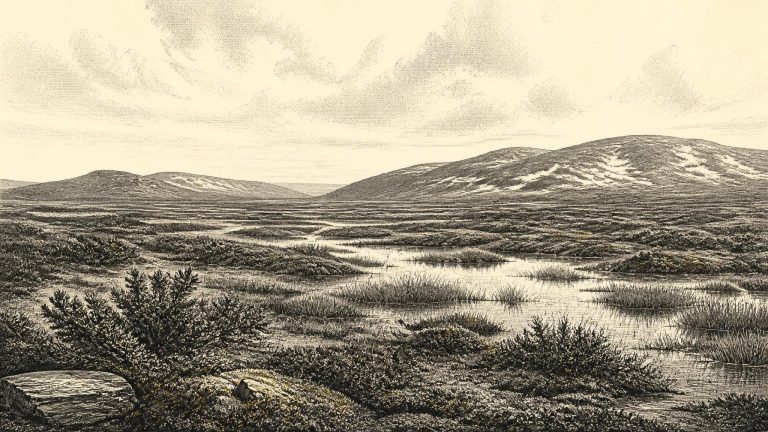
Fermanagh’s Juniper Muskeg
The most illuminating Irish evidence comes not from monuments or villages, but from sediments trapped beneath later glacial deposits. At Derryvree, organic silts lay between two tills: deposits of debris left by moving ice. Before later ice covered the site, its waterlogged sediments preserved pollen, mosses and other biological traces. Their value lies in this sequence. They show that part of Fermanagh was ice-free long enough for freshwater and wet-ground environments to develop, before a subsequent phase of ice-sheet advance buried the evidence.