

Related Archive: Periglacial Climate

Derryvree’s Periglacial Fen

Derryvree’s Periglacial Fen

Archived: 7 October 2026

Abstract

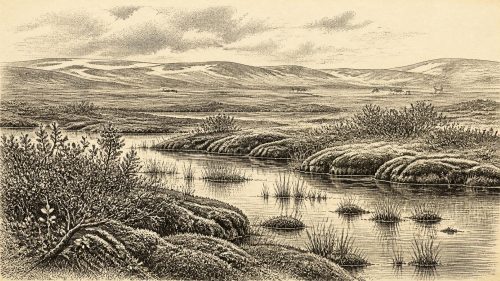
Although 30,143 BCE is a modern, imprecise conversion, Derryvree, County Fermanagh, provides Ireland’s strongest evidence for conditions within this later Pleistocene interval. Freshwater sediments, dated broadly to 36,900–31,700 calibrated BP, lay between glacial tills, recording open water, marsh, tundra vegetation and severe periglacial climate before renewed ice advance. Castlepook Cave, County Cork, preserves a mixed fauna including mammoth, reindeer, giant deer, predators and smaller cold-adapted animals, demonstrating ecological links beyond Ireland. No secure human settlement is known. A possibly cut-marked reindeer bone suggests brief human presence, but remains uncertain. Together, sites reveal regionally varied, unstable environments, not fixed political history.

Read Article

Maguirebridge’s Periglacial Seedbank

Maguirebridge’s Periglacial Seedbank

Archived: 1 October 2026

Abstract

Modern calendar label 30,397 BCE denotes a broad Late Pleistocene interval, not a recordable Irish year. At Derryvree near Maguiresbridge, freshwater organic sediments between glacial tills preserve evidence of an ice-free cold wetland phase. Plants and insects indicate treeless, tundra-like terrain with sedges, mosses, dwarf willow, aquatic vegetation and shallow pools. Other sites show climatic shifts, while Castlepook Cave fauna demonstrate ecological links with north-west Europe. Possible stone-tool damage on a reindeer bone raises but does not prove early human presence. No settlement, farming, art or institutions are demonstrated. Growing ice later transformed landscapes, burying rare evidence beneath till deposits.

Read Article