Archived: 1 November 2026
Abstract
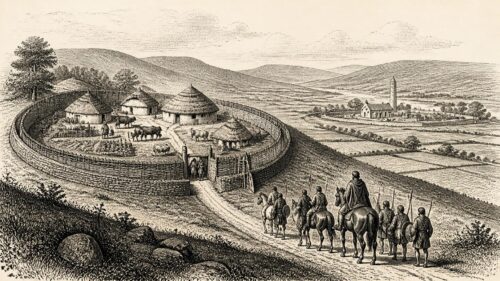
In 712, Irish annals record regional conflicts, dynastic deaths and ecclesiastical losses rather than a unified national crisis. Maíne, a descendant of Áed Sláine, was killed by Flann in Brega, while violence also affected the Ulaid, Cenél Laegaire and southern Leinster. Cú Cerca of Osraige died, and Cormac son of Máenach, king of Munster, fell to the Northern Déisi at Carn Feradaig. Ceode of Iona and Dub Guaile of Glendalough died. An annal noted Bede’s scholarly work. Rural society, farming, maritime connections and monastic networks continued, although sources provide little detail on causes, places or outcomes in the surviving record.
Read Article
Archived: 2 November 2026
Abstract
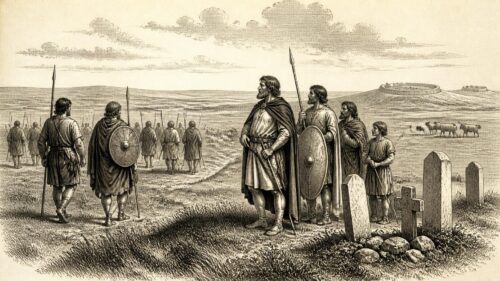
In 688 CE, a battle remembered as Imlech Pich exposed the fragility of power in Brega, the politically important plain north of the River Liffey. The early Irish annals agree on the core result: Niall son of Cernach Sotal defeated Congalach son of Conaing; Dub dá Inber, king of Ard Cianachta, and Uarchride, king of Conaille Muirthemne, were killed; Congalach escaped. They also record the death of Ségéne, bishop of Armagh, and state that the high-king Fínnechta Fledach entered clerical life. These are unusually consequential notices for one year, but they require careful handling. No annal supplies a day, a
Read Article
Archived: 2 November 2026
Abstract
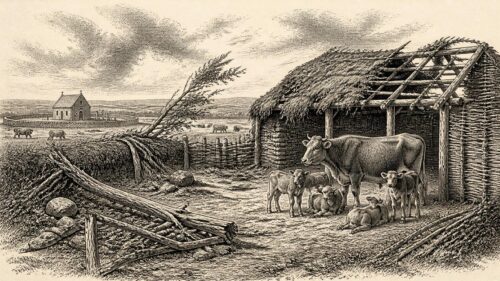
In 657 CE, Ireland’s surviving annalistic record preserves a year of transition, deaths and unsettling signs rather than a single decisive campaign. A later annalistic tradition places the opening of the joint rule of Diarmait and Blathmac, sons of Áed Sláine, in this year. The Annals of Ulster, whose internal year-numbering is offset at this point, explicitly labels its entry U658 as AD 657: it records several deaths, the death of Guret, king of Alt Clut on the Clyde, a violent windstorm, and an extraordinary cow at Láthair Briúin said to have borne four calves. The notices are brief, but
Read Article
