

Blackwater Bank and Belfast Revival
Archived: 10 October 2026
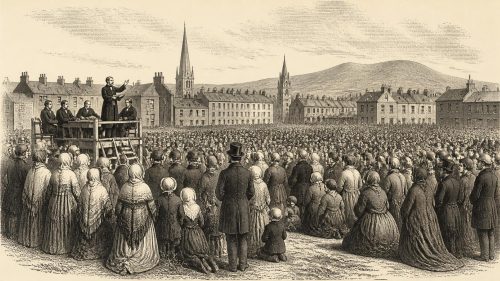
In 1859, post-Famine Ireland displayed religious revival, political restriction, migration and uneven modernisation. The Ulster Evangelical revival, rooted in earlier prayer meetings, reached peak visibility through mass gatherings, conversions and controversy, strengthening Protestant culture while provoking clerical criticism. Westminster elections operated under a narrow property franchise, leaving most people excluded. Dublin saw the launch of The Irish Times and the National Gallery’s foundation stone. The Pomona’s wreck off Wexford killed 424, highlighting emigrants’ perils. Railways reached Enniskillen and linked Tralee with Killarney, yet rural hardship deepened. Meanwhile, Fenian reorganisation abroad connected secret republicanism with Ireland’s diaspora and future political conflict.