
Archived: 28 September 2026
Abstract
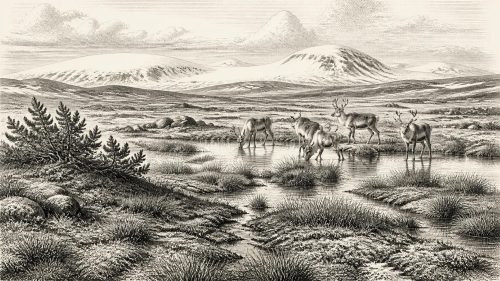
Around 30,521 BCE, Ireland was a changing later Pleistocene landscape, not a place with a recordable annual history. At Derryvree, County Fermanagh, organic freshwater sediments between glacial tills demonstrate a cold, open, tundra-like environment during an interval between ice advances. Castlepook Cave, County Cork, contains a complex, long-lived assemblage of Ice Age fauna, including mammoth, giant deer, reindeer, hyaena, bears and later cold-adapted species. A marked reindeer femur may preserve evidence of human butchery around 31,000 BCE, but lacks secure archaeological context. The evidence supports possible episodic human presence, not established settlement, while emphasising climatic instability, shifting ice and uncertainty.
Read Article
Archived: 26 September 2026
Abstract
Around 30,656 BCE, Ireland was a climatically unstable Late Pleistocene landscape rather than a recorded society. Derryvree, County Fermanagh, preserves freshwater sediments between glacial tills, indicating locally ice-free, treeless tundra wetlands with grasses, sedges, mosses, juniper and cold-water plants during a broad MIS 3 interval. Castlepook Cave, County Cork, yielded disturbed remains of mammoth, reindeer, giant deer, wolves, foxes, bear and spotted hyaena, demonstrating episodic animal occupation. A marked reindeer femur may indicate stone-tool butchery, but lacks supporting occupation evidence. No political, religious, economic or settled human life can be securely reconstructed; evidence instead reveals fragmented environments, fauna and uncertainty.
Read Article
Archived: 19 September 2026
Abstract
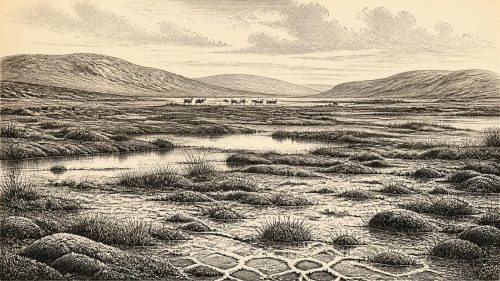
Circa 31,182 BCE, Ireland lay within the unstable Late Pleistocene climate of Marine Isotope Stage 3, rather than a recoverable calendar year. At Derryvree, Fermanagh, organic freshwater sediments between glacial tills indicate an ice-free, treeless, marshy periglacial landscape during an interval broadly encompassing this date. Crag Cave demonstrates recurring climatic shifts, while Aghnadarragh records alternating glacial and non-glacial conditions, including mammoth-associated deposits. Fossils show connections with north-west European cold-adapted fauna. A marked Castlepook reindeer bone may suggest Upper Palaeolithic butchery, but remains unconfirmed. No evidence establishes settlements, polities or sustained human occupation; the record documents intermittent environments and fragile life.
Read Article

