Clerical Figures
At a Glance
Office Names
In the Loch Cé annals, clerical identity appears in office titles. One entry for 1116 names Cellach as comarb of Patrick and says that he went on a visitation of Connacht and obtained his full tribute. The wording places a senior church figure inside a chronological record of secular and ecclesiastical affairs. The same sequence also sets his action beside burned churches and other disturbances in the year, without explaining any connection between them.
The same annalistic section also records ecclesiastical damage around Cellach’s visitation. It notes the burning of Cill-Dalua, Corcach-mor of Mumhan, Imlech-Ibhair, the oratory of Maelisa Ua Brolchain, part of Lis-mór, Achadh-bo-Chainnigh, Cluain-Iraird, and the Abbot’s great house of Ard-Macha with twenty houses about it. These notices are brief and local, but they show that churches, oratories, and an abbot’s residence can be listed in the same annual framework.
Named Clerics
The Annals of Inisfallen preserve a different kind of clerical reference in the manuscript description. The source note says the text began with a single hand and offers two possibilities for that hand: Diarmait Ó Flainn Chua, bishop and lector of Emly and abbot, or Mael Ísu Ó hArrachtáin, abbot of Emly. This is not an annal entry, but a catalogued manuscript description; it directly identifies clerical offices attached to the earliest part of the codex.
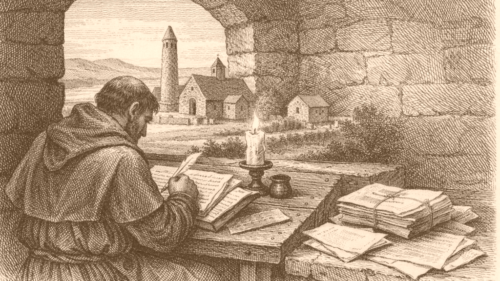
The same description adds that the manuscript was later continued by many scribes and moved among monastic houses. It says the annals may have been continued at Tomgraney, transcribed at Killaloe after the mid-eleventh century, and continued at Lismore from about 1119, before passing to a West-Munster monastery, most likely Inisfallen. These are manuscript-history claims rather than narrative events, but they show a chain of ecclesiastical locations attached to the text.
Monastic Places
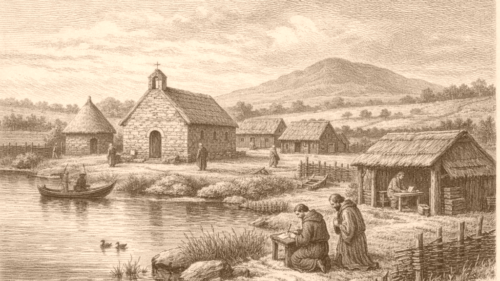
The manuscript history of the Fragmentary Annals also links clerical learning to monastic settings. Its surviving Brussels copy is said to derive from a transcription made in 1643 by Dubhaltach Mac Fir Bhisigh for John Lynch, from a now-lost vellum manuscript of Giolla na Naemh Mac Áedhagáin Senior. The note says that this older book may have been linked to the Book of Cluain Eidnech, and that the latter seems to have contained texts dealing with secular and ecclesiastical history.
The same note is cautious about what can be shown. It says the book is not named in the Fragmentary Annals text itself, that some seventeenth-century sources hint at the Book of Cluain Eidnech, and that the compiler probably had only copies of a few selections. Those statements concern transmission and survival, not the content of every source, but they directly locate ecclesiastical materials within a manuscript tradition tied to copying and preservation.
Church Violence
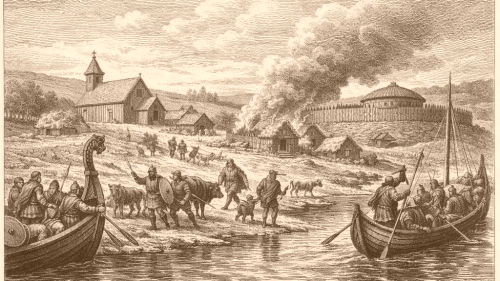
The Loch Cé entries frequently place church buildings inside records of conflict. In 1115 the stone-church of Ard Brecain, full of people, is said to have been burned by the men of Mumha, and many churches besides in Feara-Bregh were burned. In the following year, the Abbot’s great house of Ard-Macha, with twenty houses around it, was burned. The notices are terse, but they repeatedly distinguish sacred structures from other property.
The same annals also register clerical action amid warfare. In 1116 Cellach performs a visitation of Connacht and receives tribute, while in 1115 the text reports widespread scarcity, a victory by Domhnall Ua Briain and the Foreigners of Ath-cliath, and the burning of church buildings. The juxtaposition does not explain causation, but it shows church office and church destruction appearing within adjacent annual entries.
Source Lists
The broader CELT listings show that the annals under discussion belong to a wider group of Irish historical texts. The Irish Texts list includes the Annals of the Kingdom of Ireland by the Four Masters, the Annals of Inisfallen, the Annals of Loch Cé, and other annalistic texts, while the Latin Texts list includes annal-related Latin works such as Grace’s Annals and the Annals of Ireland by Friar John Clyn. These lists identify categories and titles, not narrative content.
The Four Masters page is also explicit about manuscript and editorial context. It lists multiple seventeenth-century manuscript witnesses, including copies associated with Mícheál Ó Cléirigh, Cú Choigcríche Ó Cléirigh, Conaire Ó Cléirigh, and other hands, and it names later editions by Charles O’Conor and John O’Donovan. These notes do not tell a story about clergy in the annals themselves, but they establish the textual setting in which the work survives.
Editorial Frames
The digital editions themselves make the limits of observation visible. The Annals of Loch Cé notes say the electronic text represents the edited text, that footnotes have been omitted, and that no quotations are present. The Annals of Inisfallen and the Annals of the Four Masters are likewise presented as edited digital texts with manuscript sources and bibliographic notes. Those framing details matter because the clergy references here come from editorially mediated witnesses, not from a single homogeneous archive.
Taken together, these passages show two main patterns. First, clerical office is named directly, as with comarb, bishop, lector, and abbot. Second, churches, oratories, and abbots’ houses appear as places whose burning is recorded alongside warfare and tribute. What is not shown in these excerpts is equally clear: there is no extended clerical biography, no sustained explanation of motives, and no single narrative about clergy as a group.