
Private Trust
At a Glance
Private Asylums
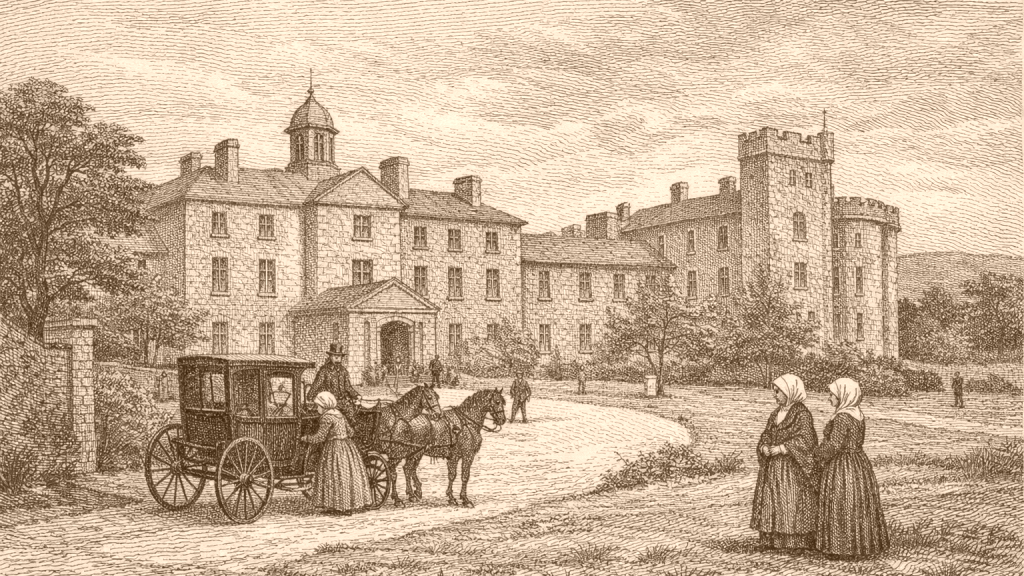
The clearest statement in these materials is that private asylums formed part of a wider Irish mental health system in the nineteenth century. One account places their expansion in the period 1820 to 1860 and says the network served a distinct socioeconomic cohort. It also notes that the 1842 Private Asylums Act was the first law directed specifically at the system, giving licensing and regulation a formal place in the record. [2]
The same source says historians had largely focused on the pauper insane, while this study shifted attention to private patients. It further states that private institutions catered primarily for the upper classes and that the article would examine financial considerations, discharge and recovery rates, and conditions of care. Those are not broad generalizations from the documents here; they are the explicit contours of the discussion preserved in the passage. [2]
Public Oversight
Public oversight appears in the language used by the Prison Inspectors. In 1823 they described private asylums as places for the confinement of the higher orders, and in the following year they refined that description to institutions for those who paid an annual sum and were conducted on humane and judicious principles. The wording shows both class distinction and a claim to acceptable standards, though it does not itself prove how every institution worked. [2]
The same passage says the inspectors distinguished a higher order of patient, implying exclusivity in the private sector. The evidence here is limited to that phrasing, but it is enough to show that official observers treated private confinement as a recognizable category rather than an informal practice. The source does not describe a full inspection regime, only this particular classification and its immediate wording. [2]
System Distinction
A second line of evidence concerns difference rather than overlap. One passage says Ireland's private asylum system diverged from its British counterpart both in the socioeconomic cohort it served and in the role it played within the mental health care system. Another says the study aimed to demonstrate the distinctive relationship between private and district asylums. The document therefore frames the two systems as related but not identical. [2]
That distinction is reinforced by a later summary from a historical guide, which traces the district asylum network from the Lunacy Act of 1821 through openings at Armagh, Limerick, Belfast, Londonderry, Carlow, Ballinasloe, Maryborough, Clonmel, and Waterford. The same guide notes that the Richmond and Cork asylums were incorporated into the system in 1830 and 1845. Here the public side appears as a mapped network, not as an abstract idea. [3]
Records Survive
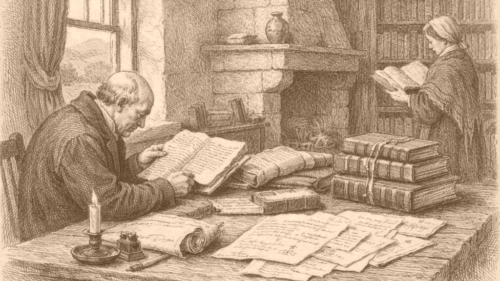
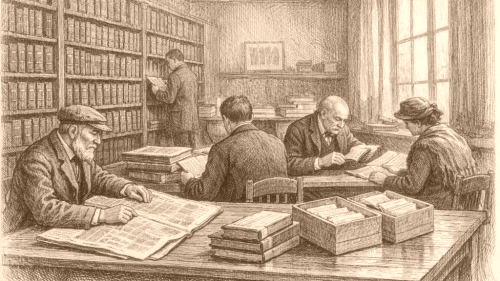
Trust also appears in the condition of the records themselves. One guide says asylum records in Ireland have a remarkably good rate of survival, although many remain on site and have not been conserved or listed. It also names holdings in the National Archives, county archives, and the Public Records Office of Northern Ireland. The passage is descriptive rather than celebratory, showing survival without implying uniform preservation. [3]
The same guide says records may include admission and discharge registers, patient registers, and committal reference forms naming relatives and other details. It also says some case books include photographs. These are tangible forms of institutional memory, but the guide does not claim they are open in every case; instead it notes that they remain inaccessible except for scholarly research or authorised access. That limitation is central to public trust. [3]
Archive Access
The accessible history of asylum care depends on where and how the material is held. A primary sources guide explains that original sources such as manuscripts are kept in special collections, while other material may be in books, microform, or electronic form. This does not refer specifically to asylum papers, but it does show the wider framework in which archival trust is managed for researchers. [1]
The same guide lists a range of digital primary sources and official publications, indicating that access increasingly depends on institutionally mediated platforms. Read alongside the asylum guide, this helps explain why surviving records can be both plentiful and controlled. The evidence here does not establish a single policy across all repositories, only that access is filtered through archive systems, catalogues, and permissions. [1] [3]
Measured Trust
Taken together, these passages suggest that private asylum care in Ireland was neither hidden from the state nor fully absorbed by it. Private institutions were licensed and described by inspectors; district asylums were organized through legislation and expanding public provision; and the records of both systems survive unevenly but substantially. The documents support a picture of monitored confinement rather than a simple opposition between secrecy and openness. [2] [3]
The most careful conclusion is also the narrowest. These excerpts show classed confinement, official classification, a distinct statutory step in 1842, and archival survival with restricted access. They do not by themselves reveal the lived experience of every patient or the practice of every house. What they do reveal is how private asylum care was framed through regulation, how public trust was asserted, and how later readers must approach the surviving papers. [2] [3]
Source References
Hover over a number to see the source. Select it to open the source.

How did private asylum provision and recordkeeping shape the balance between private care and public oversight in nineteenth-century Ireland?