Tenancy Dispute
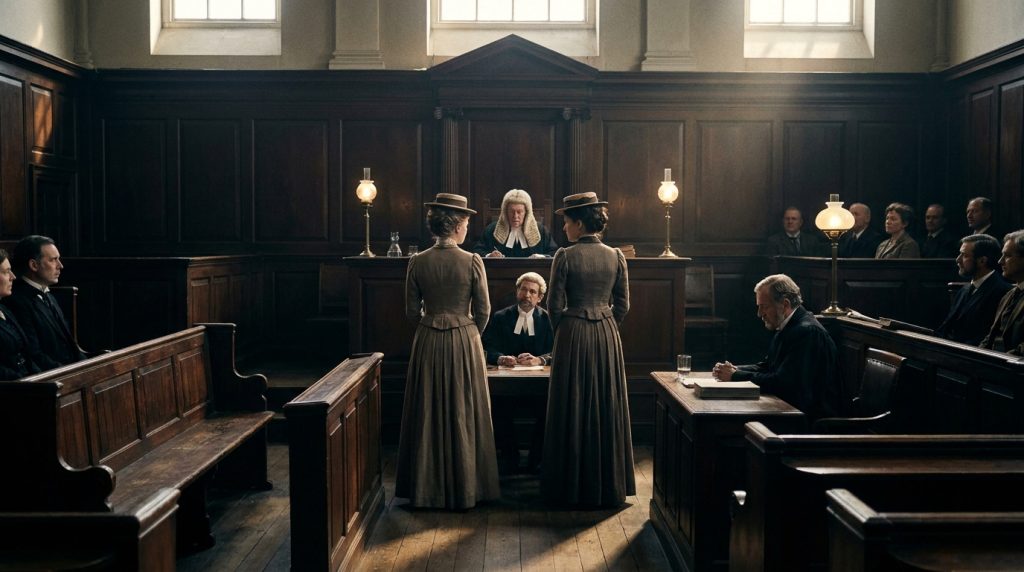
A tenancy dispute involving a Limerick woman came before Cheltenham County Court in March 1900, revealing the uncertainty that could accompany rented accommodation far from home. The proceedings concerned Mrs J. Lestbah and Mrs J. M. Harnett, whose disagreement arose from the letting of two rooms at 2 Queen’s Parade. The tenancy had begun in September 1899, several months before the hearing. For Limerick people living in Britain, such cases formed part of the less visible experience of migration, in which securing rooms, meeting rent and establishing responsibility could become matters for formal legal judgement.
Mrs Lestbah brought the action against Mrs Harnett following a disagreement over rent and the conditions under which the rooms had been occupied. The surviving account indicates that the women differed over the tenancy, the period of occupation and the financial responsibility arising from it. What may initially have appeared to be a straightforward arrangement between landlady and tenant therefore became a contested civil claim. The address at Queen’s Parade was central to the proceedings, as the court considered what had been agreed when Mrs Harnett entered the accommodation and what obligations remained after the relationship between the parties deteriorated.
The hearing was concerned not with serious crime but with the practical details of domestic life: rooms, payment, possession and responsibility. Such disputes could be difficult to resolve when agreements depended upon conversation, personal understanding or incomplete records. Each woman had reason to present the arrangement differently, and the county court was required to consider their competing accounts. The case demonstrates how even a modest tenancy could produce considerable uncertainty when the parties disagreed about what had been promised, when occupation had ended or whether rent remained due. Legal proceedings offered a remedy, but also imposed expense, anxiety and public exposure.
For Irish people living in English towns, rented rooms often provided the first foundation of life away from home. Their security could depend upon regular earnings, personal references and the willingness of property owners to accept them. The Cheltenham dispute should not be treated as evidence of a wider hostility towards Irish tenants, since the surviving report concerns a particular disagreement between two women. It nevertheless records the vulnerability of those whose homes rested upon private arrangements that could quickly become contested. A disagreement over two rooms was capable of threatening both financial security and personal reputation.
Though modest beside the major political and military events reported in March 1900, the case preserves an instructive fragment of ordinary social history. Mrs Lestbah and Mrs Harnett entered the public record because a private arrangement concerning accommodation could no longer be settled privately. Their dispute reveals the importance of rent, clear terms and secure possession in the lives of women managing households at the beginning of the twentieth century. For Limerick Archives, the hearing also records how local lives extended beyond Ireland, carrying questions of work, housing and legal protection into the courts of English towns.
- Cheltenham Chronicle, Saturday, 17 March 1900, report of the Cheltenham County Court proceedings involving Mrs J. Lestbah and Mrs J. M. Harnett.
- Cheltenham Annuaire and County Directory for 1899, Cheltenham street guide and public-office directory; Edward Davies, Office of The Cheltenham Looker-On, Cheltenham, 1899.
- County Courts Act 1888, 51 & 52 Victoria, chapter 43.