Education Funding
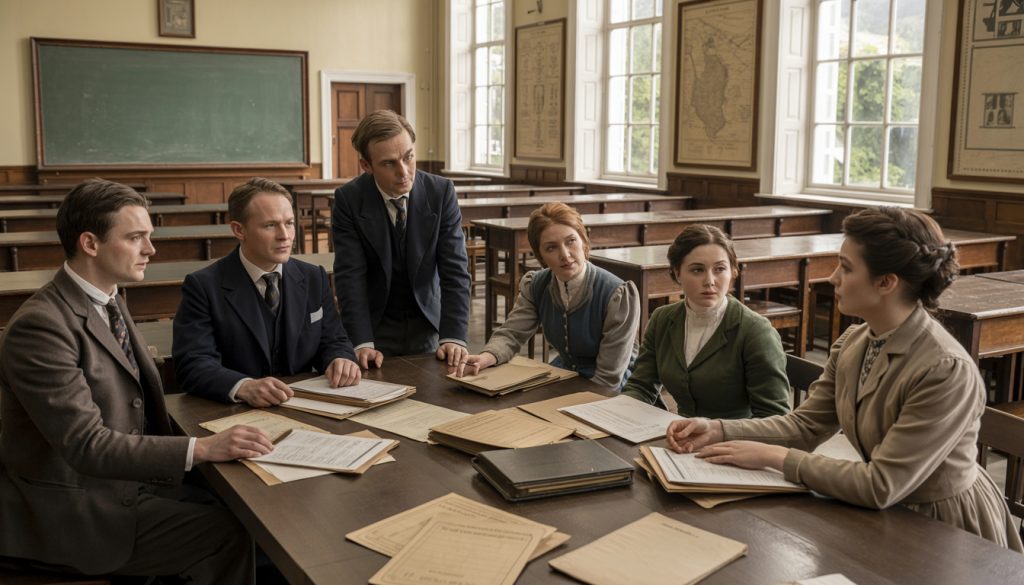
On 1 February 1900, the administration and financing of intermediate education in Ireland were formally questioned in the British Parliament, a subject that drew immediate attention in Limerick’s educational circles. The city, home to several prominent intermediate schools and a tradition of academic achievement, relied heavily on the continuity and adequacy of state support for its institutions. Reports of the parliamentary debate were discussed by Limerick school managers, teachers, and parents, who were acutely aware that national policy decisions would shape local opportunities for students seeking advancement beyond primary level.
The parliamentary debate centred on concerns regarding how funds were allocated to intermediate schools and whether the system of grants and examinations favoured certain regions or types of institutions. Members questioned whether the administration of the Intermediate Education Board was sufficiently transparent and whether resources reached schools equitably. The Chief Secretary for Ireland responded by detailing government spending and defending the criteria for distributing grants, but acknowledged that the system was under review. Limerick’s educators studied these exchanges closely, considering their implications for local funding.
In Limerick, principals and school committees debated the adequacy of existing grants, especially as enrolments grew and the curriculum expanded to include new subjects. Many feared that inconsistent or insufficient funding would undermine the city’s progress in promoting secondary education. Letters to the local press and meetings of educational societies highlighted ongoing challenges, such as the need for laboratory equipment, improved school buildings, and competitive teacher salaries. The attention given to the issue in Parliament reinforced calls in Limerick for greater investment and accountability.
The financing of intermediate education was not merely a matter of school budgets; it influenced social mobility and the future prospects of Limerick’s youth. Scholarships and examination prizes were highly sought after, and disparities in funding could affect students’ chances of progression to higher education or professional careers. As families and civic leaders followed developments in Parliament, there was strong advocacy for reforms that would ensure fair treatment for Limerick’s schools and students within the national framework.
The questioning of Ireland’s intermediate education system in Parliament signalled a growing awareness of the need for modern, accessible schooling across the country. In Limerick, the episode catalysed renewed engagement from local stakeholders, who pressed for reforms that would secure the city’s place as a centre of learning. The events of February 1900 contributed to ongoing debates about educational policy and the pursuit of equitable opportunities for all Irish children.
- UK Parliament, Hansard, HC Deb 1 February 1900, vol 78, cc1126-7, “Intermediate Education in Ireland.”
- Freeman’s Journal (Dublin), 2 February 1900, report on parliamentary debate regarding Irish intermediate education.
- Irish Times, 2 February 1900, coverage of intermediate school funding and administration.
- Limerick Leader, February 1900, local commentary and school correspondence on intermediate education funding.