Saint Fridolin
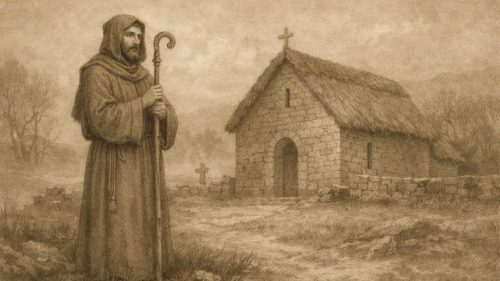
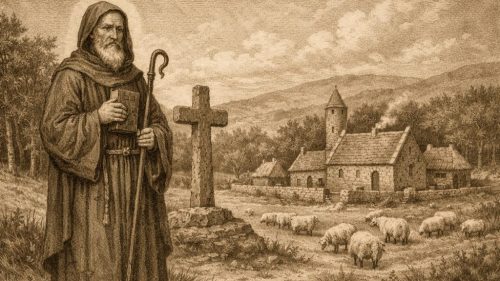
Saint Fridolin is remembered as an early medieval missionary and monastic founder associated above all with Säckingen on the Upper Rhine. Yet almost everything told about him comes from later hagiography rather than from contemporary evidence. The historical Fridolin, if he can be recovered at all, is therefore best approached as a figure at the boundary between memory, devotion, and regional identity. Later tradition presents Fridolin as an Irishman, sometimes styled an Irish missionary who travelled among the Alamanni in the age of the Merovingians. The exact details of his birth are uncertain.
Dateline
Saint Fridolin is remembered as an early medieval missionary and monastic founder associated above all with Säckingen on the Upper Rhine. Yet almost everything told about him comes from later hagiography rather than from contemporary evidence. The historical Fridolin, if he can be recovered at all, is therefore best approached as a figure at the boundary between memory, devotion, and regional identity.
Origins Tradition
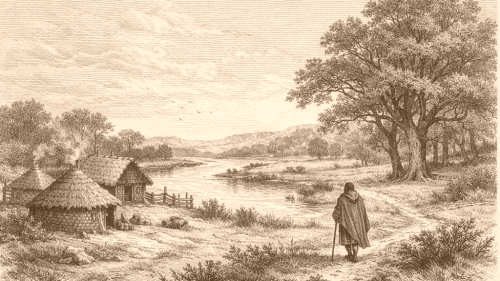
Later tradition presents Fridolin as an Irishman, sometimes styled an Irish missionary who travelled among the Alamanni in the age of the Merovingians. The exact details of his birth are uncertain. Some modern ecclesiastical summaries place his birth in Ireland in the later fifth century, but that is not a secure contemporary date. What can be said with confidence is that his cult and identity were deeply shaped by the idea of an Irish pilgrim-saint who moved from his homeland into the Frankish and Alemannic world.
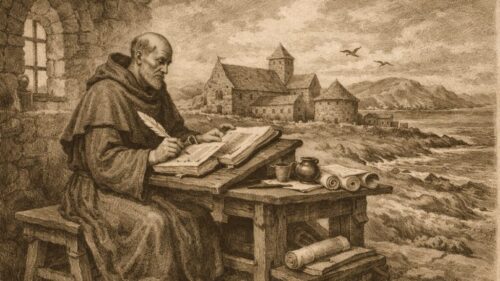
The earliest narrative source is the Vita written by Balther, a monk of Säckingen, around the tenth century. This is already several centuries after the period in which Fridolin is supposed to have lived. Because of that distance, the biography has to be read as a saint’s life, not as a modern chronological record. It preserves tradition about Fridolin’s travels, preaching, and foundation of churches, but it does not allow precise reconstruction of a historical career.
Missionary Journey
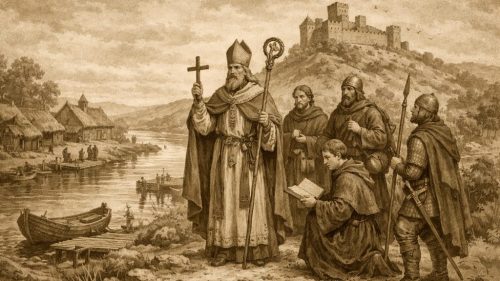
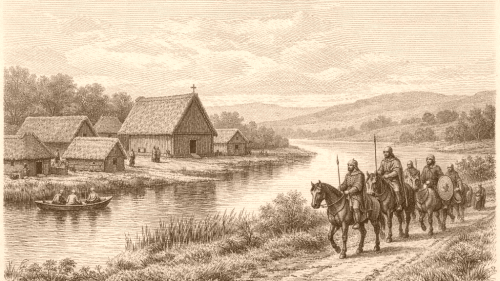
According to the legend, Fridolin first laboured as a missionary before leaving Ireland. He then travelled to Poitiers, where he sought out the relics of St Hilary and caused a church to be built for them. A dream or vision of St Hilary later directed him eastwards towards an island in the Rhine. In the story, Fridolin next appeared at the court of the Frankish king Clovis, who confirmed a gift of land for him. This narrative places Fridolin in a Merovingian landscape and links him with royal authority, but it belongs to the saintly tradition rather than to independently verified history.
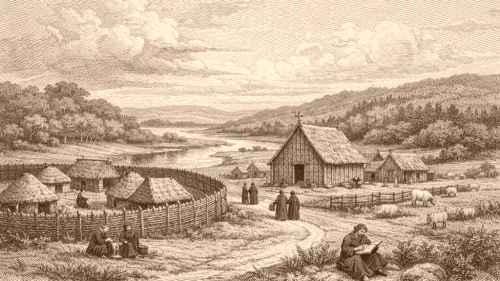
From there, the legend says, he journeyed through places such as Strasbourg and Chur, founding churches dedicated to Hilary. These episodes express the broader pattern of early medieval missionary memory: the wandering holy man, the dream, the church foundation, and the royal charter. Whether Fridolin really travelled in this way cannot be established from surviving evidence.
Sackingen Foundation
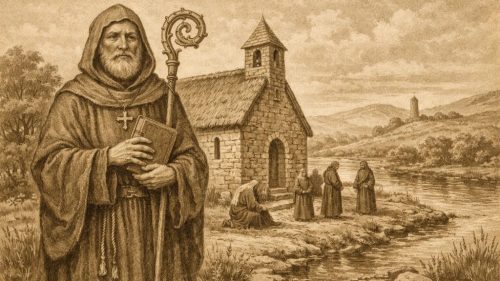
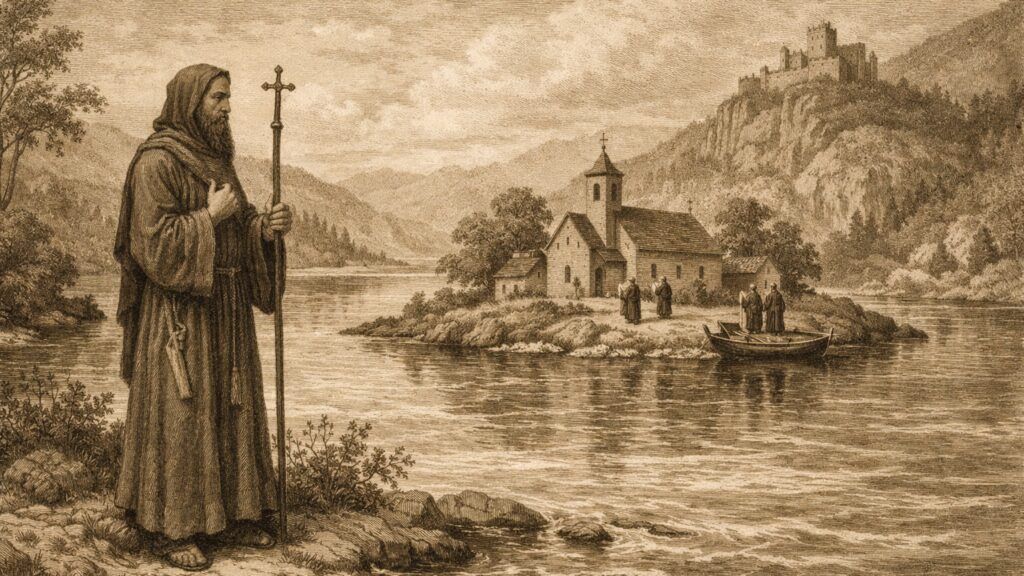
Fridolin’s strongest historical association is with the island of Säckingen on the Rhine, now in Baden-Württemberg. Tradition makes him the founder of a monastery there, and this became the core of his enduring reputation. The Säckingen foundation was important not only for religious life but also for local settlement and institutional development. In later centuries the monastery grew into a major centre of devotion and regional influence.
One well-known element of the legend describes Fridolin being expelled by local inhabitants who thought he was trying to steal cattle from the island pasture. When he produced Clovis’s deed of gift, the people allowed him to return and establish the church and monastery. This episode, vivid as it is, should be treated as a traditional explanation of monastic rights and ownership, not as documentary fact.
Glarus Legends
Fridolin is also connected with the Swiss canton of Glarus. In the traditional story, a man named Urso gave him land there, but after Urso’s death his brother disputed the gift. Fridolin then raised Urso from the dead so that he could testify in court. This miracle became especially important in later regional devotion and gave Fridolin a place in the religious memory of eastern Switzerland. Again, this is hagiographical tradition, valuable for understanding cult and identity, but not secure evidence for the saint’s life.
Death Cult
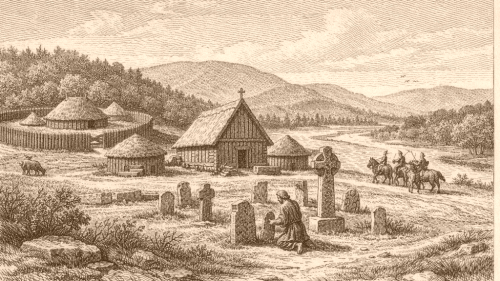
The date of Fridolin’s death is uncertain in historical terms, though later tradition commonly assigns it to 6 March, often given as 538. That date should be understood as traditional rather than firmly established. His burial is likewise associated with Säckingen. Over time, the saint’s cult spread and remained influential in the Upper Rhine region, where he was honoured as a missionary, founder, and protector. In later literature he was sometimes described as an apostle of the Alamanni or as a patron of Glarus.
Fridolin’s significance lies less in what can be proven about his life than in how his memory was used. He became a figure through whom communities explained their origins, sanctified landholding, and connected local institutions to the prestige of the early Church. That makes him a notable example of the way medieval sainthood could shape regional history long after the supposed lifetime of the saint himself.
Source References
Hover over a number to see the source. Select it to open the source.

- [1] Erzbistum Freiburg: Fridolin von Säckingen
- [2] Geschichtsquellen: Vita s. Fridolini abbatis Seckingae
- [3] New Advent: St. Fridolin
- [4] e-codices: Cod. Sang. 598, Leben des hl. Fridolin
- [5] LEO-BW: Geschichte des Stiftes Säckingen und seines Begründer des heiligen Fridolin
- [6] Library Ireland: Saint Fridolin