Saint Kilian
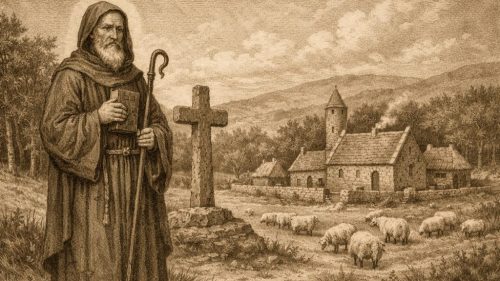
Saint Kilian, also known in tradition as the Apostle of Franconia, is remembered as an early Irish missionary bishop and martyr associated with Wfcrzburg. The surviving evidence is uneven and largely shaped by later hagiographical writing, so some details are best treated as traditional rather than fully secure. Even so, the main outline in the supplied sources is clear: Kilian was probably born about 640, likely in Ireland, and died at Wfcrzburg on 8 July, probably in 689. The supplied evidence identifies Kilian as an Irish bishop and missionary.
Dateline
Saint Kilian, also known in tradition as the Apostle of Franconia, is remembered as an early Irish missionary bishop and martyr associated with Wfcrzburg. The surviving evidence is uneven and largely shaped by later hagiographical writing, so some details are best treated as traditional rather than fully secure. Even so, the main outline in the supplied sources is clear: Kilian was probably born about 640, likely in Ireland, and died at Wfcrzburg on 8 July, probably in 689.
Irish Origins
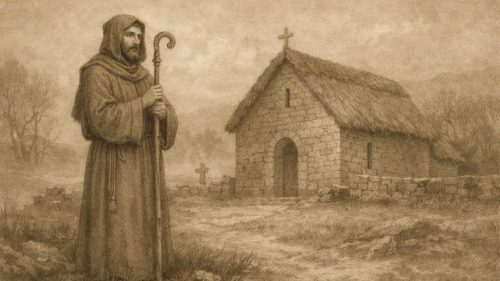
The supplied evidence identifies Kilian as an Irish bishop and missionary. Deutsche Biographie gives his place of birth as Mullagh in County Cavan, Ireland, while the Catholic Encyclopedia says he was born about 640, probably in Ireland, of noble parents. The same source adds that he was distinguished from his youth for piety and love of study. It also states that, according to the later Passio, he embraced the monastic life. The evidence does not securely establish every detail of his early formation, but it does support the broad description of Kilian as an Irish cleric who entered the missionary world of the early Middle Ages.
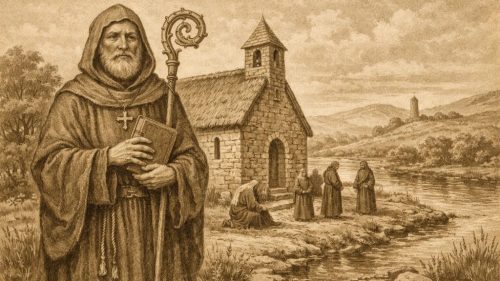
The Catholic Encyclopedia further says that, in keeping with the custom then prevailing in the Irish Church, he was assigned to no particular diocese but served as a district bishop or travelling bishop. That description helps explain how he could move beyond his native land as a missionary without a fixed territorial see. Deutsche Biographie likewise identifies him as an Irish bishop and missionary of East Franconia.
Missionary Work
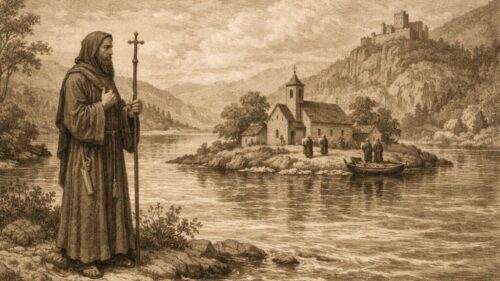
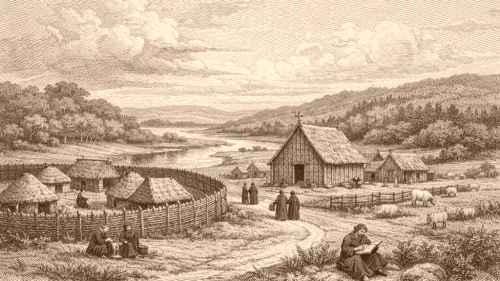
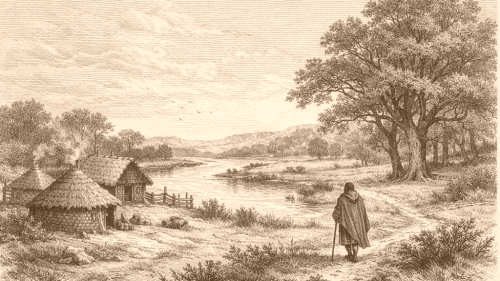
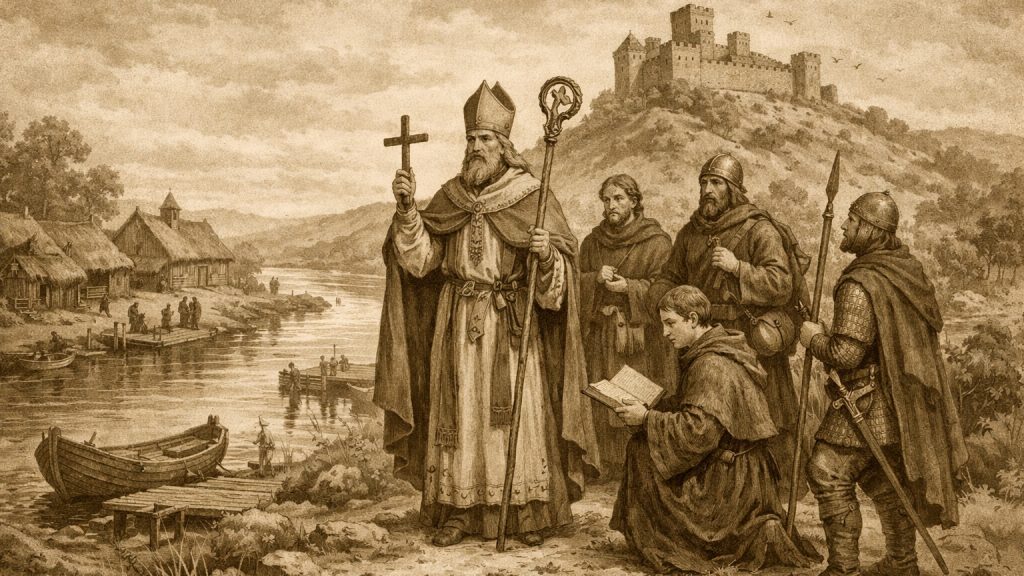
According to the Catholic Encyclopedia, Kilian left his native country with eleven companions, travelled through Gaul, crossed the Rhine, and reached Wfcrzburg. There he encountered Duke Gozbert, who, like his people, was still pagan. The source presents Kilian as a missionary who resolved to preach the Gospel in that setting and who took Wfcrzburg as the base of his activity. It also says that his labours extended over a wider area in East Franconia and Thuringia.
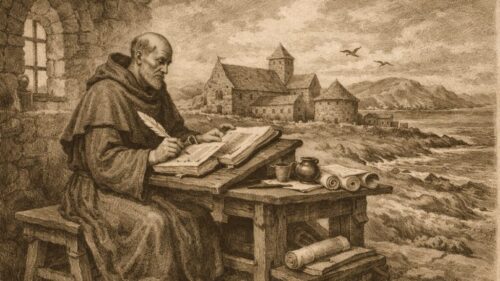
Deutsche Biographie confirms the association with East Franconia and states that the biography of Kilian and his companions survives in a Passio that is not reliable in every detail. The source notes that the account of his life and death was written comparatively late and that some elements of the narrative are not historically secure. For that reason, only the broad missionary setting can be stated with confidence from the supplied evidence.
Roman Journey
The Catholic Encyclopedia reports that Kilian and his companions travelled to Rome to receive missionary faculties from the pope before continuing their work. It says that John V, whom they expected to find, had died meanwhile, and that they therefore received their faculties from his successor, Conon. The same source dates the journey to the summer of 686 and says they reached Rome in the late autumn. It also says that their labours at Wfcrzburg continued during 687 and the following years.
Deutsche Biographie is more cautious and says that the report of Kilian’s journey to Rome for a missionary mandate sounds unhistorical and is probably a retrospective feature of the later Passio. It also suggests that the Roman journey may serve as a dating marker, possibly connected with Pope Conon in 686-87. Taken together, the supplied evidence allows the journey to Rome to be mentioned as part of the traditional narrative, while also making clear that historians regard the episode with caution.
Martyr Tradition
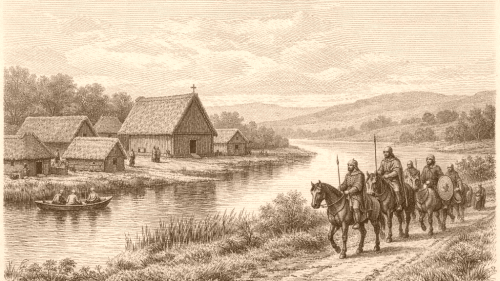
The Catholic Encyclopedia states that Kilian’s work in Wfcrzburg ended in martyrdom. It says that after Duke Gozbert had become a Christian, Kilian explained that the duke’s marriage with Geilana, his brother’s widow, was unlawful under Christian teaching and secured the duke’s promise to separate from her. According to that account, Geilana then plotted vengeance and caused Kilian and his two companions to be secretly murdered in the duke’s absence.
The same source says that this happened on 8 July, 689, though opinions vary on the exact year. Deutsche Biographie gives his death as occurring about 689 in Wfcrzburg. It also remarks that the Passio is not especially reliable in detail and that the statements about the cause and immediate circumstances of the martyrdom are questioned by later critics. The secure point is the traditional memory that Kilian died at Wfcrzburg and was revered as a martyr.
Because the evidence is mediated through later narrative, it is better to distinguish the historical core from the elaborated story. The historical core is the presence of an Irish bishop and missionary in Wfcrzburg and his death there. The more detailed narrative about Geilana, the confrontation with Duke Gozbert, and the precise sequence of the killing belongs to the tradition preserved in the Passio and later retellings.
Wurzburg Legacy
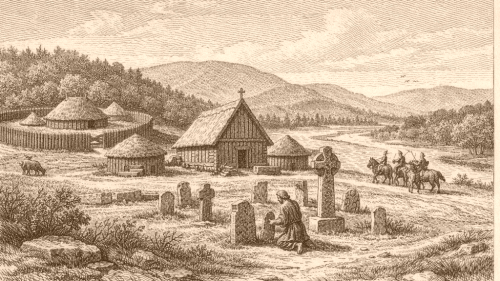
After his death, Kilian became closely linked with Wfcrzburg. Deutsche Biographie identifies him as a saint and martyr associated with the city, and the Wfcrzburg city source describes him as the patron saint of the diocese. The city also says that the history of the Kiliani Beer Festival and Fun Fair goes back to the year 1030 as an annual event commemorating Saint Kilian. That later festival history belongs to the development of his cult and local commemoration, not to his own lifetime, but it shows how deeply his memory became rooted in the region.
Kilian’s significance lies in the combination of mission, martyrdom, and memory. The supplied evidence supports the broad picture of an Irish bishop who went to Wfcrzburg, preached there, and died there around 689. Around that core developed the richer saintly tradition preserved in medieval narrative sources and later devotional remembrance. For that reason, Saint Kilian remains important both as a figure of early Irish mission and as a lasting symbol in the Christian history of Wfcrzburg.
Source References
Hover over a number to see the source. Select it to open the source.