
Welcome To Limerick Archives
Explore Limerick Archives
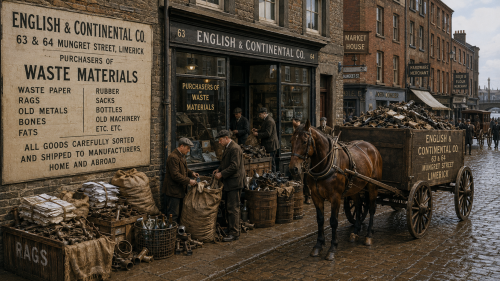
Materials Wanted
26 June 2026
Long before recycling became a familiar part of everyday life, the English and Continental Company invited Limerick residents to recognise the commercial value hidden in unwanted materials. Operating from 63 and 64 Mungret Street in 1900, the firm advertised for discarded goods that could be purchased, sorted and returned to productive use. Its premises stood within a busy commercial district close to the city’s markets, workshops and riverside trade. The advertisement reveals an organised local business in recovered materials, connecting household remnants and industrial offcuts with merchants prepared to sell them into wider manufacturing and export networks.
Read Article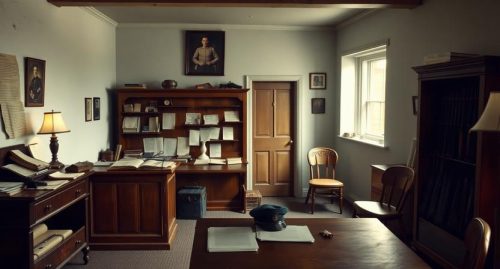
Licence Scrutiny
23 July 2026
On 13 February 1900, Parliament scrutinised the process for granting gun licences in County Roscommon, reflecting widespread concerns about public safety, fairness, and administrative transparency. Irish MPs raised questions about alleged inconsistencies and biases in how local authorities issued or withheld gun licences. They cited complaints from farmers, sportsmen, and rural workers who reported delays and arbitrary refusals, particularly in districts where tensions over land and law enforcement ran high.
Read Article
Teampall Nua
16 July 2026
The old church near Holycross, County Limerick, was recorded as a ruin by 1642. In 1679, Rachael Bourchier, Countess of Bath, restored the building, just one year before her death. Thereafter it became known as the New Church, or Teampall Nua in Irish, and served local Church of Ireland parishioners. A belfry was added during the restoration, giving the structure a distinctive profile. Although the church later fell out of use and returned to ruin, its surviving walls, arched openings and graveyard remain important reminders of seventeenth-century religious life and the long history of worship at this historic site today.
View Image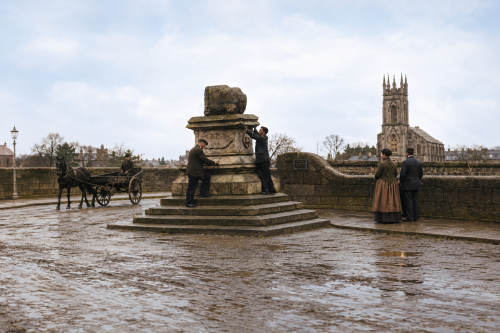
Treaty Stone
22 July 2026
The Treaty Stone stands prominently beside the River Shannon on Limerick’s North Strand during the early 1920s, overlooking the historic approach to Thomond Bridge. The riverside road retained that name until 1934, when it was renamed Clancy’s Strand in memory of George Clancy, Mayor of Limerick, who was murdered in 1921. At the same time, the adjoining O’Callaghan Strand commemorated former mayor Michael O’Callaghan, also assassinated during the War of Independence. The scene therefore captures both a familiar landmark and a district whose later street names would preserve the memory of two civic leaders killed during Ireland’s turbulent revolutionary period.
View Image
Acts Debate
22 July 2026
On 9 February 1900, Parliament engaged in a major debate on the operation of the Irish Land Acts, focusing particularly on judicial rents and tenant purchase. Irish MPs argued that, while the Land Acts had been designed to address the longstanding grievances of tenant farmers, many obstacles remained. Tenants faced difficulties in securing fair rents, and the process of purchasing land from landlords was hampered by bureaucracy, inadequate funding, and legal delays. The debate underscored the central role of land issues in Irish politics and rural life.
Read Article
Redmond Chosen
19 June 2026
Nationalists throughout the city and county are today considering the election of John Redmond as chairman of the reunited Irish Parliamentary Party. His appointment follows the agreement that brought Parnellites and anti-Parnellites together after almost ten years of damaging division. Local supporters of Home Rule hope the choice will restore authority, discipline and purpose to Ireland’s representation at Westminster. Redmond, long identified with the Parnellite cause, now assumes responsibility for men who recently stood in opposing camps. His success will depend upon persuading Limerick voters and nationalists elsewhere that old quarrels can finally yield to common political action.
Read Article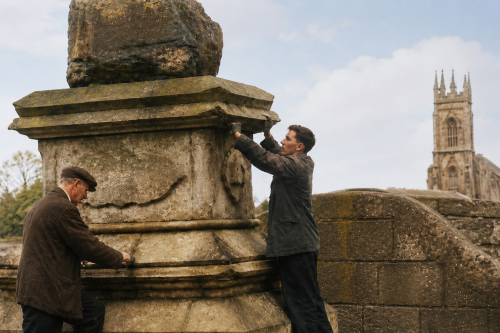
Treaty Stone
22 July 2026
The Treaty Stone stands prominently beside the River Shannon on Limerick’s North Strand during the early 1920s, overlooking the historic approach to Thomond Bridge. The riverside road retained that name until 1934, when it was renamed Clancy’s Strand in memory of George Clancy, Mayor of Limerick, who was murdered in 1921. At the same time, the adjoining O’Callaghan Strand commemorated former mayor Michael O’Callaghan, also assassinated during the War of Independence. The scene therefore captures both a familiar landmark and a district whose later street names would preserve the memory of two civic leaders killed during Ireland’s turbulent revolutionary period.
View Image
Baker Place
10 July 2026
At Baker Place in early twentieth-century Limerick, Saint Saviour’s Dominican Church stands at the centre of a broad cobbled streetscape, its Gothic stone façade, rose window, pointed arches, and carved doorways giving the scene a strong ecclesiastical presence. To the right, Tait’s Clock rises above the roadway as a civic landmark, balanced by red-brick industrial buildings and smoking chimneys behind it. Period pedestrians, a horse-drawn cart, street lamps, and a small wooden kiosk add everyday activity. The view captures a city shaped by faith, industry, commerce, public memory, and the architectural confidence of Edwardian urban life in Limerick’s historic core.
View Image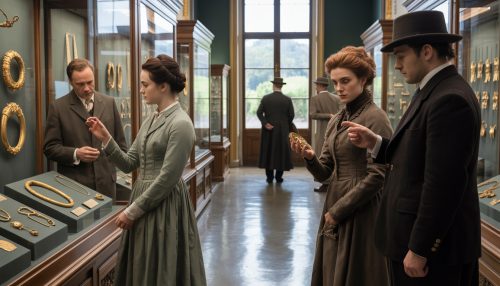
Ornament Custody
20 July 2026
On 1 February 1900, the custody and preservation of ancient Irish gold ornaments was formally raised as a matter of parliamentary concern, a subject that reverberated in Limerick’s cultural and antiquarian circles. The city’s historians, collectors, and educators—keenly aware of the significance of such artefacts to Ireland’s heritage—closely followed the debate, recognising that Limerick itself was home to several notable discoveries and longstanding collections. National reports of the parliamentary exchange brought renewed attention to the responsibilities of museums and public institutions in safeguarding these treasures for future generations.
Read Article
United Irishmen
21 July 2026
On 6 February 1900, news from Dublin that John Redmond had been unanimously elected chairman of the reunited Irish Parliamentary Party was greeted with particular significance in Limerick, where the effects of nearly a decade of political division had long been felt. For years, the city’s nationalist organisations, voters, and civic leaders had been split between Parnellite and anti-Parnellite factions, leading to rival meetings, divided loyalties, and weakened influence in Parliament and local affairs. The announcement of unity was seen as a turning point—a chance for Limerick to regain its voice in the national movement and pursue Home Rule with renewed purpose.
Read Article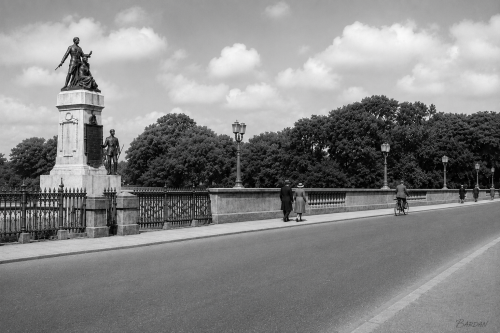
Memorial 1940s
10 July 2026
On Sarsfield Bridge in 1940s Limerick, the 1916 Memorial rises proudly beside the roadway, enclosed by green iron railings and watched over by elegant lamps. Its pale stone pedestal supports bronze figures commemorating the Rising, their solemn poses lending dignity to the riverside setting. Trees line the background, softening the urban scene and framing the monument against a bright open sky. Pedestrians in period dress walk along the bridge, suggesting ordinary city life continuing around a place of remembrance. The image captures civic pride, republican memory, and the enduring presence of national history within Limerick’s daily landscape and local identity.
View Image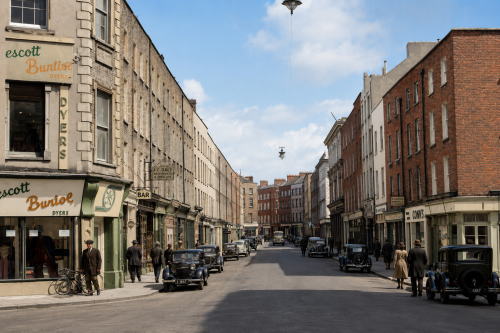
Patrick Street
20 July 2026
Patrick Street is a Limerick thoroughfare linking Rutland Street with O’Connell Street. Developed during the 1770s by the influential Arthur merchant family, it was named after Patrick “Patt” Arthur, a prominent wine and timber importer connected with nearby Arthur’s Quay. Its Georgian red-brick terraces once housed prosperous traders and professionals, while generations of women workers and family businesses sustained its commercial life. Celebrated soprano Catherine Hayes was born at 4 Patrick Street in 1818. The opening of Arthur’s Quay Shopping Centre in 1989 increased footfall, while later decades brought restaurants, pubs, retail chains and the decline of many traditional businesses.
View Image