
Welcome To Limerick Archives
Explore Limerick Archives
Kilmallock Barracks
22 July 2026
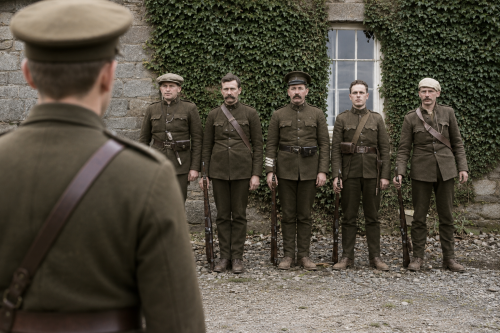
On 28 May 1920, five surviving members of the Royal Irish Constabulary stood together after the IRA attack on their barracks at Kilmallock, County Limerick. From left are Constables Feehy and Holmes, Sergeant O’Sullivan, and Constables Bailie and Barry. During the assault, incendiary devices set the building ablaze, killing two policemen inside. As the position became untenable, Sergeant O’Sullivan led the remaining defenders in a bayonet charge against the attacking republicans. The photograph captures the exhausted survivors in the aftermath of one of the most dramatic engagements of the Irish War of Independence in County Limerick during that turbulent year.
View Image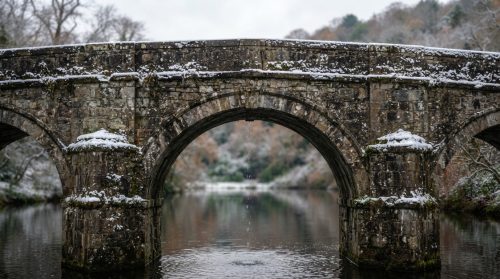
Lake Chapel
24 July 2026
The Chapel Lake lies within the 500-acre grounds of Glenstal Abbey at Murroe, County Limerick. Created during the 1830s by the Barrington family, it formed part of an ambitious landscaping scheme that introduced five artificial lakes across the estate. Positioned beneath a historic viaduct near the abbey’s courtyard, the lake remains one of the most picturesque features of the grounds. Beyond its decorative purpose, it now plays an important practical role by supplying geothermal energy used to heat the abbey church and surrounding castle buildings. Its quiet waters therefore unite nineteenth-century estate design with modern sustainable technology in a setting.
View Image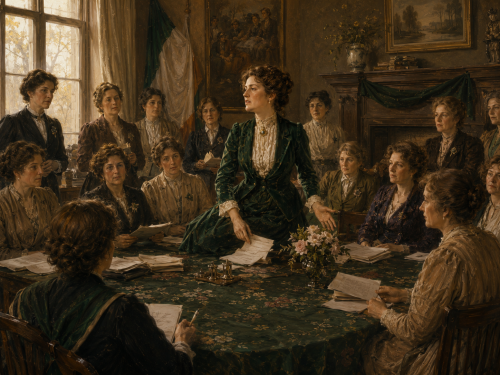
Networks Endure
20 June 2026
The establishment of Cumann na mBan has revealed how strongly the women’s nationalist networks created during Queen Victoria’s visit in 1900 have endured. Fourteen years ago, Maud Gonne and her associates organised resistance to the royal ceremonies, arranged an alternative patriotic celebration for children and founded Inghinidhe na hÉireann. Those efforts brought women together as fundraisers, teachers, speakers and political organisers. Many of the relationships, practical skills and separatist convictions formed during that campaign have now entered a broader organisation intended to support the Irish Volunteers and advance the cause of national independence.
Read Article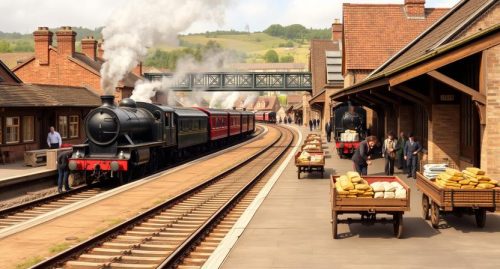
Bill Railway
22 July 2026
On 9 February 1900, the Belfast and County Down Railway Bill was formally considered in Parliament, marking a key stage in the legislative process for expanding and regulating one of Ulster’s most vital rail networks. The Bill aimed to authorise new works, improve existing lines, and clarify the powers and duties of the railway company, reflecting the growing demand for reliable transport between Belfast, Bangor, Downpatrick, and surrounding towns.
Read Article
Military Review
19 June 2026
Queen Victoria has reviewed troops drawn from the Dublin garrison and the Curragh Camp during her final visit to Ireland, placing the British Army prominently within the royal programme. The review was held in Phoenix Park, where infantry, cavalry and artillery units assembled before large crowds. Soldiers marched past the Queen in formal order while officers, mounted escorts and military bands completed the spectacle. Reports reaching Limerick describe an event intended to honour the armed forces and demonstrate their discipline. The ceremony also connected Ireland directly with the continuing war in South Africa, where Irish regiments were serving throughout the British campaign.
Read Article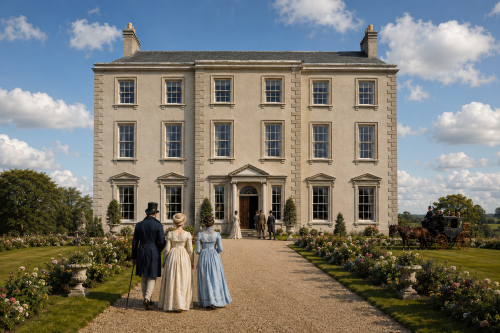
Grange House
14 July 2026
This reconstructed scene evokes the life of a prosperous Georgian country estate around the turn of the nineteenth century. The imposing house, formal gardens and gravel approach reflect the architectural taste and social order of the period. Elegantly dressed visitors, household servants, gardeners and horse-drawn carriages suggest activity surrounding such residences, where family life, hospitality and estate management met. Although idealised, the image offers a vivid historical impression of how the property may once have appeared when newly built, occupied and maintained, before decline altered its character and left only fragments of its former grandeur for future generations to study.
View Image
Redmond Chosen
19 June 2026
Nationalists throughout the city and county are today considering the election of John Redmond as chairman of the reunited Irish Parliamentary Party. His appointment follows the agreement that brought Parnellites and anti-Parnellites together after almost ten years of damaging division. Local supporters of Home Rule hope the choice will restore authority, discipline and purpose to Ireland’s representation at Westminster. Redmond, long identified with the Parnellite cause, now assumes responsibility for men who recently stood in opposing camps. His success will depend upon persuading Limerick voters and nationalists elsewhere that old quarrels can finally yield to common political action.
Read Article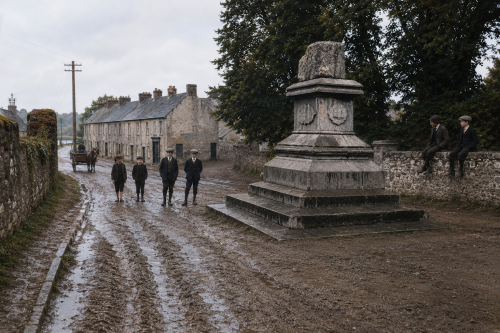
Treaty Stone
21 July 2026
The Treaty Stone stands on Clancy’s Strand, facing King John’s Castle across the River Shannon. Tradition holds that the Treaty of Limerick was signed upon this limestone block on 3 October 1691, ending the Williamite War in Ireland. Once used as a horse-mounting stone near Thomond Bridge, it was raised onto an ornate pedestal in 1865 by Mayor John Rickard Tinslay. The monument commemorates both surrender and betrayal, since promised protections for Catholics were later broken. Its military terms enabled thousands of Irish soldiers to leave for France and serve in Europe in the celebrated Flight of the Wild Geese.
View Image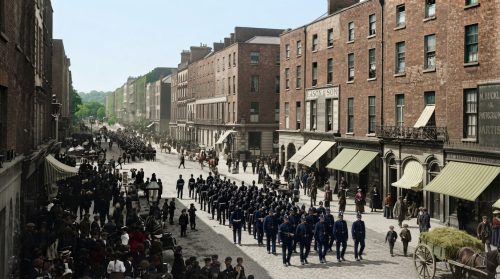
George’s Street
24 July 2026
A military parade moves along George’s Street in Limerick City, drawing the attention of shoppers, pedestrians and local residents. Uniformed soldiers march in formation through the busy commercial street, while two young boys enthusiastically keep pace beside them, imitating the procession with youthful excitement. The surrounding shopfronts, horse-drawn traffic and crowded pavements capture the energy of city life around the turn of the twentieth century. Although the exact date remains uncertain, the clothing, streetscape and military appearance suggest approximately 1900. The photograph offers a lively glimpse of public ceremony, everyday curiosity and childhood participation in Edwardian Limerick at that time.
View Image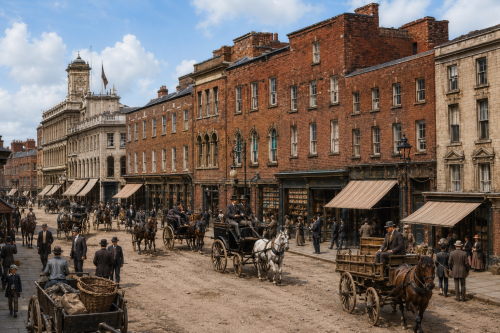
Edwardian Limerick
15 July 2026
At the beginning of the twentieth century, George Street stood at the centre of commercial life in Limerick. Today known as O’Connell Street, it was bordered by impressive Georgian buildings housing hotels, shops, offices and established local businesses. Horse-drawn carts, private carriages and crowds of pedestrians moved constantly along the busy thoroughfare, while traders brought additional noise and colour to the scene. Landmarks included the Royal Hotel, MacMahon’s Temperance Hotel and firms such as O’Mahony & Company. The street’s elegant architecture and lively commerce made it one of Edwardian Limerick’s most important and recognisable urban spaces for residents and visitors.
View Image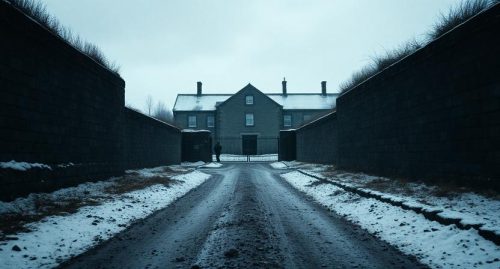
Pauper Removals
22 July 2026
On 6 February 1900, the removal of impoverished people from Britain to Ireland under poor-relief regulations was challenged in Parliament, an issue that drew immediate attention in Limerick, where the arrival of such individuals often placed strain on local resources. Limerick’s workhouses and charitable institutions were already struggling to care for the city’s vulnerable population, and any increase in arrivals from Britain raised concerns among civic leaders, ratepayers, and relief administrators.
Read Article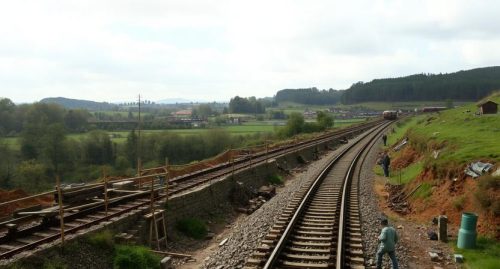
Progress Railway
22 July 2026
On 9 February 1900, the proposed Bray and Enniskerry Railway advanced through its parliamentary proceedings, bringing the prospect of a new transport link between the seaside town of Bray and the picturesque village of Enniskerry in County Wicklow a step closer to reality. The Bill sought approval for the construction of the line, which would traverse challenging countryside and provide both locals and tourists with improved access to the scenic Wicklow landscape.
Read Article