

Buried Histories
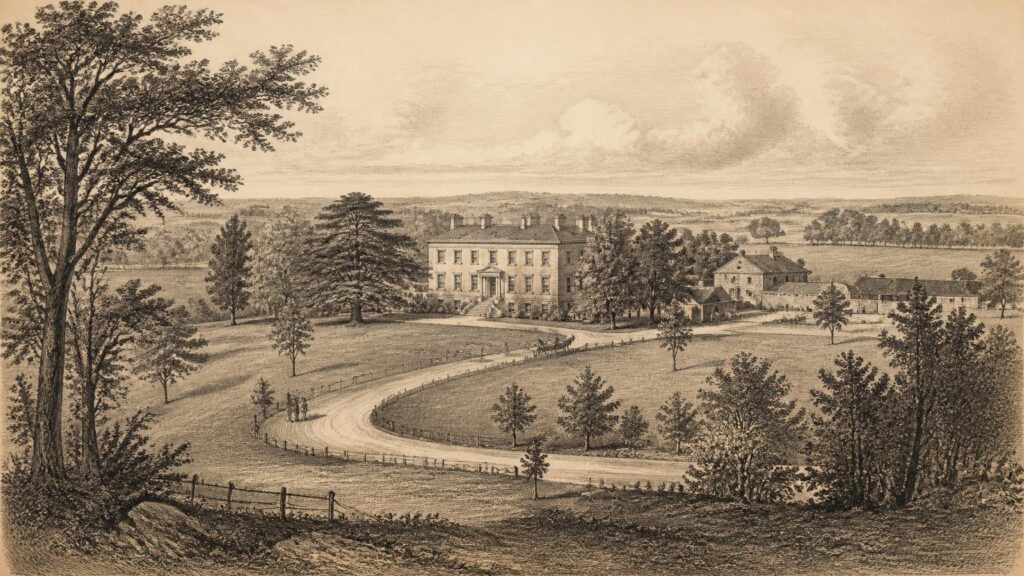
AI generated historical illustration, not a contemporary photograph.
At a Glance
Bessborough is not simply the name of a former Cork institution or an old estate on the edge of the city. It is a difficult Irish historical landscape: a place where the experience of unmarried mothers and their children was once deliberately obscured, and where memory has subsequently become a public argument about evidence, absence, responsibility, burial, identity and the use of land. Its history cannot be contained by one official report, one survivor account, or one physical site. It must instead be approached through records that survive unevenly, testimony that was too long discounted, and questions which remain unresolved.
Historical Setting
Bessborough Mother and Baby Home operated at Bessborough House, near Blackrock and Mahon in Cork, from 1922 until 1998. It was run by the Congregation of the Sacred Hearts of Jesus and Mary, commonly called the Sacred Heart Sisters. Across the period examined by the Commission of Investigation into Mother and Baby Homes, the institution admitted 9,768 mothers and 8,938 children. Those figures establish scale, but they do not describe the inner history of the place: the fear involved in arrival, the effect of secrecy upon families, the separation of mothers from children, the experience of children who remained in institutional care, or the lasting uncertainty created by missing or inaccessible information.
The institution belonged to a wider Irish system in which pregnancy outside marriage was treated as a moral, familial and social crisis. Women and girls could be sent away from home, sometimes by relatives, clergy, local authorities or medical personnel. The circumstances varied markedly. Some women sought refuge or medical care; some were placed under acute pressure; some found that options presented as voluntary were heavily shaped by stigma, poverty, family dependence and the lack of social supports available to unmarried mothers. A responsible history must retain that variety while recognising the profound imbalance of power between residents and the institutions that received them.
Mother and baby homes were neither solely religious enterprises nor merely State institutions. At Bessborough, as elsewhere, the religious congregation controlled day-to-day institutional life, while public authorities financed many placements, regulated aspects of care, inspected facilities and made referrals. This mixed arrangement matters because later public discussion sometimes sought a single culprit: church, State, family or society. The historical record instead indicates an interlocking system. Religious authority, public policy, medical administration, local government, family pressure and prevailing sexual morality all helped to make institutions such as Bessborough possible.
The term ‘public memory’ therefore requires care. It does not mean that Bessborough was unknown during its operation. The institution was visible to staff, suppliers, doctors, inspectors, officials and local people; its address appeared in records and its residents moved through hospitals, courts, labour arrangements and adoption systems. Yet the personal meanings of that visibility were controlled. A woman’s pregnancy might be known, but not openly discussed. A child might be registered, adopted, boarded out or recorded as dead, while their mother was denied a full account of what had happened. Public knowledge and public acknowledgement are not the same thing.
House Origins
Before it became associated with twentieth-century institutional history, Bessborough was part of the landscape of Cork’s prosperous estates. The house was linked with the Pike family, prominent Quakers whose commercial and civic interests formed part of Cork’s nineteenth-century mercantile world. The wider estate expressed the social order of the big house: a substantial residence, farm land, staff, enclosure and separation from surrounding communities. When the Sacred Heart Sisters acquired the property in 1922, they adapted an existing landscape of privilege and privacy to a new institutional purpose.
This transformation was material as well as symbolic. The house, outbuildings, grounds and agricultural land gave the congregation space to house women and children away from the immediate gaze of city streets. The apparent seclusion of such settings has often been described as a mechanism of concealment. That is a reasonable interpretation, though it should not be turned into an assertion that every resident experienced the place in the same way or that every part of its operation was hidden from officials. The estate was large, administratively connected and regularly supplied. What was concealed most effectively was not necessarily the existence of Bessborough, but the human cost of the arrangements made there.
The conversion of country houses into religious, medical, educational or welfare institutions was common in Ireland and Britain. Bessborough nevertheless acquired an unusually charged afterlife because its architecture and grounds came to stand for a paradox. A house associated with security, status and family continuity became a place where many women were separated from their babies and where many people later struggled to establish the facts of their own beginnings. The estate’s former grandeur has consequently become part of the memory of harm. It is not evidence of abuse in itself, but it has shaped how the site is imagined: private grounds, institutional walls, hidden labour, babies removed from sight and graves whose locations cannot confidently be identified.
Such imagery must be distinguished from historical proof. The physical site can evoke loss, but it cannot by itself settle questions concerning individual treatment, adoption consent or burial. Those matters require documents, testimony, archaeology and careful evaluation. Yet places influence memory precisely because they carry meanings that records cannot fully contain. For survivors and relatives, returning to Bessborough can be an encounter with an address that once replaced a home, a name, a relationship or an answer.
Institutional Regime
Bessborough opened in the first year of the Irish Free State. That chronology has encouraged the view that the home was a straightforward product of independent Ireland. The fuller picture is more complicated. Irish attitudes to illegitimacy, poor relief, female sexuality and institutional confinement had deep roots in the nineteenth century, while the new State inherited legal and administrative structures shaped under British rule. Independence did not create those conditions from nothing. It did, however, provide the political setting in which the new State, local authorities and religious bodies developed the systems that governed vulnerable women and children for decades.
Admissions records demonstrate the bureaucratic character of Bessborough. They could include a resident’s name, age, address, occupation, family details, referring authority, date of entry and information concerning her child. The existence of such records can create a false impression of comprehensiveness. A ledger may identify a person but omit what mattered most: whether she understood her choices, how she felt about separation, whether a stated destination matched the place she truly went, or what pressure preceded her admission. Administrative records are indispensable, but they were made for institutional management rather than for preserving a resident’s full voice.
The recorded routes into Bessborough show the reach of public and private authority. Some women arrived through county homes or public assistance arrangements. Others came as private patients. Some were referred by families, doctors, clergy or charitable bodies. A distinction between public and private patients did not erase the shared stigma attached to non-marital pregnancy. It could, however, affect payment, accommodation, documentation and the choices available after birth. The social history of Bessborough therefore cannot be reduced to a single experience of incarceration, even though many former residents have described powerlessness and loss of control.
Daily life was ordered by rules, work, religious observance, maternity care and childcare. For a significant part of the home’s history, mothers were expected to participate in domestic and institutional labour. This was not peculiar to Bessborough; labour formed part of the disciplinary logic of many Irish residential institutions. Its meaning varied. It could be represented by administrators as useful occupation, training or a contribution to communal life. Former residents and critics have more often understood it as unpaid or poorly rewarded work imposed upon women already in distress. The difference between those accounts is not merely semantic. It concerns who had power to define labour, discipline and ‘rehabilitation’.
The language of rescue and reform was central to the public justification of mother and baby homes. It could present the institution as a refuge from disgrace, a place of care before childbirth and a route towards a respectable future. Such language was not necessarily insincere in every individual case. It could coexist with genuine charitable effort, medical attention and concern for some residents. But it also concealed the structural fact that the woman’s social standing had been damaged by a pregnancy for which men were rarely subjected to an equivalent institutional penalty. The mother was made highly visible as a moral problem; the father was often absent from the institutional story.
The Commission’s work makes clear that Bessborough’s history included a large number of children leaving by adoption, especially after legal adoption became available in Ireland in 1953. Other children left with their mothers, were transferred, fostered, boarded out or remained in care. Adoption brought security and affection to some children and families, and historical analysis should not deny that reality. At the same time, adoption law and practice often separated people from original identities, records and kin. For many adopted people, the later discovery of a Bessborough connection has meant reconstructing a life from altered names, incomplete files and information controlled by others.
Medical Conditions
The most grave documented feature of Bessborough’s history is the number of children associated with the institution who died. The Commission identified 923 child deaths associated with Bessborough, alongside deaths of women connected with pregnancy and childbirth. These figures must be placed in the context of twentieth-century Irish infant mortality, poverty, infectious disease, malnutrition and the severe vulnerability of children born outside marriage. Context is necessary, but it must not become excuse. The Commission found that infant and child mortality in the homes was strikingly high, particularly in earlier decades, and that official bodies knew of serious conditions.
Statistics are useful because they reveal a pattern that individual anecdotes cannot establish. They also have limitations. A death total does not tell us the exact condition of each child, the quality of treatment in a particular ward, the experience of a mother who was told her baby had died, or the accuracy of every surviving entry. Nor does it make the deaths impersonal. Each recorded death belonged to a child with a mother, and often to siblings and extended family members who may have known little or nothing at the time. The later effort to identify names is therefore not an optional emotional addition to history; it is an attempt to restore personhood obscured by institutional statistics.
Contemporary inspections and later testimony are important here, but they must be handled with precision. The public record contains evidence of official concern about conditions in mother and baby homes, including Bessborough. It also includes recollections by former residents, staff and campaigners. These sources do not always agree in detail, and historians should not force them into a falsely seamless account. Still, their convergence on broad themes is significant: poor health among infants, inadequate conditions in some periods, strict discipline, fear, separation and a culture in which women’s accounts carried little authority.
One of the central interpretative dangers is retrospective simplification. Medical standards changed greatly over the seventy-six years in which Bessborough operated. Treatments, sanitation, nutrition, maternity practice and the welfare State all evolved. A practice that was once medically commonplace may now appear shocking, while some conditions that contemporaries accepted were nonetheless avoidable or worsened by institutional neglect. Historical explanation must neither impose present-day assumptions without evidence nor allow the language of historical difference to dissolve responsibility. The question is not whether the past was different; it is whether children and mothers received the care, dignity and protection reasonably owed to them at the time.
Official knowledge is crucial to that question. Reports, inspections, correspondence and returns show that State agencies were not distant spectators. They received information, funded placements and exercised regulatory functions. The 2021 State apology acknowledged failures that occurred over decades. That acknowledgement does not resolve every disputed finding of the Commission, but it marks a decisive change from older narratives in which the institutions were treated as exclusively ecclesiastical matters or private family tragedies.
Death Records
Records of death lie at the heart of Bessborough’s historical and moral significance. They are also a reminder that a record is not the same as certainty. The Commission examined institutional registers, civil registration material, official returns, cemetery information, correspondence and other archival evidence. It concluded that 923 children associated with Bessborough died. This was a major act of public clarification because earlier debate had been shaped by fragmented lists, conflicting totals and the painful discovery that families frequently lacked even basic information about a child’s fate.
The term ‘associated with’ is important. It reflects the Commission’s method and avoids an inaccurate suggestion that every child necessarily died physically within the same building or under precisely identical circumstances. The home’s operations intersected with its maternity hospital and with other places of care. The administrative boundary of Bessborough was not always identical to the physical place of death. Historical readers should resist the temptation to turn a necessary technical phrase into evasion. The scale remains grave, and the uncertainty attached to individual cases is one reason why the history continues to demand attention.
Deaths were recorded for administrative and civil purposes, yet burial information was often incomplete, absent or difficult to reconcile. This gap is central to public memory. A death certificate may establish that a child died, but it may not identify where the child was buried. A family may learn a name and date only to encounter a new absence: no grave, no marker, no burial register, or a record that cannot conclusively be connected to the child. Such absences can be as historically consequential as the documents that remain. They have shaped campaigns, media attention and demands that the land itself be protected.
It would be wrong to treat every missing burial record as proof of a particular burial practice. The Commission did not find physical or documentary evidence of systematic burials throughout the former Bessborough grounds. It did, however, consider it highly likely that burials had taken place there. Its investigations were constrained by the vast area of the old estate, subsequent construction and the lack of a securely identified location. The distinction is exacting but necessary: likely burial is not the same as an archaeologically verified burial ground; absence of verified remains is not proof that no burials occurred.
That distinction has sometimes frustrated survivors and relatives, for whom the question is not abstract. They seek a place to mourn, a name to place on a memorial, an answer to a family silence, or assurance that development will not disturb the dead. The evidential caution required of official inquiry can feel painfully insufficient when the lived consequence of uncertainty is so great. Yet a responsible public history must neither substitute hope for proof nor use the limits of proof to dismiss the claims of those seeking truth.
Burial Questions
Bessborough’s burial question became a central feature of national discussion after public attention focused on the treatment of mothers and children in Irish institutions. The subject acquired additional urgency because the site was considered alongside other mother and baby institutions where burial arrangements had become matters of forensic, legal and ethical concern. Comparisons can be illuminating, but each site has its own evidence. Bessborough should not be treated as a replica of Tuam, Sean Ross Abbey or any other institution. Its history must stand upon the evidence particular to Cork.
The Commission’s Fifth Interim Report examined burial arrangements at several institutions. At Bessborough, it assessed documentary evidence, possible locations, geological and practical constraints, and the implications of the estate’s changing use. The conclusion that burials were highly likely to have occurred on the grounds, without a definitive identification of a burial location, produced an enduring dilemma. The inquiry did not regard excavation of the entire former estate as feasible. But many relatives and campaigners have argued that uncertainty cannot be a reason for allowing the past to disappear beneath later development.
There are different views on what should happen next. Some survivors and relatives want extensive investigation, including the release of further technical material and stronger protection for the grounds. Others have emphasised memorialisation, quiet access, recognition and consultation rather than a disruptive excavation. These positions should not be portrayed as a simple conflict between truth and remembrance. Both arise from a desire for dignity. The disagreement concerns what dignity requires when possible burial places remain uncertain and when excavation itself may carry emotional, ethical and practical consequences.
Folklore has also entered this landscape. Local stories of ‘angels’ plots, unmarked graves, burials near walls or in particular corners of estates are powerful because they often preserve the sense that something was not properly acknowledged. Such stories can direct research and should not be contemptuously dismissed. But folklore is not equivalent to verified evidence. It may combine memory, rumour, later knowledge and the understandable need to locate loss somewhere tangible. The historian’s task is to record its existence, explain why it matters and distinguish it from conclusions that can be securely documented.
The same caution applies to dramatic allegations that have circulated in public debate. Some claims concerning Bessborough have been amplified in newspapers, political debate and social media before the underlying evidence could be fully tested. The Commission itself challenged some earlier interpretations of its records and stated that certain claims were unsupported. This does not mean that the official account is beyond criticism; survivors have contested aspects of the Commission’s report, including how testimony was represented. It does mean that historical writing should be candid about disputes rather than repeating allegations as settled fact.
Survivor Witness
Survivor testimony altered the public meaning of Bessborough. For decades, many people who had lived in the institution, given birth there, been adopted from it or lost a sibling associated with it carried their knowledge privately. Secrecy could be reinforced by family shame, institutional authority, migration, altered birth registrations and the fear of causing pain to relatives. Speaking publicly was not simply a matter of finding words. It meant challenging stories that had placed blame upon women, denied adopted people access to origins and represented institutions as benevolent solutions.
Testimony is sometimes treated as either wholly decisive or inherently unreliable. Both positions are inadequate. A survivor’s account is primary evidence of remembered experience and should be treated with profound respect. It may also contain uncertainty about dates, names, places or the actions of others, especially where events occurred under trauma or where records were withheld. This is not a weakness unique to survivor testimony; official documents are also partial, interested and sometimes erroneous. The best historical method brings oral testimony and documentary evidence into conversation without assuming that bureaucratic records are automatically more truthful.
Former residents have described experiences of isolation, lost possessions, pressure surrounding adoption, difficult labour, painful childbirth, separation and enduring grief. Individual accounts differ and should not be homogenised. Some women left with their children. Some remained in contact with relatives. Some adopted people experienced loving childhoods and later sought information not because those families were unreal, but because identity has more than one dimension. A history that allows only suffering, or only rescue, fails to represent the complexity of lives shaped by Bessborough.
The act of naming has become especially important. Projects compiling lists of mothers and children who died seek to counter the anonymity produced by institutional language. Names can be recovered from registers, civil records and family research, though transcription requires great care. A name may have been misspelled, changed, replaced by an institutional address or obscured by an adoption arrangement. Public lists are not perfect substitutes for full access to personal files, but they can create recognition where silence once prevailed.
There is an ethical reason to preserve the distinction between collective history and individual privacy. Not every person connected with Bessborough wished to speak publicly, and not every family relationship can safely be exposed without consent. Public memory should not reproduce institutional intrusion by assuming that all private information belongs in public. The challenge is to provide meaningful access to those seeking their own histories while respecting the rights and wishes of others whose lives are also contained in the records.
Public Reckoning
Bessborough entered a new phase of public memory through investigation, journalism, survivor advocacy, parliamentary discussion and the wider reckoning with mother and baby institutions. The establishment of the Commission of Investigation in 2015 was a significant State acknowledgement that matters once treated as private shame were matters of public responsibility. Its Final Report, published in January 2021, remains an essential documentary resource, even though it has been criticised by survivors and researchers who believe that elements of its interpretation did not adequately reflect testimony or the structural power exercised by church and State.
That disagreement belongs within the history of public memory. A commission report does not end historical argument; it changes its terms. It can establish datasets, preserve records, test claims and make findings under a defined legal remit. It cannot fully repair loss, provide answers that records do not contain, or guarantee that every witness feels heard. The Government has acknowledged that some survivors did not accept the Commission’s account as a true and complete representation of the evidence they gave. This acknowledgement is important because it recognises that official history has authority, but not infallibility.
The State apology of January 2021 marked another change. Public apology can be dismissed as symbolic, but symbols matter in a history structured by denial and silence. An apology recognises that harm was not merely accidental or private. It can validate the claim that women and children were failed by systems of governance, care and social judgment. Yet apology without continuing action risks becoming a substitute for responsibility. For people seeking records, redress, health supports, counselling, burial information or protection of a site, the practical aftermath is more important than ceremonial language.
Media reporting has been indispensable in bringing Bessborough to wider attention. It has carried accounts of families looking for siblings, reported documentary discoveries and made visible the human consequences of missing burial records. Journalism also has hazards. A headline may flatten uncertainty, while a powerful story can encourage readers to assume that all institutions operated identically. The best reporting has connected individual testimony to official evidence; the weakest forms have treated suffering as spectacle or converted untested allegations into certainty.
Political debate has increasingly described Bessborough as a possible site of conscience. That phrase is meaningful. It suggests that the grounds should not be understood merely as property awaiting an economically useful future. A site of conscience is a place where difficult history remains available for reflection, education and mourning. It need not mean freezing all change or treating every building as sacred. It does mean that decisions about ownership, planning and development must take account of the historical claims held by survivors, relatives and the wider public.
Records Access
Public memory depends upon records, but access to records has been one of the most contested parts of the Bessborough legacy. For adopted people and mothers separated from children, documents can contain the information needed to establish identity, trace relatives, understand medical history or correct a lifetime of uncertainty. They can also contain distressing material, false assumptions, hostile descriptions or gaps that no later law can repair. Access is therefore both a legal issue and an emotional encounter with institutional power.
The Birth Information and Tracing Act 2022 significantly altered the framework for access to birth certificates, care information and tracing services. Its importance lies not only in administrative procedure but in a larger change of principle: a person’s origins are not a favour to be granted at another’s discretion. For people connected with Bessborough, access can involve the Adoption Authority of Ireland, Tusla, the HSE’s successor record systems and other bodies holding institutional or civil material. The process can still be complex, especially where records are dispersed or where a person seeks information about another family member.
Institutional records should not be imagined as neutral repositories. They were created under unequal conditions, using categories that could stigmatise women and classify children according to administrative need. Nevertheless, they can reveal routes through the system, dates of admission and discharge, names of relatives, adoption references, medical information and correspondence. Their survival has made research possible; their gaps have intensified grief. The very unevenness of the archive is part of the story of Bessborough.
There is also a public interest in preserving institutional archives beyond individual casework. Historians need access, subject to ethical safeguards, in order to understand how the home operated across time. Aggregated records can show patterns of referral, mortality, discharge and adoption that individual files conceal. At the same time, historical research must not turn private pain into raw data. The ideal archive is not one that releases everything indiscriminately, but one that balances privacy with the right to truth, facilitates personal access and enables accountable scholarship.
Contested Ground
The former Bessborough estate remains contested because land concentrates the questions raised by the archive. Who owns the place now? What parts of the historic grounds are implicated by possible burial? What should happen where no exact burial location is established? Can housing needs, private property rights and planning law be reconciled with the claims of families who fear that the dead may be forgotten or disturbed? These are not merely technical planning questions, even though planning law inevitably forms part of the answer.
Recent political debate has intensified after planning permission was granted for apartments on part of the site. Those supporting greater protection argue that development should not proceed while unresolved burial questions remain and that the place requires preservation as a memorial landscape. Government statements have stressed that the Commission investigated possible locations and did not identify evidence sufficient to establish a specific burial ground, while also repeating its conclusion that burials were likely to have occurred somewhere on the grounds. Both propositions must be held together.
The difficulty is not solved by saying that the whole former estate should be untouched forever, nor by saying that an unproven precise location removes all ethical concern. Historical landscapes are rarely static. Parts of the old Bessborough estate have already changed through roads, housing and other uses. Yet irreversible development can narrow future possibilities for investigation and memorialisation. It can also deepen the sense among relatives that economic value is being placed above the dignity denied to mothers and children in life.
The Institutional Burials Act 2022 created a statutory framework for intervention where there is evidence of manifestly inappropriate institutional burials. Its design reflected the particular circumstances at Tuam but also created broader legal concepts for other sites. Bessborough exposes the limits of legislation built around identified burial land when the historical problem is precisely that the place of burial has not been securely located. This is not a reason to dismiss the law; it is evidence that law, archaeology and remembrance must continue to develop together.
Memorial Futures
How should Bessborough be remembered? There can be no adequate answer without survivors, adopted people, relatives of the dead and people with local connections occupying central roles in the decision. Public authorities, owners, historians, architects and archaeologists have responsibilities, but none should presume to dictate the form of remembrance. A memorial imposed from above could repeat the old pattern in which institutions spoke for those whose lives they controlled.
Memorialisation may take many forms: a protected space, named plaques, gardens, public art, educational interpretation, access to archives, digital remembrance, an annual act of commemoration or a centre for research and testimony. No monument can provide the certainty of a known grave or the restoration of a lost relationship. But a thoughtful memorial can reject the anonymity that shaped the institution’s past. It can say that those who entered Bessborough were not a social problem, a statistic or a shameful secret.
Historical interpretation should make space for difficult truths. The home was part of an Irish society in which many people, not only religious sisters or civil servants, participated in the policing of unmarried motherhood. Families sometimes acted with love under terrible constraints, sometimes under coercive social pressure, and sometimes in ways that caused lasting harm. Men who fathered children were often absent from the records and from public blame. The State funded, regulated and knew more than older narratives admitted. The congregation exercised considerable authority within the institution. None of these facts cancels the others.
Memory is therefore not the opposite of history. At its best, it asks history to become more exact: to identify names, test claims, preserve documents, state uncertainty and refuse euphemism. At its worst, memory can harden into myth, with every unanswered question filled by speculation. The future of Bessborough depends on resisting both oblivion and invention. The place demands a public culture capable of grief, evidence and moral seriousness at the same time.
Bessborough’s deepest legacy may be the insistence that hidden lives belong within Irish history. The former home was once sustained by separation: between respectable society and stigmatised women, between children and origins, between death records and burial places, and between public institutions and private pain. Its public memory challenges those separations. It asks not only what happened within the gates, but why so many people outside them accepted silence for so long. The answer will remain incomplete. But the obligation to keep asking is now part of the history of the site itself.