

Connected Island
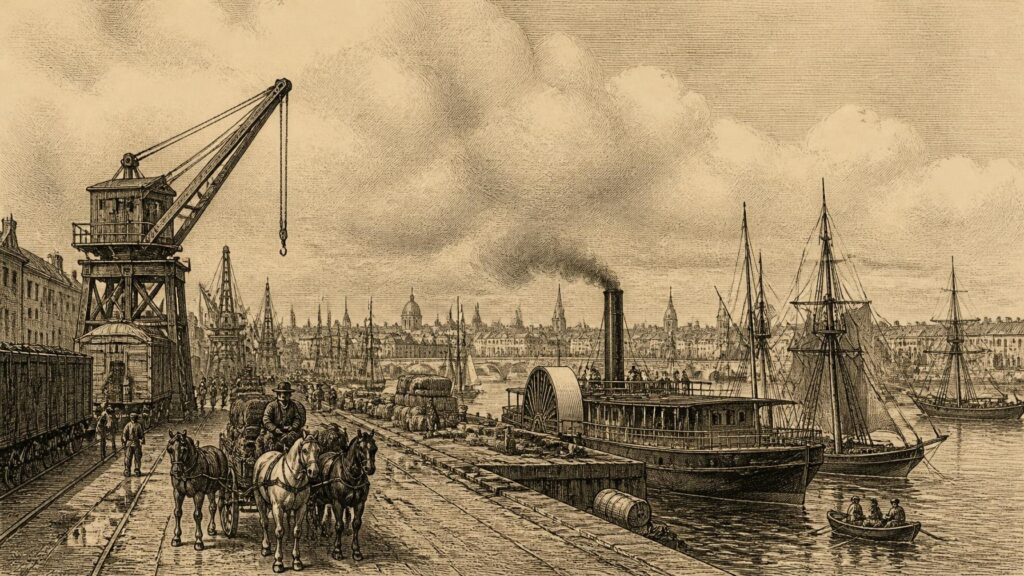
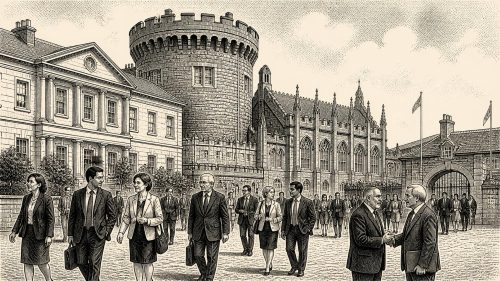
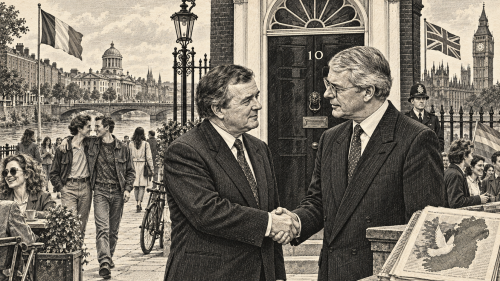
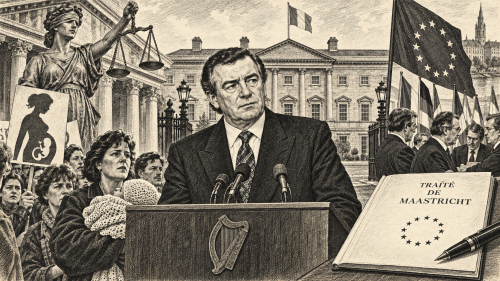
AI generated historical illustration, not a contemporary photograph.
At a Glance
Ireland’s European presidencies reveal a recurring historical fact: transport was never merely a domestic utility for an Atlantic island, but part of the country’s argument for influence, development and equal participation in Europe. From accession in 1973 to the current Council Presidency in 2026, Irish ministers and officials have had to reconcile the practical needs of a geographically peripheral state with the collective ambitions of an integrating continent. The record is one of brokerage rather than command: Ireland has rarely dictated the European transport agenda, but it has repeatedly helped to frame, negotiate and implement it.
Island Position
Ireland entered the European Economic Community on 1 January 1973 with a transport geography unlike that of most of its new partners. It had no land frontier with another member state, except indirectly through the United Kingdom’s simultaneous accession and the constitutional complexities of Northern Ireland. Continental European transport policy was often conceived through land routes: railways crossing several states, roads carrying lorries between industrial regions, inland waterways, Alpine passes and frontier controls. Ireland’s links were necessarily maritime and aerial. Its internal transport system, meanwhile, had long been shaped by low population density, uneven settlement, dependence on ports, a railway network with an all-island history, and the central pull of Dublin.
That geography did not place Ireland outside the Community’s transport concerns. On the contrary, it made the question of connection acute. A common market presupposed movement: of goods to and from Irish ports, passengers through airports, agricultural produce to continental consumers, workers and tourists across borders, and investment into regions at the western edge of the Community. For Irish governments, European membership was therefore linked not only to markets and agricultural support but also to the material means of reaching those markets. Roads, harbours, airports and later digital systems were understood as elements of national development as well as European integration.
The evidence should nevertheless be handled carefully. It would be misleading to suggest that the EEC entered Ireland in 1973 with a complete and coherent master plan for Irish transport. The Treaty of Rome contained provisions on a common transport policy, yet progress was hesitant for decades. National interests remained powerful, especially in road haulage, railways, state aid and infrastructure funding. The European Parliament’s account of the policy records that a 1985 judgment of the Court of Justice pressed the Council to act where it had failed to develop a genuine common policy. Ireland joined an evolving, contested field rather than a finished European transport order.
The island perspective did, however, furnish Irish representatives with a durable political language. Peripheral regions needed access; sea crossings were not an optional extra; air services could be essential public links; and European cohesion required more than free movement on paper. Those propositions could serve Irish interests, but they were not uniquely Irish. Greece, Portugal, Spain, Finland, Sweden, island territories and remote regions advanced related claims. Ireland’s importance lay partly in helping make peripheral connectivity a respectable Community concern rather than a narrow national plea.
Early Membership
The first years of membership coincided with profound uncertainty in both Ireland and the Community. The oil crisis exposed the vulnerability of transport systems dependent on imported fuel. Inflation, recession and unemployment complicated public investment. In Ireland, debates over state companies, the future of rail, regional roads and the role of ports were intertwined with wider arguments about economic modernisation. Membership did not dissolve those domestic difficulties, but it altered the institutional setting in which they were discussed.
One early documentary trace is especially revealing. In 1975 the Commission recorded arrangements supplied by the Irish Government for implementing Community regulations on public-service obligations and the normalisation of railway accounts. The Irish material identified the Minister for Transport and Power as the competent authority in relation to Córas Iompair Éireann. This was technical administration, not dramatic summitry, but it shows the practical penetration of European transport law into Irish public transport governance. Community membership required the State to explain how obligations borne by a public operator would be handled and financed.
The issue mattered because Córas Iompair Éireann was not simply a commercial carrier. It had inherited responsibilities from earlier state transport arrangements and operated in a political environment in which rail and bus services could be maintained for social, regional or developmental reasons. European rules did not automatically demand the abandonment of such services. Rather, they required clearer categories, procedures and accounts. In historical terms, this was part of a broader shift from opaque national administration towards rules capable of comparison across member states.
There is an important distinction here between legal harmonisation and operational transformation. The existence of Community rules did not mean that a passenger in rural Ireland immediately experienced a European transport system. Nor did it mean that Irish railways became physically linked to continental networks. The short-term effect was more institutional: departments, public companies and ministers had to understand a new vocabulary of obligations, authorisations, public service and common rules. Over time, this administrative Europeanisation became one foundation for later Irish participation in more ambitious transport initiatives.
Irish accession also coincided with the enlargement of the Community beyond its original six members. Denmark, Ireland and the United Kingdom introduced new maritime interests and new peripheral territories. The United Kingdom’s membership was particularly significant to Irish connectivity. Great Britain remained Ireland’s principal external transport bridge for passengers and freight, even while European policy increasingly encouraged wider continental links. That relationship would later become more complicated after the United Kingdom’s withdrawal from the European Union, but the underlying geography had shaped Irish policymaking from the beginning.
First Presidency
Ireland first held the Presidency of the Council of the European Communities from January to June 1975, just two years after accession. The office rotated among member states and gave the holder responsibility for chairing Council work, organising meetings and seeking agreement; it was not a national executive mandate over Europe. This distinction is central to any historical assessment. A Presidency may accelerate negotiations, identify possible compromises and give institutional attention to a file, yet it cannot simply enact the preferences of its own government.
The 1975 Presidency was important above all for Ireland’s initiation into the practical craft of European leadership. It organised the first formal meeting of the newly established European Council in Dublin Castle in March. It also coincided with the Equal Pay Directive and with the establishment of the European Regional Development Fund. Neither achievement was a transport measure, and it would be inaccurate to convert them into one. Yet the Regional Development Fund had future significance for transport because it embedded the principle that Community resources could address territorial disparities. For a state at Europe’s western margin, that principle mattered greatly.
Transport itself was not the principal remembered accomplishment of the 1975 term. Contemporary and later official accounts instead stress institutional organisation, regional development and social policy. That absence is instructive. It suggests that the later association between Irish Presidencies and connectivity should not be projected backwards too confidently. Ireland’s first Presidency established credibility as a chair and host; it did not remake the common transport policy.
Still, the term exposed Irish administration to the scale of the Council machine. Chairing meetings required detailed preparation, multilingual communication, neutrality in procedure and constant contact with the Commission and other delegations. Such experience mattered in transport as in every other portfolio. Presidency practice trained officials to distinguish national positions from the task of constructing a Council position. That distinction would become particularly important when Ireland later chaired negotiations on files whose implications for an island state were unusually direct.
There is no need for folklore to explain the significance of 1975. A popular retrospective can turn a first Presidency into a moment when Ireland suddenly became a fully confident European power. The documentary record supports a more measured conclusion. The State successfully undertook a demanding role very soon after accession, and that competence contributed to a growing reputation for procedural seriousness. It was an opening chapter, not a completed transformation.
Policy Awakening
During the late 1970s and 1980s, European transport policy developed unevenly. The ideal of a common policy had been present from the founding treaties, but actual transport systems remained deeply national. Governments defended railway structures, road-haulage rules and regulatory powers. Airlines were still shaped by bilateral arrangements and national flag carriers. Ports and shipping raised questions of safety, competition and labour. Progress was often incremental, driven by litigation, Commission proposals, parliamentary pressure and the wider programme for completing the internal market.
For Ireland, these years brought a growing recognition that transport could not be treated as a separate technical department. It bore on export competitiveness, tourism, regional development, energy use and access to public services. The country’s relatively modest domestic market increased the importance of external routes. A delay at a port, limited air competition, costly freight movement or weak road access could have consequences disproportionate to those in a continental state with multiple land routes.
Ireland held the Council Presidency again from July to December 1979. The term followed the first direct elections to the European Parliament and took place amid monetary and budgetary disputes. It is chiefly remembered for helping establish working relations with the directly elected Parliament, for guiding early work on the European Monetary System and for difficult negotiations over budget contributions. Transport did not dominate the official retrospective record. Yet 1979 reinforced an institutional change relevant to later transport legislation: the Parliament’s eventual growth as a co-legislator meant that Presidencies would increasingly have to negotiate not only among governments but across institutions.
The 1984 Presidency likewise had a wider agenda. Ireland chaired the Community during negotiations connected to Spanish and Portuguese accession, budget discipline, fisheries, wine and humanitarian relief for famine in Africa. The Dooge Committee on institutional affairs, chaired by the former Irish foreign minister Jim Dooge, produced recommendations that helped prepare the ground for the Single European Act. Again, it would be wrong to call this a transport Presidency. Its relevance lies in the institutional conditions it helped to advance.
The Single European Act, signed in 1986, supplied a legal framework for completing the internal market. Free movement of goods, persons, services and capital created pressure for transport systems that could actually carry those freedoms. The logic was not mechanical: opening a market did not itself build a motorway or modernise a harbour. But it placed transport bottlenecks, differing standards and national restrictions within a larger economic project. The later expansion of trans-European networks emerged from this wider ambition to make the internal market physically workable.
Ireland’s role in this period is best understood as part of a coalition of smaller and peripheral states seeking workable integration. The State’s diplomats and ministers did not invent the single market, nor did they control its transport consequences. They contributed to the institutional conversation in which access, cohesion and Community capacity became more prominent. Interpretation should not outrun evidence: Ireland’s influence was real but shared, contingent and exercised through negotiation.
Network Europe
The decisive conceptual change came with the idea of trans-European networks. By the end of the 1980s and the early 1990s, the Community increasingly treated infrastructure as a European concern rather than simply a collection of national assets. This was a response to the single market, to anticipated enlargement, to environmental questions and to the persistence of missing links between regions. Transport networks would include roads, rail, inland waterways, ports, airports and combined transport. Their purpose was not solely speed. They were also meant to promote cohesion, interoperability and the removal of bottlenecks.
Ireland’s fourth Presidency, from January to June 1990, occurred at a geopolitical turning point after the fall of the Berlin Wall. Its leading achievements lay in agreement on a common approach to German unification and relations with Central and Eastern Europe, and in the decision to convene intergovernmental conferences on economic and monetary union and political union. Transport was not the headline subject. But the prospect of a broader Europe made the question of continental connections more pressing. A Community accustomed to west European routes had to imagine its future shape across a much larger space.
The Maastricht Treaty later gave trans-European networks a treaty basis. For Ireland, this mattered because a European network could recognise the special circumstances of remote, insular and peripheral regions. The language did not erase distance, and neither did it guarantee funding for every desired project. It did, however, provide a policy framework in which Irish ports and airports could be discussed as parts of a shared European system rather than as endpoints outside it.
The policy was particularly suited to an island economy because it could accommodate multimodality. A road leading to a port, a port connected to short-sea shipping, an airport serving business passengers, and a rail or road link connecting a regional centre to Dublin could each be understood within a networked logic. This was more flexible than the image of a continental rail corridor alone. The policy also allowed Ireland to argue that maritime links were not peripheral conveniences but integral sections of European routes.
At the same time, the limits of the model were evident. Most physical infrastructure lay within national competence and depended heavily on national planning, public finance and political choices. European designation did not necessarily decide where an Irish road should be built, whether a rail line should be retained, or what form public transport should take in Dublin. European transport policy could shape incentives and standards, but it did not substitute for domestic government.
That qualification helps explain why Irish debate around European funds could become so charged. European support was welcomed as a means of overcoming infrastructural deficits, but projects still involved choices between regions, modes and social priorities. The historical story is not one of Brussels building Ireland from outside. It is a story of Irish agencies, local interests, government departments and European institutions interacting in a changing financial and legal framework.
Funding Corridors
Structural and cohesion funding gave infrastructure policy a visible place in Ireland’s European experience. The reform of the Structural Funds in 1988, followed by the creation of the Cohesion Fund in the 1990s, made the relationship between European policy and national capital investment more tangible. Ireland, then substantially poorer than the Community average, was among the states able to use European support for development. Roads, environmental infrastructure and other capital projects became symbols of the practical benefits of membership.
It is tempting to tell this as a simple success story: European money arrived, Ireland modernised and transport barriers disappeared. The evidence supports a more complex account. European funding was significant, but it interacted with Irish public expenditure, domestic planning, economic growth and changes in policy priorities. Some projects produced clear benefits; others were debated. The distributional consequences of investment were never politically neutral. Nor was the relative emphasis on roads, rail, public transport or regional services fixed across time.
The road network became especially important in the 1990s and early 2000s. Better inter-urban connections could reduce travel times and support access between Dublin, regional cities, ports and airports. Such investment also fitted the era’s dominant development assumptions, which placed heavy weight on private cars and road freight. In retrospect, climate concerns and urban congestion invite a more critical judgement of that balance. Yet historians should avoid judging earlier choices as though later policy constraints had been fully known or politically decisive at the time.
European transport policy gradually placed greater emphasis on sustainability, rail, public transport, intelligent systems and the internalisation of environmental costs. The Commission’s 2001 White Paper, issued as enlargement approached, framed congestion, pollution, safety and modal imbalance as European problems. For Ireland, these themes had particular implications. Car dependence, dispersed settlement and the limited scale of the rail system made a straightforward transfer of continental models difficult. But the need to lower emissions and improve urban mobility could not be ignored simply because the country was an island.
Ports and aviation retained strategic importance. Ireland’s trade in goods depended heavily on sea links, while aviation became vital to tourism, investment and personal mobility. The liberalisation of European air transport transformed the market in ways that were highly visible to Irish travellers. Increased competition and lower fares helped alter patterns of tourism and business travel, though the effects varied by route, region and airport. This was one area where European market integration could feel immediate in everyday life.
Maritime policy offered a different example of Europeanisation. Shipping safety, equipment standards, port state control, seafarer conditions and environmental rules had cross-border consequences that no island state could resolve alone. Ireland’s interest was not only commercial. Safe and reliable sea routes were essential to supply, travel and resilience. The fact that much transport legislation was negotiated through technical dossiers should not obscure its importance. Rules on equipment or reporting could seem remote from public debate, yet they affected the safety and functioning of vessels serving Irish waters and ports.
Presidency Practice
Ireland’s fifth Presidency, from July to December 1996, is remembered principally for monetary and treaty questions. The Dublin European Council advanced the Stability and Growth Pact and publicly unveiled the design of euro banknotes; the Presidency’s ‘Dublin II’ draft informed negotiations that culminated in the Treaty of Amsterdam. These were not transport achievements, but they illuminate the kind of diplomatic work a Presidency performs: narrowing differences, drafting texts, maintaining procedural momentum and finding formulations that governments can accept.
That craft was increasingly relevant to transport. As the Union’s legislative procedures developed, transport files could involve several institutions, technical agencies, national regulators, industrial interests, trade unions, consumer organisations and environmental advocates. The Presidency had to understand the dossier in detail while appearing fair to member states with sharply different systems. A state might have a strong national interest in a matter, but its chairing minister or official could not credibly act as a mere advocate for that interest.
Ireland’s 2004 Presidency illustrates the changed scale of the Union. It coincided with the accession of ten new member states on 1 May, celebrated in Dublin as the ‘Day of Welcomes’. The term also secured agreement on the draft Treaty establishing a Constitution for Europe. Transport policy was not its defining public theme, but enlargement had substantial transport implications. A Union of twenty-five members had wider borders, more varied infrastructure and more complex needs for interoperability and investment.
The enlargement context reinforced the importance of trans-European networks. Connections between old and new member states, east and west, ports and hinterlands, would be central to economic cohesion. For Ireland, enlargement had a dual meaning. It increased the scale of the internal market and the number of potential partners, but it also altered the distribution of European resources. A country that had benefited from cohesion funding was no longer the obvious beneficiary it had once been. This created a stronger incentive to present Irish connectivity as a continuing European interest, not merely as a claim based on relative poverty.
The 2004 term also demonstrates why Presidency achievements should be described precisely. It is common in political retrospectives to list major agreements reached ‘during’ a Presidency. That phrase can conceal collective authorship. The Commission proposes, the Parliament co-legislates where treaty rules require, member states negotiate, and officials often prepare compromises over years. Ireland’s credit lies in chairing, mediating and bringing matters forward at a crucial point; it does not require the implausible claim that one six-month administration created every policy outcome.
This restraint is particularly necessary in transport history. Infrastructure plans unfold over decades. A Council agreement may be a landmark, yet implementation depends on subsequent legislation, finance, permits, engineering, national choices and economic conditions. A Presidency can contribute to the moment of political agreement, but it cannot by itself construct the network promised in a regulation.
Transport Settlement
The 2013 Irish Presidency is the clearest case of a documented Irish connection with European transport policy. Held from January to June during the eurozone crisis, it was officially framed around stability, jobs and growth. The transport programme placed particular emphasis on the proposed Trans-European Transport Network, or TEN-T, and on the Connecting Europe Facility. In the Presidency programme, Ireland described quality integrated links as essential to competitiveness and presented investment to address bottlenecks and missing links as support for recovery.
The language combined economic and environmental purposes. TEN-T was envisaged as a comprehensive network extending towards 2050, supporting the internal market while taking account of energy efficiency and climate change. The Irish Presidency hoped to conclude negotiations with the European Parliament. This was not simply an Irish infrastructure request. It was a Union-wide legislative package concerning the shape, standards and priorities of a European network. But Ireland’s geographical circumstances gave its chairmanship special resonance.
The Presidency achievement report states that Ireland brokered agreement on TEN-T. The subsequent Regulation (EU) No 1315/2013 was formally adopted on 11 December 2013, after the Irish term had ended. The chronology matters. It is accurate to say that the Irish Presidency brokered the political agreement that helped clear the way for the final regulation; it is inaccurate to say that Ireland adopted the regulation during its six months in office. The distinction may appear technical, but it respects how European law is made.
The 2013 framework established a core network intended for completion by 2030 and a comprehensive network intended for completion by 2050. Its objectives included better cross-border connections, reduced delays and costs, sustainability, safety and smarter mobility. It integrated several modes rather than privileging a single one. In an Irish context, this mattered for ports, airports, roads, rail links and maritime routes. It affirmed that a European transport network had to include accessibility for remote and insular regions.
Ireland’s own rail position shows the policy’s capacity for differentiation. The Irish network has a distinctive gauge and, because of the island’s physical separation from the continental rail system, has been treated as an isolated network for certain TEN-T purposes. This allowed exemptions from otherwise mandatory requirements concerning electrification, European Rail Traffic Management System deployment and standard gauge. Such exemptions were not an expression of withdrawal from European transport policy. They were a practical recognition that uniform technical requirements can be disproportionate where interoperability with mainland networks is structurally impossible.
The 2013 transport agenda extended beyond TEN-T. Ireland advanced a Council general approach on the revised Marine Equipment Directive and secured agreement on recreational craft. It worked on passenger rights, roadworthiness, tachographs and other files. The programme also anticipated work on the Fourth Railway Package, a Commission initiative launched in 2013 to address interoperability, safety, market access and the European Union Agency for Railways. The Irish Presidency chaired an initial policy debate on interoperability in March. It did not complete the package; its technical and political elements continued through later Presidencies and entered into force only years afterwards.
This mixture of conclusions and continuities is characteristic of the Council. A successful Presidency is not necessarily one that closes every dossier. Sometimes it makes an issue ready for later agreement, maps divisions honestly or secures a general approach that enables negotiations with Parliament. Ireland’s 2013 record is strongest where documentation identifies a definite mediated agreement, especially TEN-T, and more qualified where the task was to initiate or advance discussion.
Changing Priorities
The period after 2013 changed the terms of transport policy. Climate commitments, the energy transition, digitalisation, supply-chain disruption, the COVID-19 pandemic and Russia’s full-scale invasion of Ukraine all sharpened European concern with resilience. Transport was increasingly understood not only as a channel of commerce but as critical infrastructure. Ports, aviation, rail freight, road haulage, cables, logistics systems and data networks acquired security as well as economic significance.
Ireland’s position also altered after the United Kingdom left the European Union. The consequences for goods movements were immediate and practical. Great Britain had long been a principal route between Ireland and continental markets. New customs and regulatory arrangements encouraged renewed attention to direct maritime services between Irish ports and the continent, often described in public discussion through the idea of a ‘landbridge’ avoided or supplemented by direct routes. The broader lesson was familiar: island connectivity depends on routes that can be disrupted by political as well as physical change.
Brexit also placed the all-island dimension in sharper relief. Transport on the island of Ireland cannot be understood solely through the institutions of the Irish State. Roads, rail services, freight flows and cross-border travel involve Northern Ireland and the United Kingdom. The European Union’s role is consequently mediated through treaty arrangements, the Protocol and subsequent Windsor Framework arrangements, domestic authorities and North–South institutions. A simple narrative of Irish national control would misrepresent this layered reality.
Environmental policy complicated older assumptions about connectivity. Better links could support regional development and economic opportunity, but building and operating transport infrastructure also produced emissions, land-use pressures and ecological consequences. European policy increasingly sought modal shift, clean fuels, more efficient logistics, rail interoperability and alternative-fuel infrastructure. For Ireland, a state where aviation and sea transport are indispensable for international connection, decarbonisation could not mean merely copying inland European solutions. It required attention to sustainable aviation fuels, maritime emissions, electrification where proportionate, public transport, active travel and the management of demand.
In 2024 the Union replaced the 2013 TEN-T regulation with Regulation (EU) 2024/1679. The revised framework retained the long-term logic of network development but updated it for resilience, climate adaptation, military mobility, capacity management and revised deadlines. This legal replacement is a useful warning against treating the 2013 settlement as timeless. The Irish Presidency’s achievement was historically important, but European transport policy continued to evolve. A historical article should preserve both facts: the 2013 agreement mattered, and it was later superseded.
Nor should connectivity be romanticised. Faster and more reliable links can serve communities, but their benefits depend on affordability, frequency, accessibility and the distribution of services. A route that exists on a network map may not provide a practical journey for a person without a car, with reduced mobility, living in a rural area or travelling at an inconvenient time. The contemporary focus on passenger rights and universal access reflects an awareness that transport systems must be judged by more than aggregate traffic flows.
Present Chairmanship
Ireland began its eighth Presidency of the Council of the European Union on 1 July 2026 and is scheduled to hold it until 31 December 2026. As of 30 October 2026, it is therefore a current and unfinished episode rather than a closed historical record. The official programme presents competitiveness, values and security as its principal themes. In the work of the Transport, Telecommunications and Energy Council, it commits Ireland to supporting a more connected, resilient and competitive Europe, advancing transport networks, pursuing decarbonisation and a just transition, and supporting safe and secure systems.
The wording displays both continuity and change. Continuity is evident in the old Irish concern with connection and peripheral access. Change is evident in the prominence of security, resilience, digital networks and subsea cables. In the 1970s, the pressing questions were how an island state would participate in a developing common market and how national public transport obligations fitted European rules. In 2026, physical movement is inseparable from data, cyber resilience, energy systems, strategic supply chains and geopolitical risk.
The transport work programme articulated by the responsible Irish minister has also highlighted passenger rights and digitalisation, alongside decarbonisation and competitiveness. These are broad objectives rather than guaranteed legislative outcomes. The Presidency may take forward negotiations inherited from Cyprus and hand unfinished work to Lithuania, which follows Ireland in the rotating sequence. That is how the system is designed: six-month terms create opportunities for leadership, but continuity depends on the Council’s longer institutional machinery and on the eighteen-month trio programme.
It would therefore be premature to assign definitive achievements to the 2026 Irish transport chairmanship. A historical judgement requires completed negotiations, adopted measures and evidence of implementation. At this stage, the documentary evidence supports a narrower statement: Ireland has used its Presidency programme to make connected, resilient and decarbonised transport part of a wider European competitiveness agenda. Whether that produces agreements comparable in historical importance to the 2013 TEN-T settlement remains uncertain.
This uncertainty is not a weakness in the record; it is an obligation of historical method. Governments naturally describe a Presidency in the language of ambition and delivery. Historians must distinguish a programme from an outcome, a chaired discussion from a political agreement, and an agreement from a lasting practical change. Such distinctions are particularly valuable in transport, where the interval between a Council conclusion and a completed bridge, route, vessel standard or passenger benefit may be many years.
Historical Balance
The history of Ireland’s EU Presidencies and transport policy is not a tale of a small state overcoming geography once and for all. Geography remained. Ireland is still an island on Europe’s Atlantic edge; its economy still depends on maritime and air links; its internal systems still reflect settlement patterns, public finance and the institutional division of the island. What changed was the political and legal setting in which those facts were addressed.
European membership gave Ireland access to funds, legal frameworks, markets and diplomatic forums. It also imposed rules, exposed domestic systems to comparison and required the State to negotiate with larger partners. Council Presidencies provided periodic moments when Irish ministers and officials had to act not only as national representatives but as chairs responsible for common work. Their success depended less on rhetorical assertion than on preparation, trust, technical knowledge and a capacity to broker compromise.
The transport dimension became more visible as European integration moved from tariff removal to the practical conditions of movement. Public-service obligations, railway accounting, aviation liberalisation, maritime standards, trans-European networks, passenger protections and resilient supply routes may appear to belong to separate policy worlds. Historically, they are connected by a central question: how can a market and a political union function when the means of movement are governed by different national systems and unequal geographies?
Ireland’s contribution has been strongest when it translated its own peripheral experience into a wider European argument. The insistence that remote and insular regions require genuine access was not simply special pleading. It was compatible with the Union’s commitment to cohesion. The 2013 TEN-T agreement remains the clearest example of this convergence between Irish chairmanship and a major European transport settlement. Yet it was a collective accomplishment, completed through institutions and later updated by subsequent law.
No body of folklore is needed to make the story significant. The surviving official programmes, legal texts, Council histories and departmental reports show a more interesting reality: the gradual formation of Irish administrative capacity within Europe, the changing meaning of connectivity, and the occasional ability of an island state to help guide continental policy. The history is neither triumphalist nor marginal. It is the record of Ireland learning to use the Presidency as a form of European public service while ensuring that the physical fact of distance remained visible in the Union’s common plans.


One striking theme is the article’s insistence that Ireland’s European transport influence has chiefly involved brokerage, while its island geography made maritime and aviation links central to equal participation. This complicates celebratory accounts that treat European funding or network designation as automatic solutions: domestic choices, multimodal connections and collective negotiation remained decisive. The 2013 TEN-T agreement appears especially significant because it suggests a Presidency can shape outcomes without exercising national control. As Brexit, decarbonisation and the unfinished 2026 Presidency reshape connectivity, how should Ireland balance resilient sea and air routes, rail development and European cohesion when defining its transport priorities?