Saint Gall
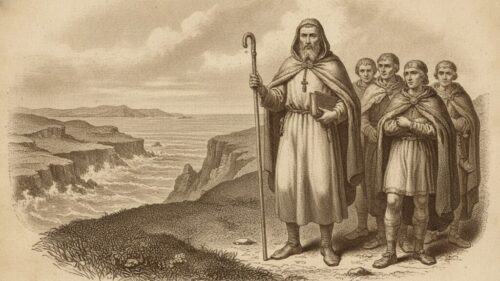
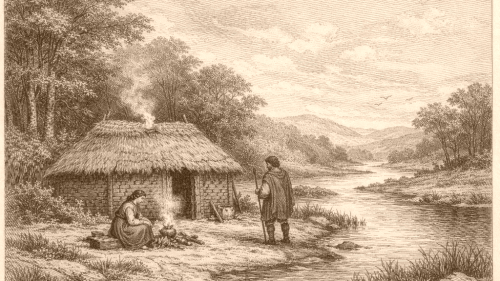
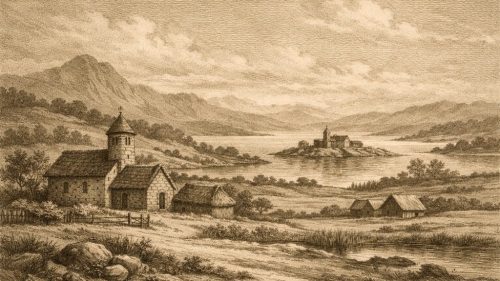
Saint Gall is remembered in the tradition of St Gallen as a missionary Irish monk who withdrew in 612 to an untamed mountain valley beside the River Steinach and lived there as a hermit. The cathedral of St.Gallen stands on the spot where the Irish itinerant monk Gall built his hermitage in the year 612. The abbey history says that the monastic settlement grew from a community of hermitages established by Gall, and that his cell became the beginning of the later abbey. The surviving institutional accounts present Gall as a missionary Irish monk and, in one modern description, as a learned and probably Irish monk and faithful disciple of Saint Columbanus.
Dateline
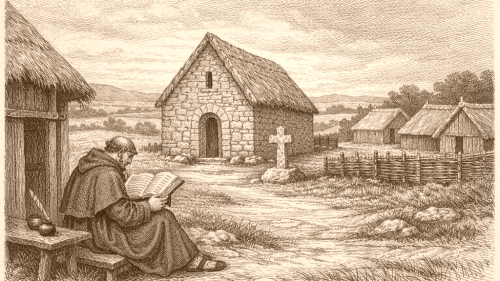
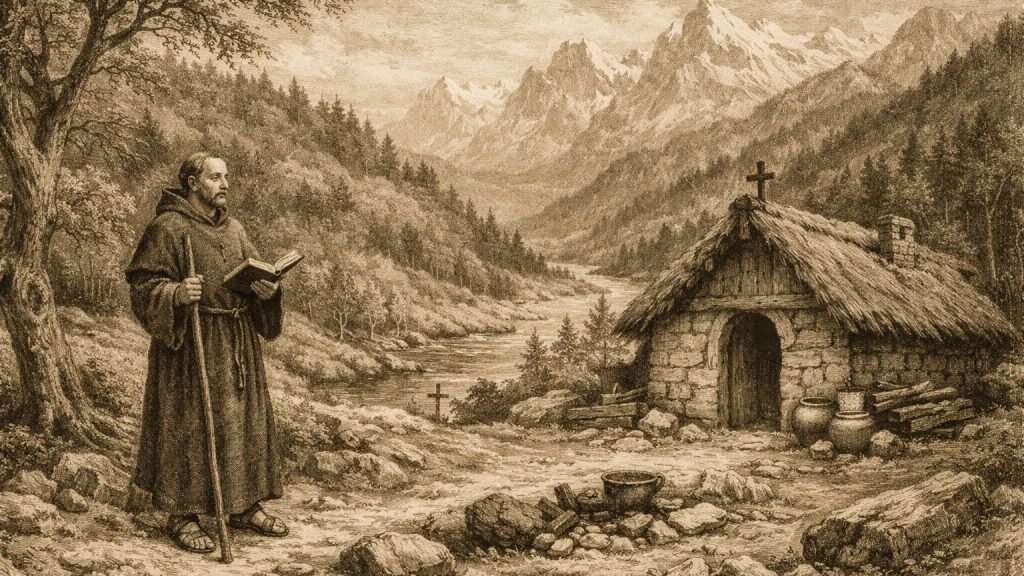
Saint Gall is remembered in the tradition of St Gallen as a missionary Irish monk who withdrew in 612 to an untamed mountain valley beside the River Steinach and lived there as a hermit. The cathedral of St.Gallen stands on the spot where the Irish itinerant monk Gall built his hermitage in the year 612. The abbey history says that the monastic settlement grew from a community of hermitages established by Gall, and that his cell became the beginning of the later abbey.
Irish Beginnings
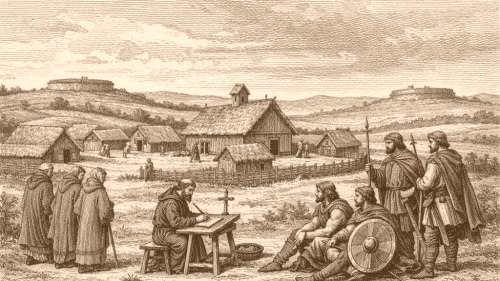
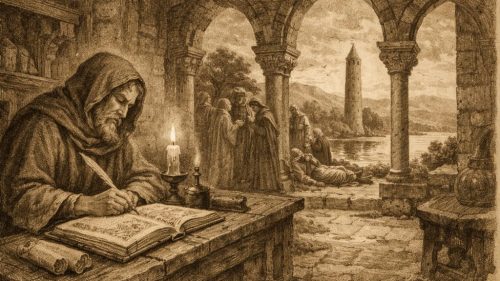
The surviving institutional accounts present Gall as a missionary Irish monk and, in one modern description, as a learned and probably Irish monk and faithful disciple of Saint Columbanus. According to tradition, he founded a hermitage on the site that later came to encompass the abbey of St. Gall around 610, while the abbey’s own historical presentation gives the year 612 for his withdrawal to the valley. A monk named Othmar later established a Benedictine monastery for the monks living around the cell of Saint Gall, and he served as the abbey’s first abbot.
The cathedral information states plainly that the church stands where he built his hermitage, and the abbey history says that the later community of hermitages grew from the cell he established in the valley.
Hermit Cell
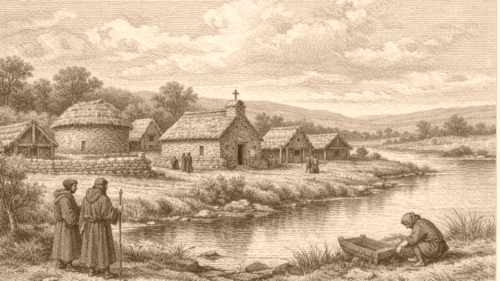
The tradition preserved at St Gallen says that a century after Gall’s time, his cell had become the embryo of a new monastic convent under Abbot Otmar. In this account, the later monastery developed around the community of hermitages that gathered near Gall’s dwelling. The same history states that in 747 the monastery, now fully developed, adopted the Rule of St Benedict. The cathedral complex and the abbey complex were later constructed in the middle of the 18th century, but the tradition they represent reaches back to the hermit in the valley.
The abbey’s historical presentation says that the baroque buildings at St Gall were the crowning glory of a monastic culture with roots stretching back more than a thousand years.
Lasting Memory
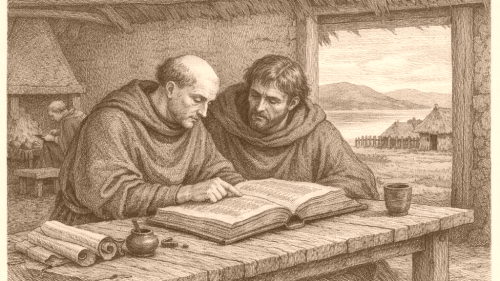
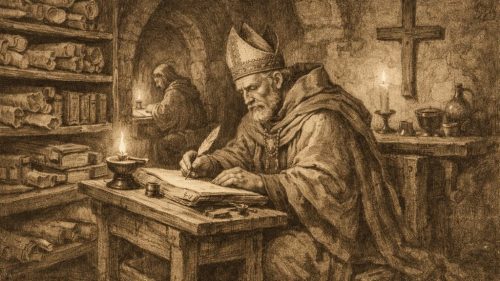
The Abbey of St Gall’s library is described as one of the oldest and richest in the world, and the UNESCO World Heritage site includes the Abbey Library, the Abbey Archives, substantial holdings of early medieval manuscripts and deeds, and one of the world’s biggest collections of Irish codices. The site stands on the spot where the Irish itinerant monk Gall built his hermitage in 612. Later in the Middle Ages the artistic and political significance of the abbey waned, while the town born in its shadow flourished and gained greater economic power.
Accounts connected with the abbey describe Gall as a disciple of Columbanus. They also say that he withdrew in 612 to the valley of the River Steinach, where his cell became the embryo of a new monastic convent.
Gozbert Plan
In the early ninth century, Abbot Gozbert presided over what the abbey tradition calls a “golden age.” He commissioned a new complex, and around 820 the Abbot of Reichenau assisted by providing the famous Plan, an ideal layout for an abbey. Gozbert adapted this drawing to St Gall’s situation. The design later became an explicit part of the UNESCO World Heritage listing for the site.
Source References
Hover over a number to see the source. Select it to open the source.