
Dublin Tenements
At a Glance
Urban Pressure
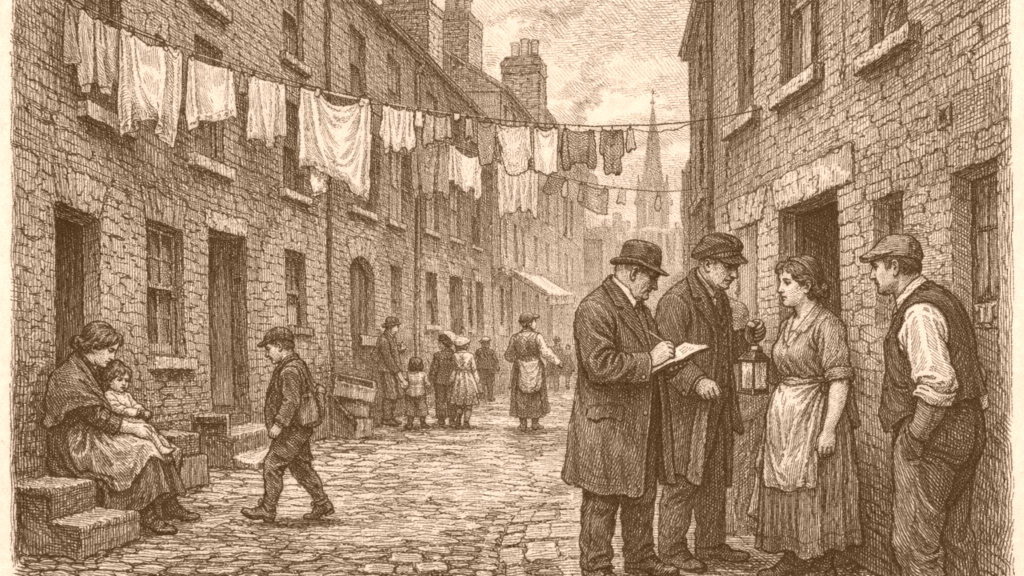
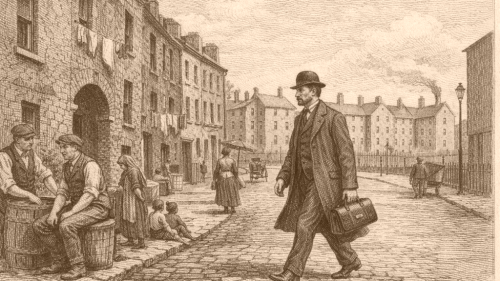
Dublin’s housing pressure appears in the evidence as a long urban problem rather than a single crisis. One account of the city describes tenement living in 1913 as crowded and poverty stricken, while another notes that Dublin Corporation later tried to end a housing and public health crisis of immense proportions. A broader housing overview places these difficulties within a longer arc that moved from shortage to later boom, bust, and shortage again. [6][8][4] [4] [6] [2]
The same materials show that these pressures were not abstract. Dublin’s tenement districts contained large numbers of people in cramped dwellings, and the housing record for the city stresses that many early schemes were small inner-city efforts. [6][8] [4] [6]
Tenement Survey
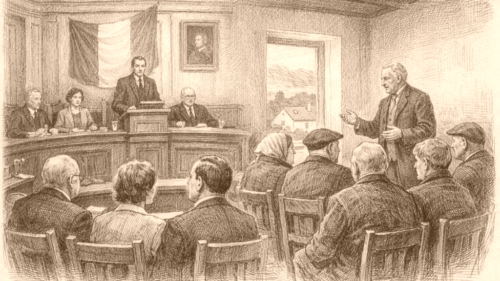
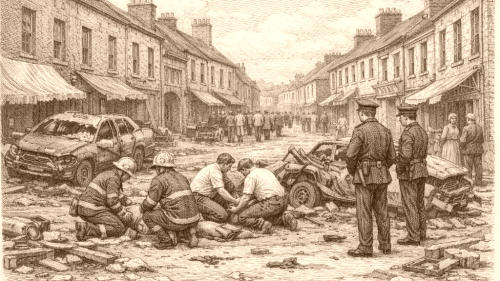
A turning point in the record came after the collapse of two tenement buildings on Church Street in September 1913. The Dublin City Council account says seven people died, including three children, and that the tragedy exposed the dreadful condition of buildings and the endemic overcrowding of the city’s tenements and courts. The inquiry that followed produced photographs and testimony, making the physical state of the housing visible in a way the text alone could not. [6][7] [4] [5]
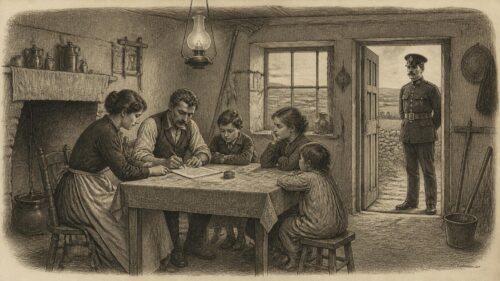
The investigation reached beyond description. The Dublin City Council summary states that the report recorded unsanitary conditions, that 87,305 people lived in inner-city tenements, and that most occupied a single room. It also notes shared water taps and water closets in courts and yards, which gives a direct comparison between space and infrastructure. These details are concrete evidence of density and inadequate facilities, not a general impression. [6] [4]
Official Response
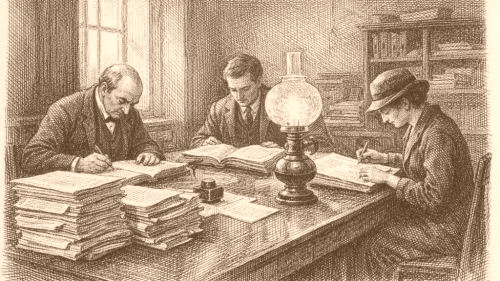
The report was presented to Parliament in February 1914. Dublin City Council says the Law Department transferred the inquiry records to Dublin City Archives for preservation and storage. [6][9] [4] [7]
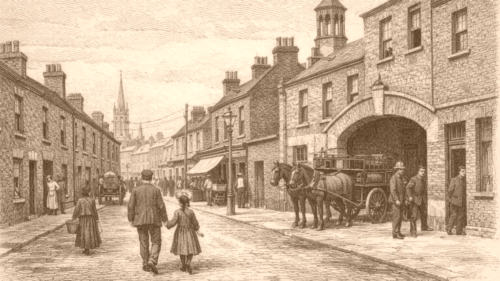
The same Dublin City Council material says that Dublin Corporation established a Housing Committee for new, well-designed housing for low-income citizens. A separate housing history notes that Dublin Corporation’s schemes transformed the urban landscape and aimed to end a housing and public health crisis. These are descriptions of official action, not proof of success, but they show that the city’s response included committee work, development, and a deliberate effort to replace the worst dwellings. [7][8] [5] [6]
Policy Drift
The broader housing history shows that policy and construction did not move in a straight line. One account of the Irish Free State says urban housing remained difficult because successive British governments resisted comparable state subsidy for municipalities, and that post-war legislation codified garden suburb ideas while leaving little actual state housing in place. This is a policy comparison, not a claim about every district or every year, but it points to the unevenness of intervention. [5] [3]
The same thesis also states that nearly 50,000 rural cottages had been built by 1914 under the subsidy programme, while urban housing remained more intractable. That contrast matters because it shows two different scales of provision within the same housing story. Rural cottage building proceeded in large numbers, but city housing continued to lag. The evidence supports a comparison between rural delivery and urban difficulty, without proving that one solved the other. [5] [3]
Later Memory
Later Dublin material shows that housing crises remained publicly remembered. A 2019 council note on the 1963 collapses at Bolton Street and Fenian Street records four deaths and a local inquiry, while a 2022 council talk links the 1913 Church Street collapse to renewed pressure on authorities. These later texts are not the original events themselves, but they show how earlier housing disasters were framed as part of a recurring urban problem. [9][7] [7] [5]
The later public memory also connects housing to rebuilding and redevelopment. The 2022 Dublin City Council summary says new and refurbished housing had almost halted by the start of the First World War, with funds later redirected after the 1916 Rising. It also states that Dublin Corporation pursued new, well-designed housing despite war and revolution. The passage shows interruption and continued official ambition, though not a complete chronology of every project. [7] [5]
Long View
Taken together, these sources show a long housing story in which overcrowding, structural decay, and official response remained intertwined. The RTÉ housing overview sets out the broad sequence from critical deficit to later glut and renewed shortage, while Dublin-specific accounts focus on tenements, inspection, and new estates. The evidence does not support a single neat explanation. It does support a sustained pattern in which housing problems returned in different forms across generations. [1][4][6] [1] [2] [4]
The strongest directly evidenced conclusion is limited but clear: Dublin’s housing pressures were severe enough to generate inquiries, photographs, committee action, and later historical remembrance. The record here shows neither a complete solution nor a single turning point. Instead, it preserves a city where overcrowding was documented in detail, public authorities responded, and later accounts continued to treat housing as a central civic issue. The surviving excerpts emphasize persistence more than final settlement. [6][7][8] [4] [5] [6]
Source References
Hover over a number to see the source. Select it to open the source.

- [1] RTÉ Archives | Society | House and Home
- [2] Housing in Ireland, 1740–2016 | The Cambridge Social History of Modern Ireland | Cambridge Aspire website
- [3] John Bull's other homes: State housing and British policy in Ireland, 1883-1922 - UCL Discovery
- [4] Derelict Dublin: Images of the City from 1913 | Dublin City Council
- [5] Dublin's Housing Crisis in Troubled Times | Dublin City Council
- [6] Building Healthy Homes: Dublin Corporation’s First Housing Schemes 1880-1925 | Dublin City Council
- [7] Collapse of Tenements 1963 | Dublin City Council
How did Dublin’s housing crises, as reflected in public reports and later historical summaries, shape the city’s response to overcrowding, collapse, and redevelopment from the early twentieth century into the late twentieth and early twenty-first centuries?