William Petty
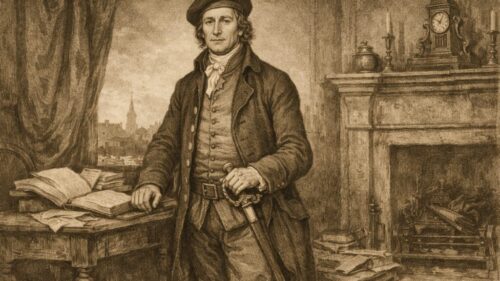
William Petty was born in Romsey, Hampshire, on 16 May 1623, the son of Anthony Petty, a clothier of the town. He was educated at the grammar school of his native place, and at the age of fifteen was sent to the university of Caen in Normandy. He later returned to England and entered the navy, though the capacity in which he served is not stated in the surviving account. Petty then turned to medicine and studied successively at Leyden, Utrecht, Amsterdam, and Paris. He went to Oxford in 1648 and became deputy or assistant to Dr Thomas Clayton, the professor of anatomy.
Dateline
William Petty was born in Romsey, Hampshire, on 16 May 1623, the son of Anthony Petty, a clothier of the town. He was educated at the grammar school of his native place, and at the age of fifteen was sent to the university of Caen in Normandy. He later returned to England and entered the navy, though the capacity in which he served is not stated in the surviving account.
Medical Studies
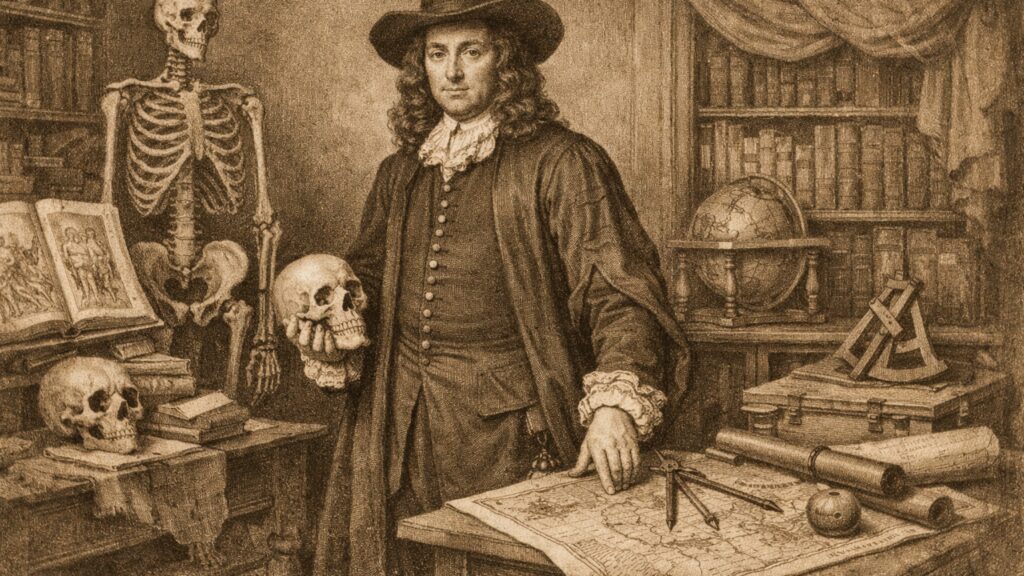
Petty then turned to medicine and studied successively at Leyden, Utrecht, Amsterdam, and Paris. He went to Oxford in 1648 and became deputy or assistant to Dr Thomas Clayton, the professor of anatomy. On 7 March 1649 he was created doctor of medicine, and on 25 June 1650 he was admitted a Candidate of the College of Physicians. In 1650, while resident at Oxford, he was mainly instrumental in the recovery of Ann Green.
Irish Service
On 1 January 1650-1 he succeeded Dr Clayton as anatomy professor at Oxford. On 7 February 1651, through the interest of Captain John Graunt, he was elected professor of music in Gresham College. In 1652 he was appointed physician to the army in Ireland, and he served as physician to Lambert, Fleetwood, and Henry Cromwell. He was elected a Fellow of the College on 14 July 1655, and in January 1658 he was elected member for West Looe in Cornwall for the parliament called by Richard Cromwell.
Later Years
After the Restoration Petty returned to England, was presented to the King, and was knighted on 11 April 1661. He was one of the earliest members of the Royal Society and was nominated on its first council. He died of gangrene of the foot supervening on gout at his house in Piccadilly on 16 December 1687, and was buried in the parish church of Romsey, close by his father and mother.
Source References
Hover over a number to see the source. Select it to open the source.